
On March 26, 2024, a suicide attack in Khyber Pakhtunkhwa province of Pakistan targeted Chinese engineers, killing six people, including five Chinese engineers who were working on a dam construction project in northwestern Pakistan. At that time, there were many speculations about the perpetrator and motive of the attack, including allegations that some separatist groups within Pakistan were behind it. However, last Tuesday, Ahmad Sharif, a spokesman for the Pakistan Army, claimed that the attack had been organized under the control of the Taliban in Afghanistan. Following that, last Wednesday, Enayatullah Khawarazmi, a spokesman for the Taliban Ministry of Defense, rejected Pakistan’s claim as irresponsible. He, in turn, claimed that ISIS militants were entering Afghanistan from Pakistani soil and carrying out attacks. A day later, Mumtaz Zahra Baloch, a spokesperson for the Pakistani Foreign Ministry, dismissed the Taliban Defense Ministry spokesperson’s claim as irresponsible and denied the entry of ISIS militants from Pakistan into Afghanistan. She reiterated her country’s claim of Afghan involvement in the attack on Chinese engineers and stated that the Pakistani government has evidence regarding this matter.
These mutual accusations between Pakistan and Afghanistan have always existed, both during the Republic period and now during the Taliban era. Pakistan now accuses the Taliban of harboring “terrorists” and similarly, reciprocal accusations against Pakistan come from the ruling Taliban in Afghanistan. However, these accusations conceal strong traces of reality behind them. Pakistan’s claim regarding the existence of terrorist sanctuaries in Afghanistan under Taliban control is true, and so is the Taliban’s claim regarding the presence of terrorists on Pakistani soil.
It has been quite some time since parts of the tribal areas of Pakistan have been transformed into safe havens for terrorists. There is ample evidence that on the other side of the border, terrorists have numerous sanctuaries. The killing of Osama bin Laden in Abbottabad, Pakistan, is one clear piece of evidence of the existence of terrorist hideouts on that side of the border. The presence of Taliban leaders and fighters from Afghanistan in Pakistan is another testament to the situation. In the midst of this, the Pakistani government had granted permission to the Afghan Taliban to operate, despite the legitimate Afghan government being in power, allowing activities such as military training, mine-making, and political activities. It was based on these activities that Mullah Hibatullah trained suicide bombers in the Hajji Hassani Mosque and sent those fighters to Afghanistan with wooden keys hung around their necks to target the government and the people of Afghanistan. It was under this permission that the Peshawar Council and Quetta Council of the Taliban openly operated there. Now, the Afghan Taliban have provided such facilities to TTP and other groups.
Now that Afghanistan has fallen into the hands of a terrorist group, Pakistan’s claim is also valid. Terrorists in Afghanistan also have nests and sanctuaries, from which they control their terrorist activities. It is unclear whether Pakistan’s claim regarding the planning of attacks on the Chinese within Afghanistan is true or not. Still, it is evident that unless Islamabad’s approach to terrorism changes, such attacks will not cease. Under Taliban control, Afghanistan hosts at least 20 terrorist groups, just as several other groups find sanctuary in Pakistan.
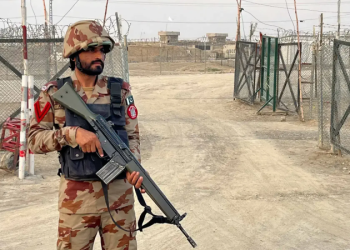
Various terrorist groups operate extensively in Pakistan’s tribal areas, and occasionally the Pakistani army engages in warfare against some of them. However, the problem for Pakistan’s military and government lies in drawing a line between terrorists and distinguishing them as either beneficial or harmful. Some armed terrorist groups that ostensibly do not contradict the interests of the Pakistani government and army are not targeted. There are also claims that the Pakistani military nurtures and supports them. Even if these claims are unfounded, it is still evident that the Pakistani army does not conduct operations against certain active terrorist groups in the country and perceives them as “good terrorists” acting in Islamabad’s interests. This definition of terrorism and categorization of terrorists is one of the obstacles to combating extremism and terrorism in Pakistan. For example, while Islamabad shelters and advocates for the Afghan Taliban and refrains from labeling them terrorists, it refers to Pakistani Taliban (TTP), who do not have an agenda contradictory to that of the Afghan Taliban, as terrorists and fight against them. TTP is not the only issue; terrorism operates under different faces and various names in Pakistan and Afghanistan, and it should not be divided into good and bad by any government.
Therefore, the fight against terrorism first requires recognizing the existence and danger of this phenomenon in both countries and then providing a clear definition for it. When both the ruling authorities in Afghanistan and the Pakistani government deny the presence of terrorists within their territories, they fail to define terrorism clearly. In the absence of such a definition, no effective fight against terrorism can take place. In that case, claims of combating terrorism by any ruling authority or government will only remain as mere assertions and a media war. Thus, the Pakistani government must reconsider its definition of terrorism and then fight against all terrorist groups (without categorizing them as good or bad). Combatting terrorism requires regional cooperation, which will not materialize if the Taliban’s rule in Afghanistan persists. Therefore, the Pakistani government and all regional countries facing direct and indirect threats of terrorism must reconsider how they interact and relate to the Taliban. They must consider whether it is possible to fight against other terrorist groups while a terrorist group holds power.
After this stage, it is time to eradicate terrorist sanctuaries in the region. Before entering the operational phase of military combat against terrorism, regional countries must move past accusations and denials and embark on the first stage of combat. The first stage involves acknowledging the presence of terrorists in the region, especially in Afghanistan and Pakistan. The second stage requires a clear definition of terrorism and avoiding categorizing it as good or bad. The third and final stage involves armed warfare against terrorism with regional cooperation. Otherwise, no country can combat terrorism alone. Identifying the locations of terrorist hideouts in which countries and regions they are situated in belong to the third and final stage of combat.
The Pakistani government can take action against extremist and terrorist groups within its borders once it identifies its stance toward them and expects the same from other regional countries. These operations must target all terrorists without discrimination. The current situation is the result of dividing terrorists into good and bad and leaving the good terrorists untouched, even supporting them. Terrorism, regardless of its name or characteristics, must be suppressed. Currently, Afghanistan lacks such a framework because a terrorist government holds power. It is unreasonable to expect some terrorists to fight against others and ultimately eradicate terrorism. However, the situation differs in Pakistan. There, groups like TTP, Al-Qaeda, or ISIS do not control the government. Therefore, the ruling government can target terrorists regardless of their affiliations, names, or origins.
Weakening and eliminating terrorists in Pakistan can contribute to the security of the entire region. If Afghanistan has turned into a hub of terrorism today, it is because terrorists were trained, armed, and sent from Pakistani soil. Practically, before Afghanistan became a refuge for terrorists, part of Pakistani soil had such characteristics. If a non-terrorist and legitimate government were in place in Afghanistan, it would be expected to combat terrorists and uproot their sanctuaries from the country. However, the current situation is different. Therefore, the only option available to Pakistan and the region is to define their stance against terrorists and their sanctuaries within their borders, provide a clear definition of terrorism, refrain from categorizing terrorists, and then pressure the Taliban to confront other terrorists. The current policy of Afghanistan’s neighbors, particularly Pakistan and Iran, of engaging with the Taliban and providing direct or indirect support to this group, will only strengthen the terrorists and ultimately lead to the destruction of terrorism in the entire region.
If governments delay action, terrorists will emerge victorious. Terrorism is not a phenomenon that waits for politicians and rulers of regional countries to satisfy their short-term interests and then engage in battle. Terrorism grows fatter every day, and if governments do not act, they may miss the opportunity to move and fight against this phenomenon.
You can read the Persian version of this analysis here:
بهشت تروریستان در دو سوی دیورند؛ با تروریسم برخورد سلیقهای نکنید