
The Afghan Embassy in New Delhi, with “regret and disappointment,” has announced its closure, handing over the keys to the Indian government due to the host country’s lack of cooperation. In a statement, the embassy cited public expectations, the absence of political support from India, and the lack of a legitimate government in Kabul as reasons for ceasing its political representation activities for Afghanistan in this country. However, some former diplomats, citing the strained relationship between New Delhi and the Afghan ambassador, suggest that the country tacitly welcomed the embassy’s closure. According to them, India aims to avoid competing with Pakistan in the Afghan arena. Meanwhile, the closure of the Afghan Embassy in New Delhi has generated diverse reactions. Afghan immigrants in India express grave concerns, emphasizing that the absence of consular services and political support has posed significant challenges and an uncertain future for migrants and students.
Following the fall of Afghanistan to the Taliban, many of the country’s political representations abroad have faced significant challenges. Some host countries, due to the absence of a legitimate and legal government in Kabul, have supported the activities of Afghan embassies in providing consular services, while others in the region have handed over political representations to the Taliban. The Afghan Embassy in New Delhi, by sending a letter to the Indian Ministry of External Affairs, has requested India to take over the political representation of Afghanistan.
The Afghan Embassy in New Delhi announced yesterday that it has ceased its operations as of the first day of October of this year. In the statement, the embassy stated, “The Afghan Embassy in New Delhi regrets to announce the suspension of its activities with deep disappointment.”
The statement explains that this action has been taken after careful consideration, taking into account the historical ties and long-standing cooperation between Afghanistan and India. It argues that the closure of the Afghan Embassy in India has occurred due to the lack of support from the host government. The statement further notes, “We acknowledge our shortcomings in meeting the expectations and requirements to secure the interests of Afghanistan and its citizens due to diplomatic non-support in India and the absence of an efficient legal government in Kabul.”
In the statement by the Afghan Embassy in New Delhi, it has been announced that consular services will continue in some cities of this country. The statement notes: “We’ve chosen to suspend all diplomatic activities at this representation, except for providing emergency consular services to Afghan citizens, until the ambassador relocates to the host country.”
However, Azimullah Warsaji, a former official of the Afghan Embassy in Doha, contends that India has tacitly approved the closure of the country’s embassy in New Delhi. He believes the Indian government is content with this development, as it had initially opposed the appointment of Farid Mamundzay as the ambassador. According to Mr. Warsaji, Ashraf Ghani’s idiosyncratic approach to diplomacy had seriously strained political relations with regional countries, the effects of which are still visible today.
This former Afghan diplomat, who also worked in New Delhi, states that India is not inclined to exit the Afghan arena in competition with Pakistan. He asserts that New Delhi, in its dealings with the Taliban, aims to safeguard its interests in Afghanistan and endeavors to establish alignment with the group through all available means, perceiving the Taliban as a regional threat on par with ISIS and Al-Qaeda.
This former Afghan diplomat emphasizes that India accepted its defeat in Afghanistan at the time of the Doha agreement between the United States and the Taliban. According to him, a senior official from the Indian Ministry of External Affairs, who was responsible for Pakistan, Afghanistan, and Iran affairs at that time, was appointed as India’s ambassador to Qatar to facilitate interactions with the Taliban and obtain assurances from the group.
However, an anonymous diplomatic source reveals that the Afghanistan-India relationship faced challenges when Mr. Ghani, under various pressures, requested the Indian government to accept his nominated ambassador. The Indian government, however, had concerns in this regard.
The source continues to claim that Mr. Mamundzay, due to his foreign travels, had even been labeled “conditionally allowed entry” by the Indian government but had managed to “play it cool” and create opportunities for the host country himself.
The source further alleges that some Afghan consulates have received rent for their residences from Kabul, and transferring money from Kabul without the knowledge of the Indian government is not possible. Most countries have warned Afghan political representatives that if they establish official relations with Kabul under Taliban control, their activities will be restricted.
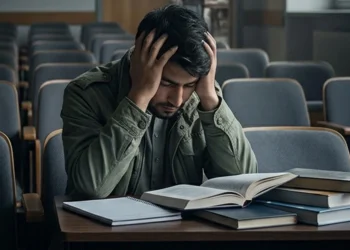
Meanwhile, the closure of the Afghan Embassy in New Delhi has presented serious challenges for Afghan migrants and students in this country. They say that in the absence of the embassy, they face significant difficulties in obtaining consular services and political support.
Ishaq Sarwari, an Afghan student in India, emphasizes that the absence of the embassy will pose significant challenges for thousands of students. According to Mr. Sarwari, students need to have their educational documents authenticated at the Afghan Embassy in New Delhi. He points out that hundreds of students are currently about to finish their studies, and they cannot depart India without having their documents attested by the Afghan Embassy in New Delhi, as their documents lack validity without this certification.
This student underscores the importance of not only attesting educational documents but also renewing passports for many other students. He highlights that these students, residing in Delhi and its vicinity, are encountering economic hardships and cannot financially manage trips to the consulates of the Afghan Embassy in Hyderabad and Mumbai for passport renewal.
Some other students also claim that the Indian government has left hundreds of students in a state of uncertainty and has not fulfilled its commitments towards them. Naseer Ahmad, an Afghan student in India, asserts that India had initially declared its intention to grant higher education scholarships to all Afghan students living in the country following the Taliban’s assumption of power. However, in the current year, it has not honored its commitment in this regard. He adds, “This year, they have not awarded scholarships. Hundreds of students are in a state of uncertainty. However, India has granted a thousand online scholarships to Afghanistan, perhaps in an attempt to placate the Taliban. This is happening while people are struggling to even afford food, not to mention access to electricity and the internet. The challenges are significant..”
On the other hand, Qais Malikzada, one of the Afghan immigrants in Delhi, says that the closure of the Afghan embassy in India poses numerous challenges for immigrants. According to him, hundreds of people currently need to renew their passports, and in the absence of the embassy, these individuals will face significant challenges and may be subject to forced expulsion. He explains that Afghan immigrants in India whose passport validity has expired cannot rent homes for themselves or address their other issues in the country.
Mr. Malikzada explains, “The majority have acquired migration cards and are heading to third countries, but their passports require renewal. Without renewal, countries do not grant visas. Those holding migration cards must also renew their residence visas.” He goes on to allege corruption within the Afghan embassy in Delhi but underscores that, despite these challenges, the issues faced by immigrants can be addressed indirectly.
It’s important to note that India has consistently urged the establishment of an all-inclusive government, the prevention of terrorist groups from utilizing Afghan territory, and the safeguarding of human rights by the Taliban. Nevertheless, even though India has reopened its embassy in Kabul, it has not formally acknowledged the Taliban regime as Afghanistan’s official government, and it has not responded to the closure of the Afghan embassy and the communication from this political representation.