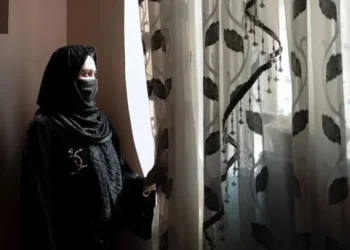
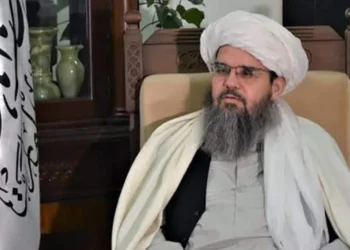
The latest decree issued by Mullah Hibatullah Akhundzada, the absent leader of the Taliban, bans girls from studying health sciences in educational institutions. Although the official text of the decree has not yet been made public, media reports indicate that on Monday, December 2, 2024, the Taliban-controlled Ministry of Higher Education summoned officials from medical science institutes in Kabul and conveyed Hibatullah’s directive. According to reports citing these officials, the new decree explicitly prohibits girls from pursuing health sciences. Yesterday, further reports emerged of additional restrictions imposed by Mullah Hibatullah on schoolgirls. Sources in Kandahar revealed that in a meeting with the Taliban’s “Council of Scholars,” Mullah Hibatullah stated that girls aged 13 are eligible for marriage and are not even allowed to study in grades below the sixth level. These new restrictions continue a series of bans imposed over the past three years on women and girls by Hibatullah Akhundzada.
Medical institutes were the last remaining educational centers where girls could continue their studies. The students in these institutes were primarily those who had graduated from schools several years earlier. Over the past two years, no girl has been able to graduate from school to pursue higher education. Now, this last hope and sole option for girls to continue their education has been stripped away, as health sciences join the ranks of forbidden subjects under the Taliban. The question of how the Taliban intends to provide female doctors in a patriarchal and traditional society, or how women’s health issues will be addressed without female doctors, remains unanswered. The economic and social ramifications of this decree, though significant, pale in comparison to a graver issue: Who considers a 13-year-old child eligible for marriage? Can a 13-year-old bear the heavy burdens of married life or even make decisions regarding her spouse? Above all, the right to education—trampled upon since the Taliban’s return to power in August 2021—stands as the most pressing concern.
From the outset, the Taliban closed schools for girls above sixth grade and soon after barred women from universities. The restrictions extended to private educational centers, which were also closed to women and girls. Now, even medical institutes are off-limits for girls, ensuring that no female doctors, nurses, or midwives are trained. In place of these banned institutions, the Taliban are constructing religious schools (madrasas), the only educational institutions currently accessible to girls, with no age restrictions. Reports suggest that the Taliban often take young and adolescent girls from these madrasas as second, third, or fourth wives, indoctrinating them with the belief that they must satisfy men’s sexual desires in these roles. In the absence of female doctors, perhaps Mullah Hibatullah will decree that these madrasa-trained girls write talismans to cure illnesses.
The decree by Mullah Hibatullah has sparked widespread reactions on social media, with numerous politicians outside the Taliban also expressing serious opposition. Many attribute such decrees to the Taliban’s ideology, but this narrative seems inaccurate. If the Taliban ideologically opposed women’s education, the daughters of the group’s leaders would not attend schools and universities abroad. These restrictions are less about ideology and more about authoritarianism. Mullah Hibatullah and his followers want to demonstrate to the people of Afghanistan and the world that whatever they dictate must be obeyed without question, even if their decrees—like depriving women of education—are illogical and contrary to human values.
These restrictions are imposed by a group that seized the fate of Afghanistan like a monstrous force three years ago, continually pressuring society to the point of breaking its spirit under their oppressive rule. The Taliban demands nothing more than absolute submission from the people of Afghanistan. Violent suppression of dissent and shameful restrictions on women’s education and work are all means to enforce and maintain societal obedience. This has little to do with the group’s religious ideology or beliefs.
The Taliban did not impose these restrictions on girls’ education all at once; they did so gradually. Promises to reopen schools and institutions were repeatedly made to minimize backlash against their actions. This gradual approach has ensnared the people of Afghanistan and even international organizations like the United Nations in the Taliban’s strategy. Yesterday, Afghanistan’s permanent representative to the United Nations criticized UNAMA for its silence regarding the deprivation of girls from education in medical institutes. Such silence is a testament to the effectiveness of the Taliban’s strategy of incremental restrictions. They implement one restriction, wait for society to adjust and accept it, and then impose the next. This pattern has persisted to this day.
If the people of Afghanistan and human rights organizations do not stand united against the Taliban and compel them to retreat, society will regress to a terrifying state where no educational or reform program can restore it to its rightful path. The unified support of Afghan men and women for girls’ education, in coordination with human rights organizations, can pressure the Taliban to abandon their hostility toward knowledge and their systematic deprivation of women from education.
You can read the Persian version of this analysis here:
علوم ممنوعه؛ هیولای طالبان استخوان جامعه را درهم میشکند | روزنامه ۸صبح