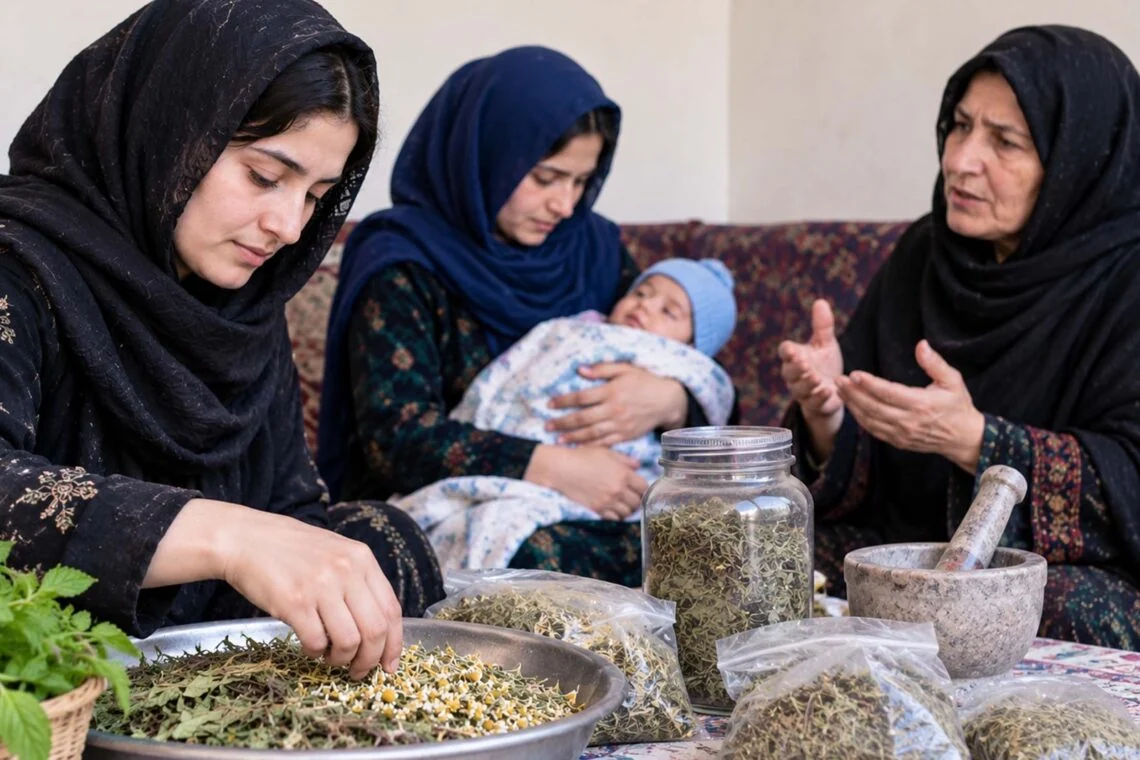
Several women say that, due to the high cost of medicines and the difficulty of accessing health services, they have turned to medicinal herbs to ease menstrual pain and to treat postpartum problems and infertility. According to them, their familiarity with these herbs and their use of them have largely been shaped by the advice of elders in the family and experienced women. These women say that the lower cost of medicinal herbs compared with visiting a doctor and buying prescribed medicines is one of the most important reasons for their inclination toward this method of treatment.
Shabnam, 36, says she has been using herbal remedies for about three months to have a son. According to her, in the area where she lives, the use of herbal remedies is common among women who want to have children, particularly during their menstrual period.
She adds: “I have been married for 10 years, and I have four daughters. My husband wants me to give birth to a son. For this reason, I have been using fish roe and carrot seeds for three months. I have heard from others that these substances have worked for some women.”
She says: “We live in a remote area, and access to health centers and health services is difficult for us. Also, the costs of treatment and transportation are beyond the financial means of many families. For this reason, we are forced to use methods we have learned from our elders and grandmothers. Moreover, herbal medicines are cheaper and more accessible than other treatments.”
Narges, 25, says she has been using medicinal herbs for about three years to relieve menstrual pain. According to her, she began using these herbs on the advice of elders in the family and experienced women, and she has relied on this method ever since to ease her monthly pain.
She adds: “Every month, during my period, I use mint, ginger, and chamomile to reduce the pain. One of the reasons for my inclination toward medicinal herbs is their lower cost compared with visiting a doctor. Currently, doctors’ consultation fees have increased, and medical examinations and buying medicine also involve high costs. Since many women, especially those who are not employed, do not have an independent income, they cannot afford these costs or regular visits to medical centers. For this reason, using medicinal herbs is more economical for us.”
Shagufa, 20, says that a year ago, after giving birth, she used herbal remedies on a doctor’s advice because of persistent back pain. She says: “After childbirth, I had severe back pain, so much so that I constantly kept my back wrapped. The midwife combined fenugreek with several other ingredients and advised me to boil it and drink it. After using this herbal mixture, my back pain subsided, and my milk supply also increased.”
Meanwhile, Maseerat Bakhshi, a midwife, warns that the unsupervised use of some herbal remedies can have harmful consequences for women’s health, particularly during pregnancy, childbirth, and breastfeeding. According to her, some of these herbs may cause uterine contractions, miscarriage, premature birth, disruption of breastfeeding, and even liver toxicity.
The midwife says: “The unsupervised use of some herbal remedies during pregnancy may trigger uterine contractions and increase the risk of miscarriage or harm to the fetus. During breastfeeding as well, several herbal compounds can pass into the baby’s body through breast milk and cause unwanted side effects.”
Bakhshi adds: “The use of some medicinal herbs during menstruation may affect the amount of bleeding and the regularity of the menstrual cycle. Some of these substances can also cause premature birth, disrupt uterine contractions and lead to liver toxicity. Many women assume that if herbal remedies are of no benefit, they at least have no side effects, but this assumption is not correct. In particular, herbs with a very ‘hot’ nature, according to traditional medicine, may cause problems for the mother and the fetus in certain conditions. For this reason, these substances should be used with awareness and after consulting health professionals.”
Mohammad Hanif Hashemi, a specialist in internal medicine, warns against the unsupervised and continuous use of herbal remedies, particularly before pregnancy, during pregnancy and after childbirth. According to him, alongside their possible benefits, medicinal herbs can also have unwanted side effects and consequences, and therefore should not be used without awareness and consultation with a doctor.
He says: “Women who use herbal remedies on their own and for a long period, either before pregnancy or to become pregnant, may face problems with ovarian function and irregular menstrual cycles. Also, using some of these medicines during pregnancy can increase the risk of bleeding, hormonal imbalance, and even miscarriage. Long-term use of some medicinal herbs may also damage the kidneys and liver.”
The specialist adds: “Our advice to women is to avoid long-term and unsupervised use of medicinal herbs and to see a specialist doctor if they face any health problem. Also, to receive advice and treatment, they should turn to qualified professionals and reputable health centers and avoid consulting unqualified individuals.”
Meanwhile, a number of the country’s citizens complained some time ago about the rising prices of medicine and the scarcity of some medicines in the country’s markets. They stressed that the increase in medicine prices and the shortage of essential medicines have raised the cost of treatment and put the families of patients under greater hardship.
You can read the Persian version of this report here:
دشواری دسترسی به خدمات صحی؛ زنان به گیاهان دارویی پناه میبرند