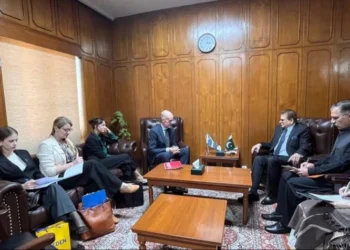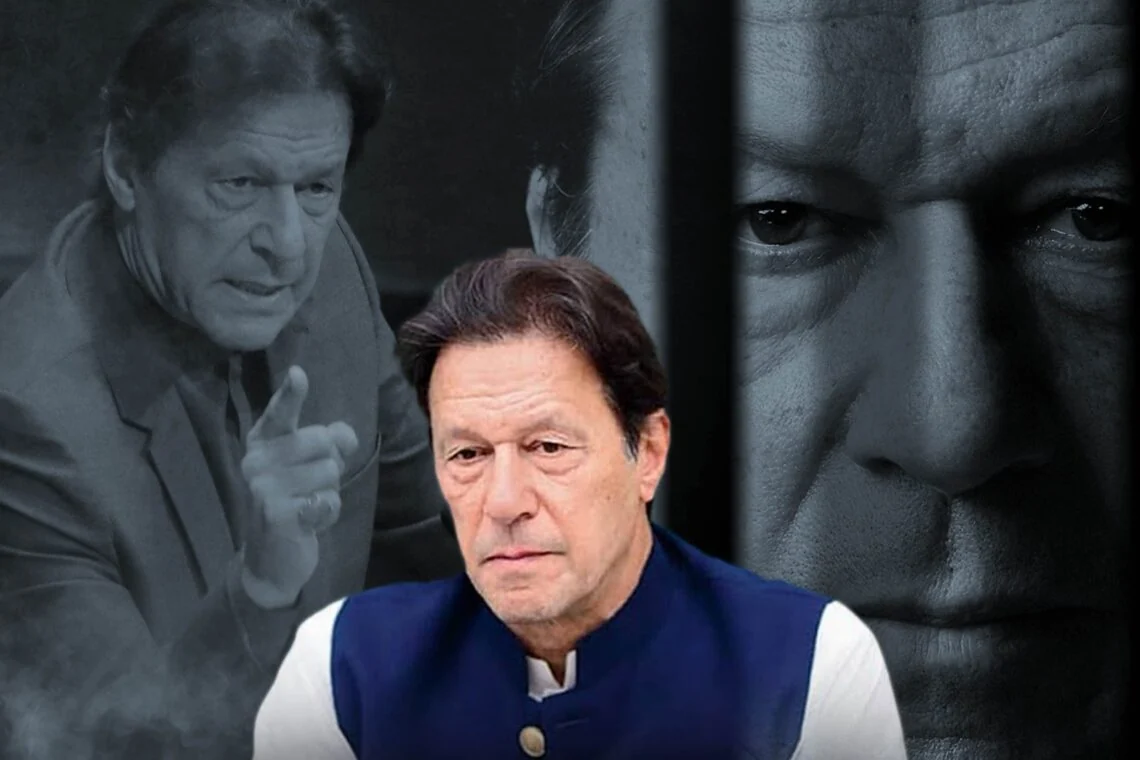
In 2020, when we travelled to Pakistan on an official government delegation to hold peace talks, together with Dr. Abdullah Abdullah, Chairman of the High Council for National Reconciliation (HCNR) of the Islamic Republic of Afghanistan, Imran Khan was the country’s prime minister. At that time, he held an important political and executive position, and as Pakistan’s highest executive official, he stood at the center of political and governmental decision-making. The unprecedented welcome and diplomatic protocol extended to the delegation of Afghanistan’s government at the time reflected his standing in those days. The trip, of course, took place at Imran Khan’s invitation to the Chairman of the HCNR.
Several years later, Imran Khan’s political circumstances and standing have changed fundamentally. He, who once headed the government of Pakistan, is now held in Adiala Prison and, according to reports and statements by his lawyer, has raised concerns about his health and that of his wife.
According to Barrister Salman Safdar, Imran Khan’s lawyer, a letter from him has been published in which concerns are raised about his health and his access to medical services. In the letter, Imran Khan spoke of the possibility that his condition could worsen and called on judicial bodies to give attention to the issue of his treatment.
One notable point in this matter is his reference to the hospitals that were established during his years of political and governmental activity to provide medical services to the people. Developments concerning Imran Khan, regardless of differing assessments of his political record and his tenure as prime minister, raise important questions about the relationship between political power and judicial institutions, the rights of prisoners, and the responsibility of governments.
Imran Khan’s political path, like that of many political figures, shows that positions of government can be transformed by political developments, shifting coalitions, and judicial decisions. A person who at one point stands at the head of a country’s executive structure may, in another period, face political and judicial restrictions.
Nevertheless, an examination of these developments should not be limited merely to a narrative of the fall or changing fortunes of one politician. The more important issue is the observance of legal principles, the independence of judicial institutions, and the guarantee of the fundamental rights of all those held in detention.
The right to medical care is not a special privilege of the powerful or of political figures; rather, it is part of the human rights of prisoners. This right must be respected regardless of a person’s social standing, fame, political affiliation, or the nature of the charges against them.
In the letter, which, according to his lawyer, Barrister Salman Safdar, was published at Imran Khan’s request, he expressed concern that he might not leave prison alive. The most bitter part is that in this letter, Imran Khan mentions the hospitals he built to provide free treatment for the people, hospitals whose purpose was to give needy patients access to health services, yet today he himself is the one seeking access to treatment.
For me, the comparison between Imran Khan’s situation during the official trip in 2020 and his current circumstances is an example of the striking transformation of a person’s political standing. This comparison also shows that power and political office are not permanent or guaranteed positions and can change as a result of various developments.
Ultimately, Imran Khan’s political story can be considered from two angles: first, the instability of power and the changing fortunes of those who hold political office; second, the necessity of upholding the principles of justice and human dignity, even in conditions of political disagreement and confrontation. The record of any politician should be assessed based on their performance, decisions, policies, and the consequences of their time in office, just as the treatment of that person during detention should likewise be based on the law and respect for human rights.
Political power, contrary to what many of its holders imagine, is not everlasting. Offices change, coalitions fall apart, yesterday’s friends may become today’s opponents, and someone who once made decisions in the prime minister’s palace may one day appeal to judicial institutions for his most basic rights. Power comes and goes, offices change, and political positions do not endure; but what must remain steadfast beyond all these changes is the law, justice, and human dignity. Perhaps the most important lesson of this story is that the true value of power is measured not by the splendor of the days of authority, but by the degree of commitment to humanitarian and legal principles, both in times of power and in times of deprivation.
Nevertheless, this narrative takes on a broader meaning within the context of Pakistan’s political structure. It is a country in which no prime minister has so far managed to complete a full five-year term, and its prime ministers have consistently left power before the end of their terms as a result of political instability, power disputes, and judicial or military developments. This situation shows that the instability of power in Pakistan is not limited to the fate of a single politician but is rooted in the country’s political structure.
You can read the Persian version of this article here:
از اوج قدرت تا پشت دیوارهای زندان؛ روایت تلخ چرخش روزگار عمران خان