• 8AM.MEDIA
  • ویب‌سایت فارسی
  • پښتو ویب‌پاڼه
  • اۉزبېکچه ویب‌سایت
  • Podcast
Thursday, November 19, 2026
Hasht-e Subh
  • Home
  • News
    • Afghanistan News
    • World News
  • Opinion
    • Editorial
    • Analysis
  • Reports
    • Daily Reports
    • Investigative Reports
  • Society
    • The story of people
  • Women’s Word
  • Columns
    • Three Years After Afghanistan’s Fall: The Taliban’s Resurgence
    • Towards Equality
    • The Resurgence of the Taliban: Two Years Since Afghanistan’s Fall
    • Hebatullah Report Special Edition
    • Resistance for Education Special Edition
    • Special Column on Taliban’s Education Curriculum
    • Nawroz
  • Interviews
  • Contact Us
    • About Us
    • 8AM MEDIA Annual Awards
    • Submit an Article to Hasht-e-Subh
  • 8am.mediaBack
Subscribe
No Result
View All Result
  • Home
  • News
    • Afghanistan News
    • World News
  • Opinion
    • Editorial
    • Analysis
  • Reports
    • Daily Reports
    • Investigative Reports
  • Society
    • The story of people
  • Women’s Word
  • Columns
    • Three Years After Afghanistan’s Fall: The Taliban’s Resurgence
    • Towards Equality
    • The Resurgence of the Taliban: Two Years Since Afghanistan’s Fall
    • Hebatullah Report Special Edition
    • Resistance for Education Special Edition
    • Special Column on Taliban’s Education Curriculum
    • Nawroz
  • Interviews
  • Contact Us
    • About Us
    • 8AM MEDIA Annual Awards
    • Submit an Article to Hasht-e-Subh
  • 8am.mediaBack
No Result
View All Result
Hasht-e Subh
No Result
View All Result

Shenzhen Summit: A Win or a Loss for Iran?

Translated by Farhad Farhaad | Originally written in Persian by Radin Mohammadi

Mohammad Mohammad
19 November 2026 - Solar Hijri Date: 1405/08/28 [t_time:1795083803]
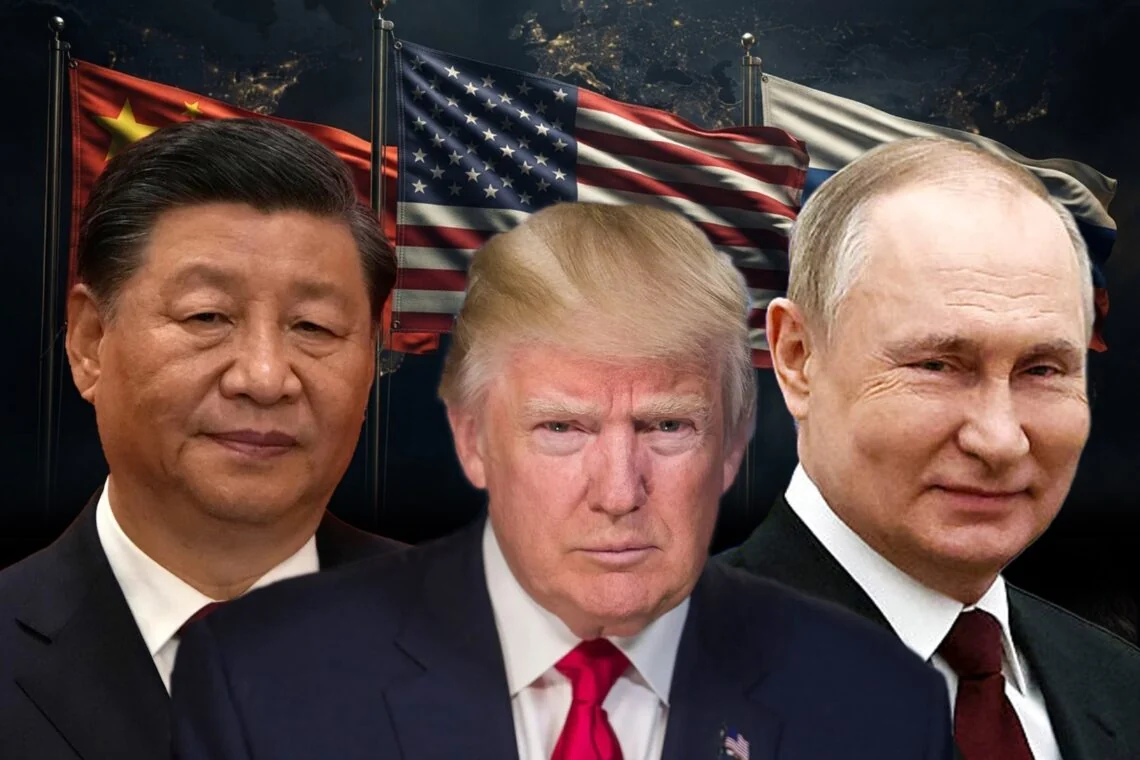
Chinese President Xi Jinping, US President Donald Trump and Russian President Vladimir Putin, from left to right, ahead of the Shenzhen summit on Iran. (Photo credit: Social Media)

Social Media

Donald Trump, President of the United States of America, is neither seeking authorization for a broad military attack on Iran in this trilateral meeting with Xi Jinping, President of China, and Vladimir Putin, President of Russia, nor does he want to push the war to a stage where its costs spiral out of control. His main goal is to win the cooperation of these two powers in containing the Iran crisis, a cooperation that would compel Tehran to accept nuclear limitations and reduce tensions in the Strait of Hormuz. This cooperation does not necessarily mean open support for military action. Rather, it takes the form of coordinated diplomatic and economic pressure so that Tehran sits at the negotiating table from a weaker position.

China has a clear priority in this equation. Beijing is above all concerned about the security of shipping and the steady flow of oil. The Strait of Hormuz is vital to China’s economy, and any prolonged disruption there would upset the energy supply chain and maritime trade. Therefore, after the summit, China will increase its pressure for a return of calm to the waters of the region. Even if this pressure means pushing Tehran toward greater flexibility, Beijing is willing to accept it.

China’s economic interests here take precedence over any “ideological commitment” or “strategic alliance” with Iran. Xi knows that continued tension could drive up energy prices and affect China’s economic growth. He is therefore inclined to steer Tehran toward solutions that guarantee the security of maritime routes.

Russia will also accept a mediating role, but not at the price of bearing the high costs of confrontation with America. Moscow is preoccupied with its own problems in Ukraine and with Western sanctions, and it does not want to spend its limited resources on fully backing Iran’s position. Putin may outwardly defend Iran’s rights and stress the need to respect the sovereignty of states, but in practice he is not prepared to shoulder the economic or political costs of confrontation with Washington. Russia can play the role of facilitator in the negotiations, but this role ultimately leads to a narrowing of Tehran’s options. Moscow prefers that the crisis be managed at a level that does not harm its own interests, while it can also extract concessions from its position as mediator.

America, in this equation, maintains economic and naval pressure. The presence of aircraft carriers in the region and the continuation of sanctions are tools Washington uses to keep Tehran under pressure. The aim is for Iran to enter any possible talks from a weaker position. Trump knows that a full-scale military attack carries unpredictable risks and could push the region into wider instability. His strategy is therefore a combination of sustained pressure and controlled diplomacy.

In Shenzhen, no final and comprehensive agreement on Iran will be signed. Expecting such an outcome is not realistic. However, the political ground is being prepared for a deal whose main purpose is to limit Tehran’s bargaining power. In the coming months, this could lead to proposals for limited negotiations, negotiations in which Iran will face narrower options. For Iran, the main danger is not only a military attack. The greater danger is that it gradually finds itself in a position of economic and diplomatic isolation. When China and Russia put their own interests ahead of unconditional support for Tehran, Iran’s room for maneuver shrinks. Tehran may be forced to accept conditions that it would never have accepted under normal circumstances and with a freer hand. These conditions could include further restrictions on the nuclear program, a reduction in regional activities, or acceptance of stricter monitoring mechanisms.

A real security guarantee and the complete lifting of sanctions remain the main sticking point, but Iran’s bargaining power to obtain these demands has diminished. The bitter lesson Iran will take from this summit is clear: friendship with great powers is not the same as a guarantee of national interests. China, Russia and America all ultimately decide based on their own interests. Iran, too, must accept this logic and act accordingly. A country that possesses military and geopolitical power but cannot convert it into the welfare of its people, lasting security, and genuine independence in decision-making may appear powerful on the battlefield but lose at the negotiating table. Power that is not turned into an effective political and economic instrument becomes a weakness in the long run.

This situation is rooted in the mistaken, or at least incomplete, calculations of past years. Excessive reliance on relations with the East, without creating a real balance in the international environment, has placed Tehran in a position where, when the interests of the great powers overlap, Iran is pushed to the margins. Shenzhen shows that even apparent allies are unwilling to pay high costs to support Iran’s position if those costs conflict with their own national interests. China needs cheap oil and safe routes, Russia needs sanctions management and a focus on other fronts, and America needs to show control over regional crises without being drawn into a war of attrition.

In such an atmosphere, Iran must look at the scene more realistically. Reliance on ideological slogans or the expectation of unlimited support from other powers no longer works. Real power lies in the ability to convert military and regional capacities into tangible economic and diplomatic gains. If this conversion does not take place, Iran may be forced to accept unfavorable conditions at the negotiating table even at the peak of its power on the ground. The Shenzhen summit highlights this reality. A final agreement will not be signed there, but the political path that forms afterward moves toward limiting Tehran’s options.

This process is gradual. Economic pressure continues, shipping security becomes China’s priority, Russia plays the role of a cautious mediator, and America, while keeping its tools of pressure in place, prepares the ground for negotiations in which Iran appears in a weaker position. The outcome may be a ceasefire or a limited agreement that reduces tension but imposes structural restrictions on Iran’s nuclear program and regional activities. Meanwhile, the people of Iran will continue to face the economic and social consequences of these calculations.

The main lesson is that in the international system, national interest is the absolute priority, and no power is willing to sacrifice its interests for another. If Iran wants to escape this vicious circle, it must redefine its power in a way that both creates lasting security and guarantees welfare and independence in decision-making. Otherwise, it may end up the loser at the negotiating table. Shenzhen displays this reality in a bitter but clear way.


You can read the Persian version of this article here:
نشست شنژن؛ به سود ایران یا به زیان آن؟

ShareTweetSendSendShare

Related Posts

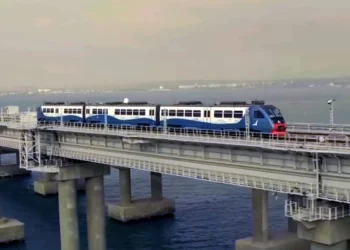
The Crimean Bridge connects the Crimean Peninsula to mainland Russia across the Kerch Strait in the Black Sea. (Photo credit: Wikipedia)
No category

Russia Reports Another Ukrainian Attack on Crimean Bridge

19 November 2026 [t_time:1795071295]
US President Donald Trump waves to the camera from a distance amid criticism of the Nobel Committee’s decision to award this year’s Peace Prize to Navi Pillay. (Photo credit: AFP)
World News

Trump Says He Would Still Have Gone to War with Iran Despite Political Costs

19 November 2026 [t_time:1795071119]
An Afghan family gathers inside their home as they share a modest meal amid ongoing humanitarian and economic challenges (Photo: IRC)
Afghanistan News

World Bank: More Than 15 Million People in Afghanistan Face Food Insecurity

18 November 2026 [t_time:1795015782]

Latest

Loading latest news...

Popular stories

  • An Afghan woman gazes out of her home, reflecting the isolation and challenges faced by women in Afghanistan under Taliban rule. (Photo Credit: 8am.media)

    UN Report Reveals Shifts in Family Attitudes and Rise in Domestic Violence in Afghanistan

    Share
    Share Tweet
  • Taliban Order Female Doctors to Have Male Guardians to Work With Male Colleagues

    Share
    Share Tweet
  • World News Day 2024: We need your help

    Share
    Share Tweet
  • Mullah Hibatullah Changes Kandahar’s Name to “Kandahar Sharif”

    Share
    Share Tweet
  • Turkey-Saudi Arabia-Pakistan Defence Agreement Takes Effect

    Share
    Share Tweet

Podcast

Insights
Insights

Join Lynne O’Donnell for 8AM’s podcast series, Insights.
Lynne talks with generals, diplomats, soldiers, journalists, politicians, activists, people who have front row seats for conflicts around the world, and citizens with a story to tell, happy or sad. For this first series, Afghanistan is the focus. Lynne and her guests talk about the collapse of the republic in August, 2021, and the impact since — for the people of Afghanistan, for the security of the region, for the safety of the world. It’s important, interesting and insightful.

Insights/22: Controlling the Narrative with Mina Sharif
byinsights8am

Controlling the Narrative

Lynne O’Donnell talks with Mina Sharif, author, activist, women’s rights campaigner, educator and mentor. They discuss who controls the narrative and who speaks for Afghanistan’s people when the Taliban appear to have seized control not only of the country but of the message, too.

Have a listen

Insights/22: Controlling the Narrative with Mina Sharif
Episode play icon
Insights/22: Controlling the Narrative with Mina Sharif
Episode Description
Episode play icon
Insights/21: Media Meltdown with Zahra Joya
Episode Description
Episode play icon
Insights/20: Terror Inc with Scott Richards
Episode Description
Episode play icon
Insights/19: Busting Stereotypes with Bushra Gohar
Episode Description
Episode play icon
Insights/18: Media Matters with Waliullah Rahmani
Episode Description
Episode play icon
Insights/17: What Goes Around Comes Around with Sima Samar
Episode Description
Search Results placeholder
Hasht-e Subh

8AM Media, also known as Hasht-e-Subh Daily, stands as Afghanistan's premier independent and non-profit newspaper, resonating as a beacon of journalistic integrity since its establishment in June 2007 by esteemed Afghan journalists and human rights advocates. With a steadfast commitment to citizen journalism and civic education, Hasht-e-Subh Daily has earned its place as the most esteemed publication in the nation.

Publisher: Sanjar Sohail
Email: [email protected]
Executive Director: Parwiz Kawa
Email: [email protected]

Read More

Shenzhen Summit: A Win or a Loss for Iran?

Polio-Free Afghanistan Calls for Cooperation to Eradicate Polio

Taliban Report Forced Return of 658 Migrants to Afghanistan

World Children’s Day: UNICEF Highlights Children’s Right to Education

Afghanistan Marks 80th Anniversary of UN Membership

Editor’s Choice

Every Saturday morning, 8AM MEDIA English Services Department will guide you through the week’s biggest stories from Afghanistan and the international community.

Subscribe

© 2026 - ©Hasht-e Subh Daily

No Result
View All Result
8am.Media
پښتو ویب‌پاڼه
ویب‌سایت فارسی
اۉزبېکچه ویب‌سایت
  • Home
  • News
    • Afghanistan News
    • World News
  • Opinion
    • Editorial
    • Analysis
  • Reports
    • Daily Reports
    • Investigative Reports
  • Society
    • The story of people
  • Women’s Word
  • Columns
    • Three Years After Afghanistan’s Fall: The Taliban’s Resurgence
    • Towards Equality
    • The Resurgence of the Taliban: Two Years Since Afghanistan’s Fall
    • Hebatullah Report Special Edition
    • Resistance for Education Special Edition
    • Special Column on Taliban’s Education Curriculum
    • Nawroz
  • Interviews
  • Contact Us
    • About Us
    • 8AM MEDIA Annual Awards
    • Submit an Article to Hasht-e-Subh
  • 8am.media

© 2026 - ©Hasht-e Subh Daily