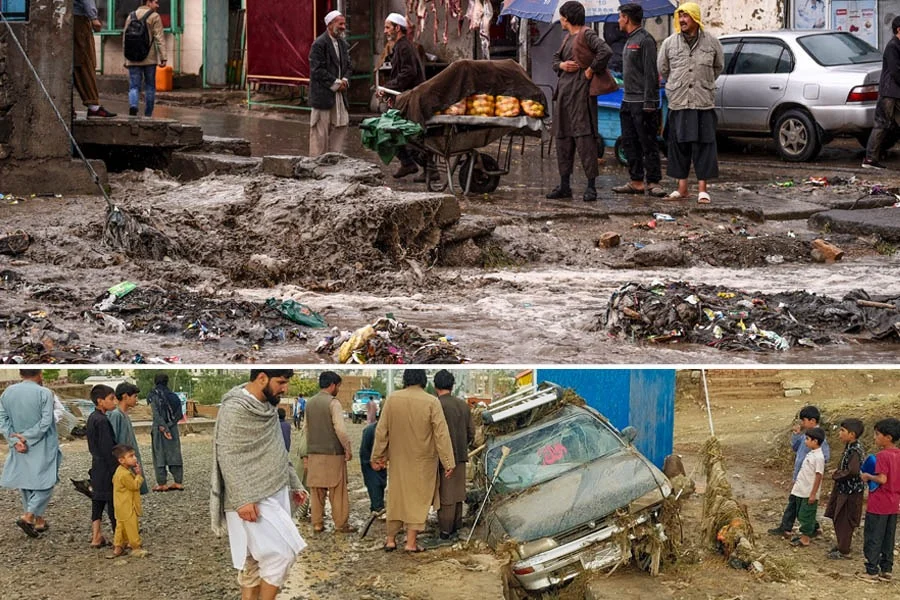
Autumn rains have begun in Kabul, and a number of residents in different parts of the city say they are worried that mud will worsen because of unfinished construction and development projects run by the Taliban municipality. They say the continuation of half-finished projects, the unchecked spread of construction, and the widespread destruction of roads and city thoroughfares have turned Kabul into a city full of dust on dry days and mud on rainy days, leaving residents to face growing difficulties in their daily commutes.
Omid (pseudonym), a resident of Kabul’s District 2, says unfinished projects, the unchecked expansion of construction, and the demolition that accompanies it have turned Kabul into a city filled with dust and mud. He says that with the arrival of autumn and consecutive rainfall, the situation is getting worse and adding to citizens’ difficulties in their daily travel.
He says: “The demolition of the city’s major roads and the dust it produces have made travel very difficult. While one project has not yet been completed and handed over for use, demolition work begins in another part of the city. If this situation continues during the cold season, along with consecutive rainfall, citizens will face even more problems when traveling to different parts of the city.”
Mozhgan, a resident of Barakai in Kabul, says that with autumn arriving and winter approaching, people’s concerns about the consequences of bridge and road construction, particularly the increase in mud, have grown.
She adds: “The Taliban begin construction or demolition of another road or bridge before completing one project. We spent the summer with the dust from these projects, and now, with the start of the rains, we are facing the problem of mud. With more rain and snow in winter, the amount of mud will increase.”
Tawab (pseudonym), a resident of the Chahar Rahi Shahid area of Kabul, says that since 2023, the slow pace of work and delays in completing some road construction projects have created numerous problems for people. According to him, weak project management and oversight, shortages of resources and funding, the low capacity of contracting companies, technical problems, and a lack of coordination among the responsible departments are the main causes of the slow progress of these projects. In addition, unfavorable weather and geographic difficulties also pose challenges to the implementation of some projects. He says: “The delay in completing road construction projects has had various consequences for citizens, from increased traffic congestion and longer travel times to pollution caused by dust and the emergence of health problems. This situation has also raised transportation costs, damaged vehicles, and disrupted the commercial activities of shopkeepers. Moreover, transporting patients and agricultural produce has become harder, and citizens’ access to educational and health services has also been restricted.”
Basir (pseudonym), a student at a private university, says the slow progress of road construction projects, particularly with the change of season and the onset of rainfall, has put citizens’ daily lives under serious strain. According to him, residents struggled with the dust from these projects during the summer, and now, with the start of the rains, they are dealing with mud.
He says: “When I reach class, I look as though I have come through muddy fields; my boots and clothes get completely dirty. In the last few days since the rains began, the situation in the Chahar Rahi Shahid area has become very bad. The Taliban started construction of an overpass in this area about two weeks ago, but now parts of the route are full of mud, and in some places there is standing water. This situation has made it hard for small and large vehicles to move and has caused many problems for drivers and citizens.”
The student adds: “Work on these projects began in the autumn season. Right now it is only raining, but when snow begins to fall, the situation will get worse. On the other hand, there are no proper sidewalks that people can use easily. As a result, travel on foot has also become difficult for pedestrians.”
This comes as local sources in western Kabul said in late April that work on the construction of the Naqqash to Omid-e Sabz Township road had made no significant progress after nine months. According to the sources, the completion deadline for the Naqqash to the Omid-e Sabz Township road project had been set at 14 months, but in the past nine months, even the excavation has not been finished.
You can read the Persian version of this report here:
با آغاز بارندهگیها؛ کابل در گلولای پروژههای ناتمام طالبان غرق میشود