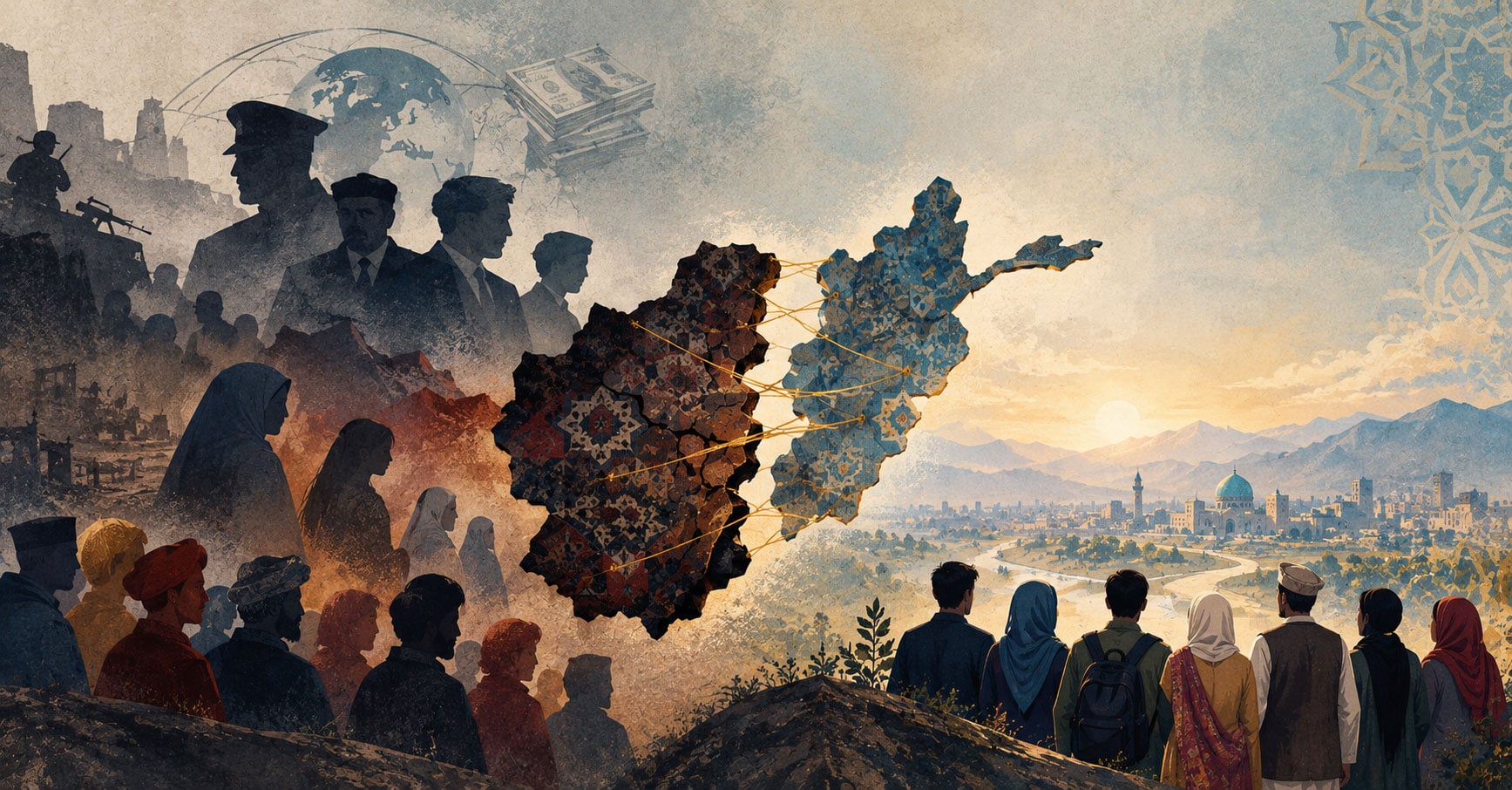
Whenever we try to explain Afghanistan’s political failures, we reach for the familiar set of explanations: decades of war, foreign interventions, fragile institutions, tribal and ethnic diversity and fragmentation, and authoritarian rulers who have squandered the public’s trust. None of these are untrue. But we rarely ask the more uncomfortable question: what in our everyday cultural norms and persistent political habits have produced, reproduced, and normalized these problematic realities, passing them quietly for generations?
The question is far from academic. For two decades, Afghanistan received vast international resources for nation-building, creating a modern state while fighting a war against the Taliban and their Al-Qaeda allies. Government ministries were rebuilt, elections were held, and a good constitution was drafted and ratified. However, in August 2021, after 20 years of US-led international engagement and more than two trillion dollars in mostly US military spending, the Islamic Republic of Afghanistan collapsed, and the Taliban returned to power.
Several critical features embedded in Afghanistan’s political culture, we suggest, are responsible for the repeated political crises and regime failures. These include personality-driven, self-serving politics rather than politics guided by values, principles, and programs; categorical claims of superiority, access to greater power and resources by rulers justified by instrumental abuses of religion and ideologies; accompanied by pervasive gendered disparities; and a chronic, debilitating dependence on external powers for political, economic, and security support, a pattern that dates back to Afghanistan’s creation as a buffer state in the late 19th century.
These challenging normative elements woven into the fabric of Afghanistan’s society and culture have shaped how power and resources are managed and mismanaged time and again with the same disastrous political consequences. Outside powers have repeatedly relied on a narrow circle of self-serving local power brokers, who used that backing to entrench themselves as autocratic rulers. Such shrewdness and prejudiced policies and practices against others have transformed existing social differences into articulated social fragmentation and violence. Misconceived and disastrously deployed Marxist and Islamist ideologies to justify terrorizing opponents, denying women their human rights, and imposing gender apartheid by the Taliban regime are the most egregious impacts of Afghanistan’s disturbing political culture. The most harmful outcome of such conduct,t however, has been a pervasive crisis of trust in the country.
The results of these distressing norms and habits are not left behind when people are forced to leave Afghanistan. Indeed, the same mindsets now shape diaspora organizations, opposition movements, and the outlook of new generations, inside and outside the country. For example:
- Politics of patronage without accountability. Allegiance to individual leaders based on patronage, not adherence to principles, ideas, merit, or institutional programs, persists. The leader eclipses whatever cause he or she claims to represent, and any criticism of them is considered betrayal. Only opponents are deemed nepotistic, corrupt, or self-serving.
- Once a leader, always part of coalitions. Afghan political figures, appointed or selected, rarely step down, retire, or quit even after many failures. Many exiled officials of the failed Republic are now leading opposition groups, making fragile coalitions frequently fall apart.
- Zero-sum politics and zero tolerance of criticism. Politics and economics of exclusion, winners take all, resulting in the politicization of ethnic, linguistic,c and religious identities. Any criticism means disloyalty, producing a culture of silence and obstinacy.
- Seeking foreign patrons and blaming outsiders for all failures. With rare exceptions, aspiring rulers pursue foreign patrons–money, weapons, security, and legitimacy. When found results in building a domestic patronage network, not cultivating popular support. The cost of this habit to the nation has been devastating. Governments that depend on outside support become accountable to their foreign backers rather than to their own people, treating citizens as subjects (ra’yat, taba’a) rather than as rights-bearing members of the nation. Many opposition groups in exile still measure their standing by their access to foreign capitals rather than seeking to gain the trust and support of the people they claim to represent. Legitimacy granted from outside, however, is flimsy, disappearing the moment foreign priorities change, as events of August 2021 made painfully clear. Paradoxically but not surprisingly, the collapse of the Republic is blamed on external decisions: the Doha agreement, the role of regional actors, and the withdrawal of international forces. But external factors, however valid, cannot tell the whole story.
- Immaculate politics of impunity for crimes and abuses. Afghanistan has never seriously reckoned with the crimes committed during its decades of war and misrule. Young Afghans are now asked to support leaders who have never answered for past wrongs, and the lesson presumably they learn is that power justifies everything.
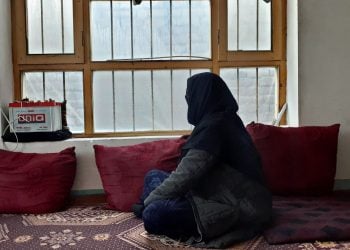
- The exclusion of women culminated in the Taliban’s gender apartheid. Even during the twenty years of real progress, Afghan women were largely kept away from political decision-making. An Oxfam review found they were present in only 15 of 67 rounds of peace talks between 2005 and 2020. Under the Taliban, that marginalization has hardened into what UN experts and Afghan women’s rights advocates call gender apartheid, a system that bars women from education above 6th grade, work, and public life. Yet this did not begin with the Taliban. It is the most extreme expression of a political culture that has long treated politics as male prerogative and allowed women to participate only on terms set by men.
- Politicization and polarization of ethnic identities, large and small. Ethnic and religious-sectarian representation in governments has too often been symbolic or as tokens. Diaspora movements frequently reproduce the same hierarchies in an even more extreme form, especially through the hostile ethnic rhetoric that fills online spaces. The old divisions are not merely preserved but intensified and passed on to new generations. This is at a time when the educated youth are seeking a different Afghanistan– a genuinely inclusive, empowered citizen-centered nation.
These disturbing facts oblige us to reconsider what the demand for unity by the international community, especially among the opposition groups, means and whether and how it could be obtained. Unity cannot mean silence, impose consensus, shield or reward former officials from scrutiny and blame. A healthier political culture–one centered on shared values and principles of equal citizenship, inclusive access to power and resources based on merit, not membership in a particular identity group including gender, respect for Islamic ethical values that are consistent with universal human rights, working collectively for national self-reliance and reducing dependency on outside powers–would allow us to negotiate over roadmaps, plans and programs for ending endless cycles of political chaos, instability, proxy wars and violence. A political culture enabling us to disagree without accusation of mutual betrayal and suspicion of disloyalty. It would treat compromise in methods, not principles, as an ordinary instrument of politics, not weakness, and hold allies to the same standards we apply to our adversaries.
Pervasive poverty, violence, and chronic instability generated by dependent dictatorial regimes cannot be understood apart from Afghanistan’s historically reproduced problematic political culture. Afghanistan’s foreign-dependent regimes have been governed by “rulers’ law” and not the “rule of law,” where power is conceived as private property, leaders demand unquestioned loyalty for patronage, opponents are presumed to be enemies, criticism is mistaken for hostility, and unity is confused with uniformity.
If Afghanistan’s political history offers any lessons, it is to re-examine and transform our problematic political culture so we can try to build a more just and resilient political community. A political system based on ethnic and gender inclusivity, equity, and mutual respect. To achieve such a feat, at a minimum, we must learn to agree to disagree without destroying one another. A transformed political culture and society that could turn all forms of challenges, domestic and foreign, into welcomed opportunities.
About the authors:
Hasina Jalal, Ph.D. Candidate in Public and International Affairs at the University of Pittsburgh; Lecturer at The New School and Duquesne University.
Dr. Nazif Shahrani, Professor Emeritus of Anthropology, Central Asian and Islamic Studies, Indiana University Bloomington.