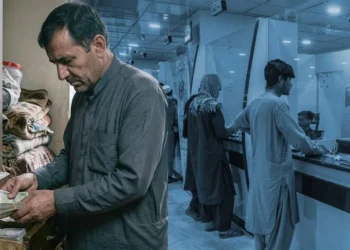
The Taliban, by imposing a nationwide shutdown of internet and telecommunications services in Afghanistan, have driven the final nail into the coffin of individual freedoms, development, and people’s connection with the outside world. Opponents of the Taliban and other citizens of the country have said that this move has not only dragged Afghanistan into absolute isolation in the 21st century, but has also thrown the daily lives of millions into crisis. The United Nations, Amnesty International, media organizations, and human rights groups have stressed that this decision has paralyzed educational, medical, banking, and relief services, silenced the people’s voices, and further worsened the ongoing humanitarian crisis in the country. The UN Assistance Mission in Afghanistan (UNAMA) has warned that the internet shutdown puts thousands of earthquake victims and returnees from neighboring countries at risk of hunger and health problems.
At the same time, Afghanistan citizens living abroad have described this Taliban action as “forced isolation.” According to them, the Taliban are not only unaccountable but also, through such decisions, attempt to gain full control over the minds, lives, and existence of the people. Users have said that Afghanistan has now become more than ever “a silent and dark prison” for its citizens. Some emphasize that backwardness and hostility to modern values are rooted in Taliban ideology and that no lobbying efforts can beautify the image of this group.
The shutdown of internet and telecommunications services has severed the connection of the people of Afghanistan with the world, and for more than two days, no type of communication or information from inside the country has been available. This Taliban measure has sparked widespread reactions.
UNAMA, in a statement, has said that the Taliban must immediately restore nationwide access to the internet and telecommunications services. UNAMA stressed that the shutdown has virtually cut Afghanistan off from the outside world and carries the risk of inflicting serious harm on the population, undermining economic stability, and exacerbating one of the world’s worst humanitarian crises.
The mission has warned that the banking and financial system has been disrupted, women and girls’ access to health and education services has been further restricted, families have lost the ability to transfer money to one another, and several sectors have been severely affected. UNAMA added that this decision has gravely limited freedom of expression and access to information.
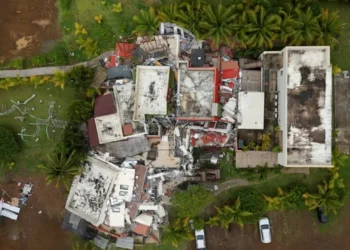
According to UNAMA, the shutdown comes at a time when Afghanistan has been hit by powerful earthquakes in the east of the country, with women and girls making up more than half of the victims. Alongside this crisis, the mass forced return of migrants from neighboring countries continues. The mission said that cutting access to telecommunications services in such sensitive conditions places lives at serious risk.
Amnesty International has likewise warned that the Taliban’s nationwide internet blackout in Afghanistan has dire economic and humanitarian consequences and that full access must be restored immediately.
Smriti Singh, Amnesty International’s South Asia Regional Director, stated that the internet blackout is a reckless act that has disrupted humanitarian aid delivery, access to medical care, and education. She added that restricting the flow of information allows the world to remain unaware of human rights violations in Afghanistan. Singh emphasized that the internet is vital for educating girls who are barred from studying beyond the primary level, and this blackout undermines their ability to learn.
Reactions of Taliban Political and Military Opponents
The Afghanistan Freedom Front (AFF), in response to the Taliban’s internet shutdown, described the move as “cutting Afghanistan off from the world” and “a major insult to the collective intelligence and awareness of citizens.” The front stated in a declaration that by cutting the internet, the Taliban have disrupted people’s access to education, information, medical services, economic resources, banking networks, and even daily communication, turning Afghanistan into a “silent and dark prison.”
The statement added: “The internet shutdown not only practically isolates Afghanistan from the world but also reflects the Taliban’s conscious effort to close even the smallest window for awareness, protest, and social organization.”
According to the Afghanistan Freedom Front (AFF), in the absence of the internet, thousands of businesses will shut down, service cycles will collapse, and millions will lose their jobs. The statement further said: “Afghanistan under Taliban rule has become a haven for terrorists and a black hole of despair for ordinary people. The Taliban’s decision to cut off the internet is a combination of incompetence, fear of public awareness, and internal disputes within the group over power and wealth.”
Similarly, the Coordination Council of Afghanistan’s Political and Consular Missions, reacting to the nationwide cutoff of internet and telecommunication services, declared that this action constitutes “collective punishment of the people of Afghanistan and a direct assault on human dignity and freedom.” The council added that the Taliban have dragged Afghanistan into complete isolation.
In a statement released on Tuesday, the council emphasized: “The severing of all contact and communication between the people of Afghanistan and the international community has further isolated the country and aggravated severe humanitarian and human rights crises.” The council also noted that silencing the people leads to a muted society, paralyzed businesses, and millions of boys and girls being deprived of education and global connection.
Meanwhile, Rahmatullah Nabil, former Director-General of Afghanistan’s National Directorate of Security (NDS), described the nationwide internet and telecommunications shutdown as part of the Taliban’s strategy to preserve power. Writing on X, he said: “Silencing the people is one of the Taliban’s enduring methods of consolidating power.” Nabil added: “Wherever religion and ideology become instruments of dominance and rule, the suppression of freedoms and silencing of people turn into a permanent and unending principle for maintaining power.”
Naseer Ahmad Faiq, Acting Permanent Representative of Afghanistan to the United Nations, said that the Taliban’s internet shutdown aims to suppress the voices of millions of citizens, block online education, conceal the group’s crimes, and isolate a nation from the world. He said that cutting off a nation’s communication represents blatant misuse of international aid to Afghanistan and is a clear example of authoritarian action. Faiq stressed that the international community must not remain silent in the face of this situation.
Reactions of Media Support Organizations
The Center for Media Freedom, reacting to the Taliban’s internet shutdown, announced that it has lost communication with journalists inside the country. This media advocacy body urged the international community to support the right of Afghanistan’s citizens to access information and to take immediate steps to end this censorship. According to the center, by deliberately shutting down the internet, the Taliban have silenced dissent and isolated millions of citizens.
The group expressed concern that domestic media outlets’ online activities have halted, while exiled media face difficulties in accessing reliable sources, stressing that the internet blackout has severely undermined journalists’ ability to cover events.
Its statement said: “This extensive censorship is not merely a restriction of access but a direct assault on fundamental freedoms. The internet shutdown gravely undermines freedom of expression, press freedom, and the right to information.”
Meanwhile, Azizullah Aryanfar, a writer, wrote that: “The internet shutdown is a political and strategic decision that signifies a complete regression from the civilized world, a break from the international community, and absolute silencing of the people. This action may also signal anxiety and instability, the full extent of which is not yet clear.”
At the same time, residents of border provinces have traveled to zero-point border areas to access internet services from neighboring countries to communicate with friends and families abroad.
Social media users and Afghanistan analysts, referring to massive economic losses and the country’s disconnection from the world, have shared varied views. The majority have expressed their emotions by using the phrase “Offline Afghanistan” to describe their separation from family and friends inside the country, and have voiced concern over the continuation of this situation. Many have called for the immediate restoration of the internet and an end to this “forced isolation.”
With the shutdown of internet services, the Torkham crossing has also been closed, and international flights to Kabul Airport have been suspended. This has left hundreds of passengers stranded in Dubai and other countries, awaiting the lifting of restrictions to resume flights and return to their homes. Sources have reported that the absence of the internet has disrupted the processing of documents and coordination of flights, paralyzing air services.
You can read the Persian version of this report here:
«افغانستان آفلاین»: طالبان با قطع سراسری انترنت، کشور را به زندان خاموش تبدیل کردهاند