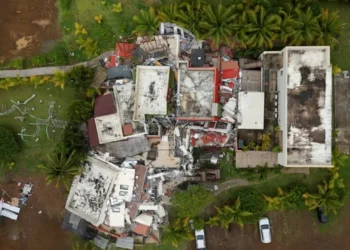
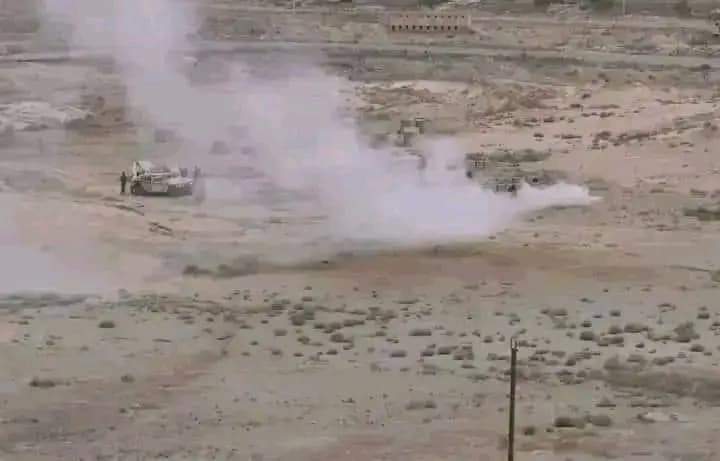
Yesterday, the people of Sepira and Barmal districts in the provinces of Paktika and Khost commenced a Ramadan morning with the sound of Pakistani aircraft and explosions resulting from drone strikes. This attack is said to be in response to a Taliban provocation on a Pakistani security forces outpost in Khyber Pakhtunkhwa. Just two days before this Pakistani airstrike on Afghan soil, a vehicle laden with explosives struck a wall of a Pakistani security forces outpost in North Waziristan and detonated. The blast demolished the outpost’s wall and breached its defenses. Subsequently, six assailants infiltrated the outpost and engaged with the stationed forces. The Pakistani military announced that five Pakistani soldiers were killed in the explosion from the vehicle-borne improvised explosive device (VBIED) and two more soldiers in the ensuing firefight with the six assailants, all of whom were neutralized by Pakistani forces. The following day, Asif Ali Zardari, the newly elected President of Pakistan, attended the funeral ceremony of these soldiers, carrying their coffins on his shoulders and vowing revenge. On Tuesday morning, January 18th, Pakistan’s aerial bombardment of Afghan soil in Paktika and Khost provinces began. Therefore, Pakistan’s incursion into Afghan territory could be seen as Islamabad’s retaliatory strike against the TTP.
On the one hand, shortly after the attack on the Mir Ali outpost in North Waziristan, the group led by Hafiz Gul Bahadur, one of the commanders of the Pakistani Taliban (TTP) reportedly based in Afghanistan, claimed responsibility for this attack. The Pakistani army also announced yesterday that they had targeted the Abdullah Shah base, another TTP commander. Local sources have confirmed to the media that some members of the TTP group have been killed in Pakistan’s attacks. Consequently, the suspicion of retaliatory motives behind Pakistan’s attacks is further reinforced. The question, however, arises as to why the Pakistani government allows itself to violate the territorial integrity of another country and deploy its military aircraft into the territory of another country to conduct its attacks. Why doesn’t Pakistan combat the Pakistani Taliban insurgency within its borders? And is there any evidence of Afghan Taliban involvement in terrorist attacks against Pakistani security forces?
Pakistan has been one of the influential countries shaping Afghanistan’s destiny in the past half-century. This influence stems from providing refuge, nurturing, and equipping anti-government forces stationed in Afghanistan within its territory. This trend began during the time of Muhammad Daoud Khan and intensified during the rule of the Mujahideen. The forces were later known as the “Mujahideen” and the seven-party alliances were nurtured within Pakistan. The Pakistani military had a hand in guiding these jihadist forces. When the jihadist forces (Mujahideen) succeeded in defeating the government backed by the Soviet Union and came to power, Pakistan, in turn, nurtured and equipped the anti-government forces of the Mujahideen: the Taliban. The Taliban are so intertwined with the Pakistani military and government that even border skirmishes and verbal tensions between this group and Islamabad imply efforts to consolidate the Taliban’s independence from Pakistan. However, such efforts have not succeeded in elevating the Taliban from a proxy of Pakistan to an independent and national group.
Consequently, with the resurgence of the Taliban in Afghanistan, Pakistani authorities celebrated and welcomed it. Subsequently, they began lobbying in favor of this group and acted as its spokespersons and guardians of its interests as long as they could. However, this situation was not sustainable, and conditions soon changed. Now, genuinely or ostensibly, relations between the two sides are not warm. On the one hand, after the fall of the republic in Afghanistan, various terrorist groups have found refuge under the Taliban’s umbrella, with the Pakistani Taliban (TTP) being one of those groups. The Pakistani government, which considers the TTP a terrorist group, has been engaged in a heated war with this group in recent years. Now that the TTP has established itself in Afghanistan, Islamabad accuses the Afghan Taliban of supporting this group and has repeatedly asked them to surrender the leaders of this group to Islamabad. However, the Afghan Taliban have refused. As the recent wave of TTP attacks on Pakistani security forces has intensified, Islamabad has further intensified its accusations against the Afghan Taliban.
One of these accusations is that the Pakistani Taliban acts as a proxy force for the Afghan Taliban. Yesterday, the Pakistani Ministry of Foreign Affairs, in a statement regarding the country’s attacks on Afghan soil, stated that Islamabad respects the territorial integrity of Afghanistan, but some circles within the Taliban use the TTP as their proxy forces in the war against Pakistan. However, such justifications for violating Afghanistan’s sovereignty are unfounded. By sending fighter jets into Afghan territory, Islamabad demonstrates that it considers Afghanistan as its open territory governed by its proxy forces (the Afghan Taliban). If the argument is about the proxy nature of the TTP, it is merely a facade. The Afghan Taliban does not have a war with the Pakistani government to needs to use the TTP as a proxy force. Even if they had a reason for such a war, they are aware of their military and economic limitations and understand their weaknesses. Therefore, if Pakistan violates Afghanistan’s territorial integrity, it is because there is no national government in Afghanistan, and Islamabad considers this country as its open territory, giving itself the right to fly its aircraft there and suppress its enemies.
Another accusation leveled by Islamabad is the allegation of the TTP receiving money from India through “Afghan authorities.” These Afghan authorities, whom Pakistan has not named until now, cannot be anyone other than the Taliban. By attacking Afghan soil, the Pakistani military may be attempting to send a message to Delhi and warn it that it does not joke about supporters of the TTP. The reason why Pakistan cannot directly send such a message to Delhi is due to India’s military and economic power. Pakistan has no chance against India, and the Pakistani government and military are well aware of this. Therefore, it attacks the defenseless and weak country of Afghanistan to show that it is not reckless against TTP attacks and their supporters. Pakistan knows that even if the Taliban in Afghanistan wanted to, they still do not have sufficient military power to counter it equally and cannot fly their fighter jets. Therefore, there are two reasons behind Pakistan’s attack on Afghan soil. The first reason is that there is no national government in Afghanistan to defend its territorial integrity. On this basis, Pakistan considers it its open territory and grants itself the right to fly its jets there and suppress its enemies. The second reason is the weakness of Afghanistan. Even if the Taliban’s support for the TTP is not real, Pakistan fires its rockets to broadcast its messages to other parts of the world.
The reason why Pakistan does not fight the TTP within its territory stems from the country’s experience in combating a terrorist group. The Afghan Taliban, as a terrorist group, found refuge and support within Pakistani territory, just as today the Pakistani Taliban find refuge and support within Afghan soil. The government of the Islamic Republic of Afghanistan fought against the Taliban for half a decade but ultimately faced defeat. One significant reason for the Afghan government’s inability to suppress the Taliban was the sanctuary these groups enjoyed in Pakistani territory. The Afghan government lacked sufficient military power to target its enemies on the soil of another country, unlike Islamabad. Consequently, it had to confront its enemies within Afghan territory. However, the Taliban always had a place to regroup. Whenever they were suppressed to some extent, they would retreat, regroup, and return with more equipment. Now, the Pakistani military, utilizing this experience, realizes the difficulty of fighting a group that finds refuge and support in another country. Islamabad is fighting the TTP on Afghan soil essentially to compel the Taliban to suppress this group and deliver its leaders to Pakistan, or at least return them to the negotiating table. The Pakistani military understands that if the TTP continues to receive support and sanctuary, it will not be easily defeated. Therefore, rather than directly targeting the core of the TTP, Pakistan targets its sanctuary.
The final question is whether the footprint of the Afghan Taliban is evident in TTP attacks. The answer is affirmative. The UN Security Council’s report indicates the presence of the TTP in Afghanistan under Taliban control. Additionally, based on this report, some elements of the Afghan Taliban enter Pakistani territory to aid their brethren (the Pakistani Taliban) in their war against Islamabad. For instance, Barri, a suicide attacker who targeted Pakistani military personnel in Dehra Ismail Khan Khairpkhwa, was a member of the Afghan Taliban and a resident of Helmand.
Furthermore, the modus operandi of TTP attacks is entirely consistent with that of the Afghan Taliban’s attacks against the Afghan government, reinforcing the speculation that the planners of Afghan Taliban attacks consult with the TTP. The division of the TTP into smaller groups to make quicker decisions and conduct surprise attacks resembles the military organization of the Afghan Taliban. Suicide attacks, previously initiated by the Afghan Taliban, are now executed by the TTP. The attack on March 16 in Mir Ali, North Waziristan, is an example of this. All these factors indicate the footprint of the Afghan Taliban behind TTP attacks. Therefore, even if the overarching policy of the Taliban is to avoid confrontation with Pakistan, or they have no reason to engage, there are elements within this group who see themselves in a state of war.