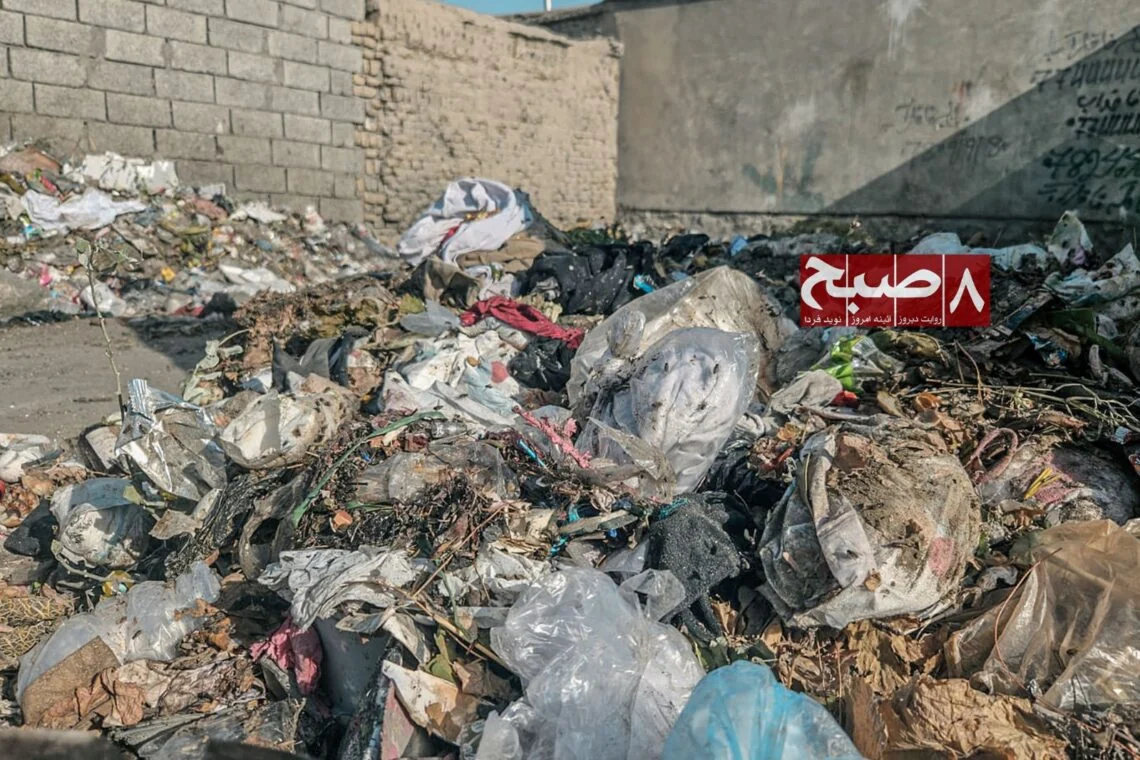
Several Kabul residents have expressed concern about the growing use of plastic bags and are calling for door-to-door awareness programs and practical measures to reduce their consumption. They say the low price and easy availability of plastic bags, along with the lack of suitable alternatives, have kept their use widespread. They add that many plastic bags are discarded in the environment after a single use, polluting the land and water. According to them, awareness campaigns through television, radio, mosques and city banners should continue, but awareness alone is not enough to reduce plastic consumption, and the production and import of plastic bags must also be restricted.
Alim, a Kabul resident, says the use of plastic bags has spread across different areas of people’s daily lives, and that action must be taken to reduce it. He adds that although replacing plastic bags in Afghanistan will take time, it is not impossible.
This Kabul resident says: “Plastic bags are seen everywhere, because factories producing them are now active inside Afghanistan as well. Even bakeries use plastic bags, although everyone knows how harmful they are and that they spoil the bread too. I am aware of the harm of plastic myself, and when I go to the market, I take a cloth bag with me. But people rarely use cloth or paper bags. Almost everything has become plastic, and it does not look promising that a suitable alternative will replace it any time soon.”
Shakib, another Kabul resident, says that several programs to reduce the use of plastic bags have been launched in the past by young people and various organizations, but these programs have not produced the desired results. He adds that alongside awareness-raising, the supply of plastic bags in the market must also be restricted so that people turn more to alternative options.
This Kabul resident says: “The media and social networks should play a greater role in raising awareness. The campaigns launched in the past were not very effective because plastic bags were still available in the market. People care more about money than about their health, and they do not think about the long-term consequences. For this reason, this trend continues.”
Sami, another Kabul resident, says that despite people’s awareness of the harmful consequences of plastic materials, their use remains widespread in the city. He considers the low price of plastic bags and the lack of accessible alternatives to be the main reasons for their continued use. He calls for controls on the production and supply of plastic bags in the market and for encouraging people to use cloth and paper bags.
Sami says: “People know how problematic plastic is, but because plastic bags are cheap, they still use them. If their production and supply in the market are controlled, people will be forced to use alternative options.”
Sikandar, another Kabul resident, says he has not so far witnessed any large-scale, physical campaigns in the city to reduce the use of plastic bags. He adds that most awareness programs on this issue are carried out on social media, particularly Facebook, and that fewer practical activities are seen across the city.
Sikandar says: “Plastic is harmful, and using it causes filth and pollution in the environment, but many people cannot afford to buy paper or cloth bags. In my opinion, one solution is to use alternative options for packaging goods and to set plastic aside as much as possible. Some people prefer black bags, but this type of bag can also be problematic for the environment.”
Hassan, another Kabul resident, says that no serious and effective action has so far been taken to prevent the use of plastic bags. He adds that using plastic bags to carry hot bread has long been common in Afghanistan and continues in many bakeries.
He says: “It has been common in Afghanistan for some time to put hot bread inside plastic bags, and this practice continues now as well. In some bakeries, warnings are given about the harms of plastic, but the use of plastic bags is still more common.”
Meanwhile, a number of environmental experts say that the lack of effective plastic waste management and the increasing use of single-use bags have heightened environmental risks in Afghanistan.
Kazem Homayoun, an environmental expert, says that a large part of plastic waste, after being collected, is buried or left in the environment without proper sorting and recycling, and because it does not decompose, it remains in nature for a long time. He stresses that to reduce this problem, restrictions must be placed on the production and import of plastic bags, alongside awareness-raising.
Homayoun says: “Plastic waste management in Afghanistan is still at a basic level. In the past, most waste was organic matter and decomposed after being buried, but now plastic waste is also buried alongside other waste and remains in the environment for many years. Several years ago, according to a report I received from the Kabul Municipality’s Cleaning Department, about 4,400 tons of waste were produced daily, of which only a part was collected, and the rest remained in the environment. However, it was not clear what share of this waste was made up of plastic bags.”
Homayoun stresses that to reduce the use of single-use bags, awareness-raising alone is not enough, and a set of legal, economic and educational measures must be undertaken.
Sayed Mohammad Sulaimankhil, another environmental expert, considers the widespread and excessive use of plastic bags in Afghanistan’s cities to be a serious environmental challenge. He says that the use of plastic, particularly low-quality bags, has not only environmental consequences but can also carry economic and social consequences.
This expert says: “One of the major environmental challenges is the widespread use of plastic in Afghanistan’s cities. People sometimes unconsciously use plastic, particularly low-quality plastic, for carrying goods and for other purposes. We may use a plastic bag for only half an hour, but that same bag can remain in the environment for hundreds of years. This shows how our behavior today can affect the environment and the lives of future generations.”
According to published statistics, thousands of tons of waste are produced daily in Kabul. However, reliable and up-to-date statistics are needed to state the exact share of plastic in this total waste. Single-use bags, bottles, and plastic containers are among the items seen in urban waste after use.
The United Nations (UN) has also previously announced that hundreds of millions of tons of plastic are produced annually in the world. The increase in plastic production and consumption, together with weak waste management, is considered one of the major environmental challenges worldwide.
You can read the Persian version of this report here:
خریطههای پلاستیکی؛ عرضه بیرویه و نگرانیها از پیامدهای زیستمحیطی