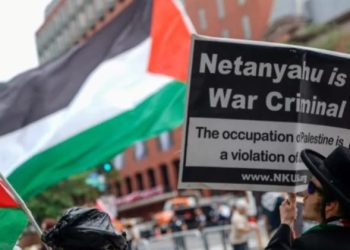
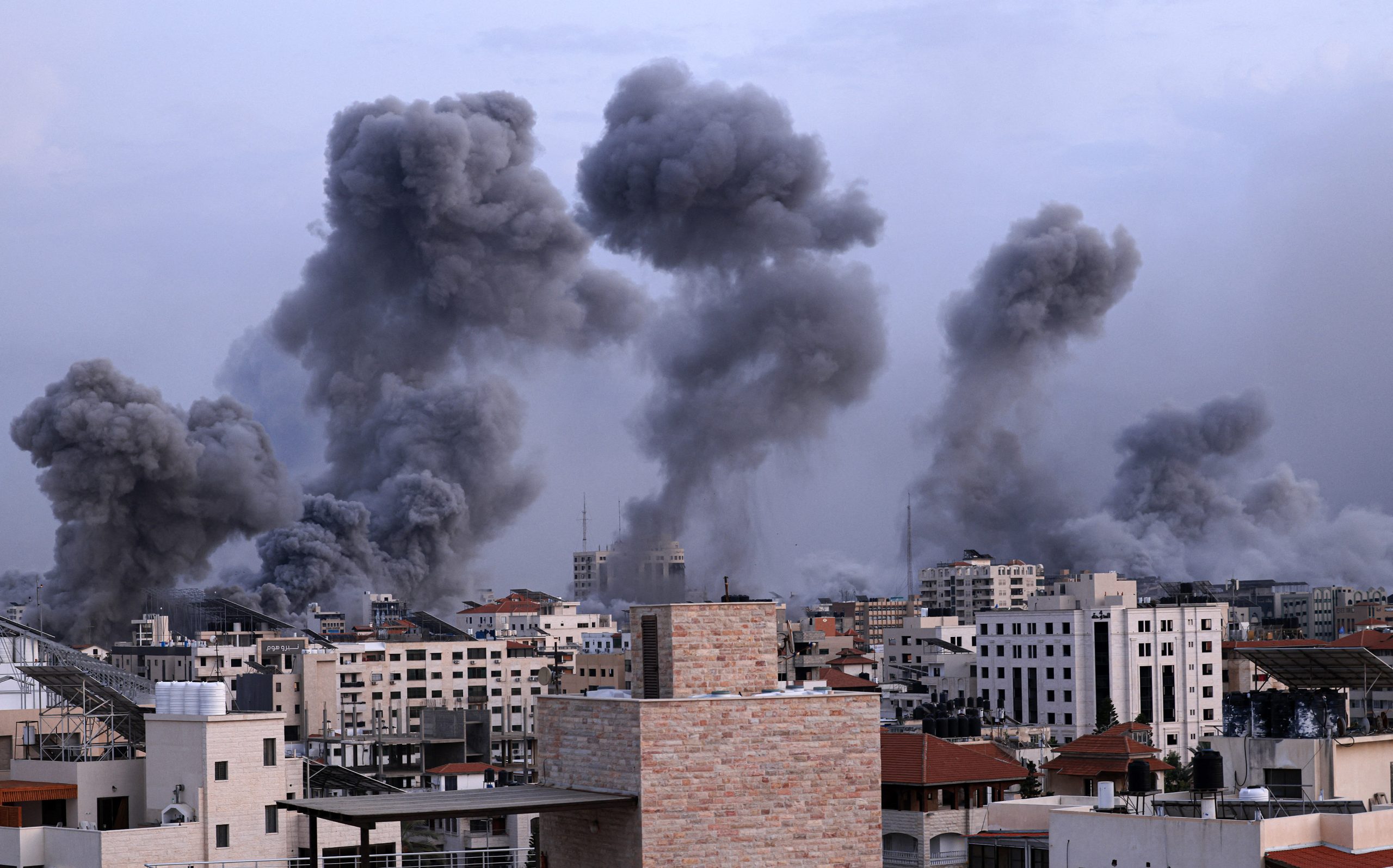
The October 7th attack by the Hamas group on Israel deemed a terrorist and inhumane act by Israel and Western nations, has not only sparked controversy among politicians, theorists, and media but has also unveiled the ignorance of Israel’s intelligence and special operations agency and its government. Beneath the veil of the region’s largest intelligence organization and the Middle East’s nuclear power, the largest military attack from land, sea, and air by a known enemy unfolds, yet Israel remains oblivious. Whatever the outcome of this war, it is perceived as a political defeat for Netanyahu and his government. The reasons behind it are evident to experts and are elaborated upon without hesitation. However, Hamas will also face serious consequences. By executing the October 7th attack, Hamas has trampled upon all international human rights documents and deprived dozens of Israeli civilians of their right to life.
The Hamas-Israel war is sometimes much more perplexing than media discussions and social media platforms. Describing it requires expertise rather than just firsthand information. In international relations, there is a paradigm known as Realism. Theorists of this intellectual strand believe that the survival principle is the ultimate goal for states. Since both sides of the war chant the slogan of destruction, it seems that this war is designated for both survival and existence. Understanding this matter is not very difficult with the help of international relations knowledge. Still, considering the unpredictability of international relations phenomena, the complexities of regional and global political issues, the unpredictability of political leaders’ actions psychologically, interested parties involved in the war, the visible and hidden aspects, non-regional roots of the war, and the dire security conditions in the Middle East, among other reasons, accurately delineating its outlook for the coming months to gain a proper understanding of this war seems challenging. Nevertheless, describing and analyzing the possible outcomes is feasible and achievable. The purpose of this writing is to formulate and analyze possible scenarios of the Hamas-Israel war. In other words, this analysis aims to answer the question: What outcome awaits the Hamas-Israel war?
I have been continuously and systematically tracking this war from day first. I have reviewed statements of influential figures in the war and available news, analyses, and related articles. With the help of data and international relations knowledge, I consider the following scenario as one of the possible conclusions of this war. It is worth mentioning that there is no precedence or preference in categorizing the scenarios.
Permanent Ceasefire
A universal unwritten rule has always existed in state relations; every battle ultimately concludes with a ceasefire or other forms of cessation. If the fate of this war remains uncertain in the coming months, both militarily and politically, it will impose heavy and costly burdens on Netanyahu and his cabinet, while Hamas and Gaza have been in peril and playing with fire since the outset of the October 7th attack. If the war continues, probably, Israel’s inability to free hostages from Hamas and the increase in Israeli military casualties will lead to public dissatisfaction in Israel and globally, potentially fueling civil unrest against Israel and even pressure from political opponents of Netanyahu and America (although as of writing this article, there has been no change in the tone of American politicians, especially Biden’s stance on the destruction of Hamas). Consequently, the Tel Aviv government may opt for a permanent ceasefire. However, a permanent ceasefire would be much more delightful and rewarding for Hamas leaders in proportion to the continuation of the war, and they have already conveyed the message of ceasefire to all actors beforehand.
Continuation of the battle until the surrender or destruction of Hamas
Considering the war objectives set by the Israeli government under Netanyahu’s leadership (the surrender or destruction of Hamas, the release of hostages, and the demilitarization of Gaza to pose no threat to Israel) and the determination of Israel’s international allies, especially the United States, the weakness of the resistance axis against Israel (referring to Iran’s proxy groups in the region known as the resistance axis), and Iran’s adoption of a strategic patience policy (Iran deliberately chose this policy against Israel’s policy of the chain reaction), and unless Israel is prepared for a ceasefire under no circumstances as it has not been prepared so far, achieving this, although seemingly difficult and costly, is not unrealistic. Although it is assumed that Israel aims for the destruction of Hamas to weaken it maximally rather than its literal destruction and to establish a maximum deterrent.
Consolidation of Maximum Deterrence by Israel and Tactical Retreat from Gaza
Since 2011, Israel has carried out extensive attacks on positions affiliated with Iranian proxies and the Iranian Revolutionary Guards Corps (IRGC) in Syria and other regions. This has been aimed at weakening armed groups associated with Iran and, consequently, weakening Iran’s influence in the region and establishing maximum deterrence. It is possible that with the weakening of Hamas to a maximum extent in Gaza, Israel may tactically retreat from Gaza in several stages. In this case, it is envisaged that this war could last for months, as Netanyahu, in particular, has repeatedly emphasized the lengthiness of the war.
Expansion of the War to the Region
One weak scenario of the Hamas-Israel war is its expansion to the region, as neither the United States seeks to open another front besides the Russia-Ukraine war nor does Iran desire the escalation of the Hamas-Israel conflict. Both Iranian and American officials have repeatedly admitted that they do not seek direct war with each other, although Israel, by adopting a chain reaction policy, is attempting to provoke Iran into a serious response against itself to persuade the United States to militarily strike Iran. Killing high-ranking officers of the IRGC in Syria and killing 11 more officers of the IRGC serve this purpose. However, the United States has taken actions to prevent the escalation of the Hamas-Israel war, including notifying Iran not to create another front through its proxy Hezbollah or other proxy groups via Qatar, forming an international coalition for the security of maritime traffic in the Red Sea, and attacking the positions of Iran’s proxy groups in the region. It seems that even considering the killing of three American soldiers in Jordan and the emphasis of the U.S. president on a decisive response, the United States is not seeking direct war with Iran. As the defense minister of that country has stated, their country does not seek war with Iran. Although this possibility is not very strong, it is still predictable.
Israel’s Acceptance of the Two-State Solution Plan
The global community, including the United States, Britain, the European Union, Arab countries, and the United Nations, except Israel and Iran, support the establishment of two independent states, Israeli and Palestinian. For the first time since Hamas’s attack on Israel and Israel’s counterattack against Hamas, Iran has also brought up the plan to establish two states. It seems improbable that the Israeli government would approve a plan endorsed by the United Nations; however, this issue has two problems. First, it is not clear whether Iran would agree to this plan or not because Iran’s disagreement with the plan signifies the continuation of Israel’s insecurity and war in the region. Second, if the war does not end before the U.S. presidential elections and Trump manages to return to the presidency for a second term, the plan will fail because Donald Trump does not support the two-state plan except for Israel and himself. There have been discussions about the formal recognition of the Palestinian state by the United States in political forums and media outlets. If true, it appears that Israel has no choice but to agree to the formation of a Palestinian state.
Israeli Control of Gaza after Weakening Hamas to the Maximum Extent
This action is not unprecedented. Israel has taken such measures before to expand settlements. The official and international border of Israel was previously defined by a United Nations Security Council resolution in 1967, but since then, Israel has expanded its territory through the use of force, contrary to all principles and rules of international law. The global community’s observations of Israel’s coercion tactics, aimed at forcing compliance with the UN reconciliation plan and its disproportionate actions against the people of Gaza, have emboldened the country. This possibility does not seem very strong or impartial.