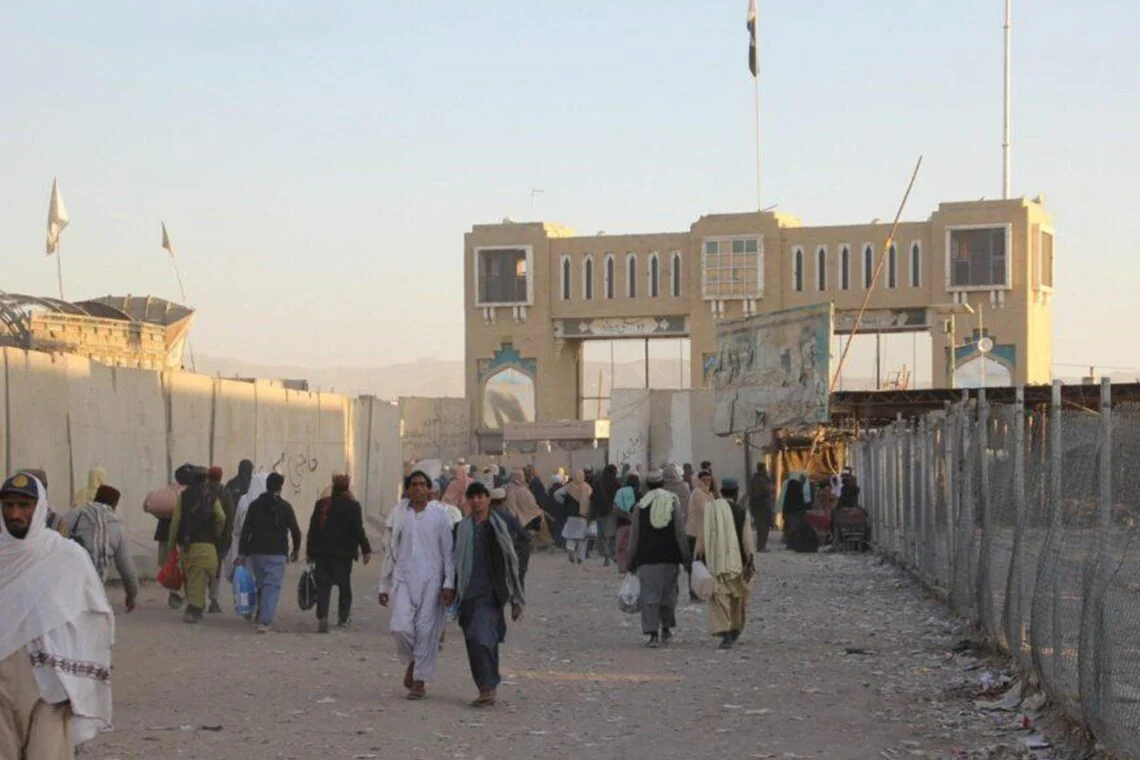
Several traders and shopkeepers in Spin Boldak district of Kandahar province say that more than 50 percent of their trade and economic activity has stalled since the closure of the Pakistan border. They say the Taliban’s ban on importing right-hand drive vehicles has also pushed people’s businesses into a severe slump.
Hajji Khodai Rahim Khan, a trader in Spin Boldak district, says: “The closure of trade routes with Pakistan has seriously damaged our businesses. Previously, thousands of people on both sides of the border made a living through this trade, but now a large number of them are unemployed. Unfortunately, the trade and business of ordinary people have become politicized, and as a result of this decision, people’s economic lives have run into serious difficulties.”
Spin Boldak traders say that Japanese, Taiwanese and Singaporean vehicles, along with vehicle spare parts, were previously imported into the district and sold there, but the Taliban have banned their import.
Baz Mohammad, a member of the Container Owners’ Union, says the Taliban’s decision has left thousands of poor families without food, and many families now face a dire economic situation and an uncertain future. According to him, the decision has emptied the car market in Spin Boldak district, caused people to lose their jobs, and sent trade in the area into collapse.
This trader says: “The ban on importing right-hand drive vehicles and their spare parts has had a severe impact on the Spin Boldak commercial market. As a result of this decision, the car markets have emptied, thousands of people have become unemployed, and a large number of poor families have lost their source of income. If this ban continues, the vehicle trade in the region will face even greater difficulties.”
Lal Khan Achakzai, another member of the union, says the trade in vehicles and spare parts had been one of the main sources of employment and income for people in the area, and a large number of traders, spare parts sellers, mechanics, drivers, porters, warehouse keepers and transport companies worked in this sector. According to him, not only the residents of Spin Boldak benefited from this trade, but car markets in Kandahar, Kabul, Helmand, Zabul and other provinces of Afghanistan also benefited from the imported vehicles and spare parts.
He adds: “The trade in vehicles and spare parts was not merely the personal business of a few traders, but was regarded as an important source of employment and income for thousands of residents of the area. Through this trade, mechanics, drivers, spare parts sellers, porters and warehouse keepers supported their families. This trade not only benefited the people of Spin Boldak, but car markets in Kandahar, Kabul, Helmand, Zabul and other provinces also depended on it. Since the import ban, all of these sectors have been harmed.”
Mohammad Homayoun, head of the mechanics at the car market in Spin Boldak district, says that before the Taliban’s ban, up to 60 containers carrying right-hand drive vehicles and vehicle spare parts arrived daily at this market and were unloaded there.
He says: “Before the Taliban’s ban, up to 60 containers carrying right-hand drive vehicles and vehicle spare parts arrived in Spin Boldak every day. The goods from these containers were unloaded here and then distributed to various provinces of Afghanistan. But after the ban was enforced, the car markets have emptied, and according to our information, between 60,000 and 70,000 people in this sector have become unemployed.”
Abdul Halim Aka, another container trader in the Spin Boldak commercial market, says: “After the ban on importing vehicles and spare parts was announced, 10 major traders tried to hold talks with various Taliban officials about reversing this decision. We shared our problems with the Taliban’s governor in Kandahar, the Office of the Prime Minister, and other relevant officials of this group, and told them that preventing traffic accidents is not possible solely through a ban on imports. But despite all our efforts, our demands were not accepted, and the traders returned to their homes without achieving any result.”
Habibullah, a 24-year-old who previously worked in organizing and moving container goods, says he earned between 5,000 and 15,000 Pakistani rupees a day, but has now been unemployed for more than 100 days and has so far been unable to find another job. He says he is the breadwinner for a family of 11 and does not know how to meet their daily needs.
Spin Boldak is considered one of the important border and trade districts of Kandahar province in Afghanistan, and it plays a special role in strengthening trade relations between Afghanistan and Pakistan, expanding imports and exports, and developing economic activity.
About 400 days ago, following clashes and political tensions between the Taliban and Pakistani border forces, the Spin Boldak-Pakistan trade crossing, along with other trade routes, was completely closed.
Right-hand drive vehicles, known locally as “steering right” cars, are also called “Pakistani-hand vehicles” or “single-key” vehicles. The Taliban claim that the drivers of these vehicles do not have sufficient view of the road and of the path of other vehicles, which increases traffic accidents.
The Taliban have banned the import of “steering right” vehicles into Afghanistan and have ordered customs offices not to clear right-hand drive vehicles. The decision was issued based on Decision No. 20 of the group’s Council of Ministers, and the Taliban’s Ministry of Finance (MoF) has been tasked with preventing the entry of vehicles that do not conform to Afghanistan’s driving system.
You can read the Persian version of this report here:
کسبهکاران سپینبولدک: ممنوعیت طالبان ۵۰ درصد کاروبار ما را با رکود مواجه کرده است