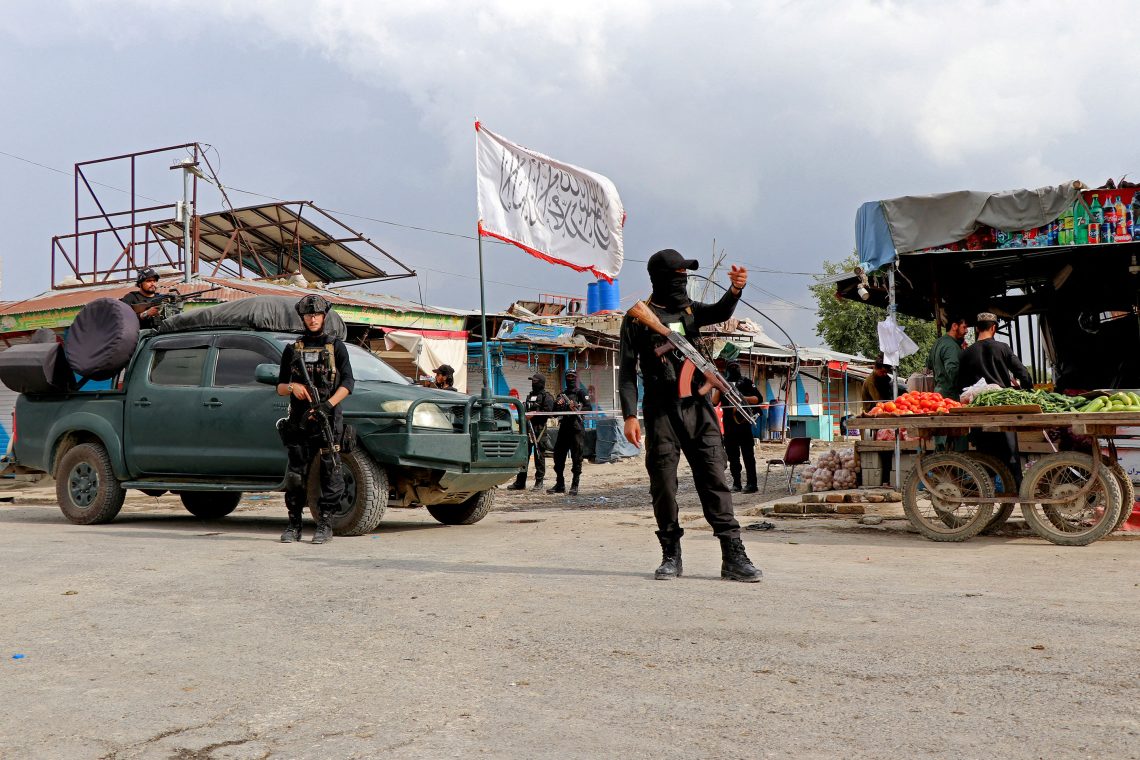
The claim of providing security has long been a tool in the hands of the Taliban, extending from the distant past to the present. By exploiting this notion and portraying themselves as worthy rulers, this group has also deceived some countries. However, the realities on the ground over the past nearly three years show something different: the Taliban have failed to ensure security. The fact is that Afghanistan under Taliban rule has not only lacked security but has also been engulfed in a whirlpool of insecurity. Nevertheless, Taliban officials, in meetings with foreign officials or participation in public gatherings, portray their regime as the guardian and guarantor of security in the country.
Unfortunately, the Taliban’s manipulation of the security issue has deceived some countries, international organizations, and foreign officials. It has been observed multiple times that representatives of certain countries, in their meetings with the Taliban, have kindly acknowledged what this group claims as providing overall security and described the situation in favorable terms compared to the past. The influx of foreign tourists to Afghanistan has also normalized the situation. The Taliban, always seeking opportunities, exploit this situation to the fullest. Just last weekend, The “Associated Press” reported that the Taliban are holding tourism management training courses to attract more tourists. According to the report, the number of foreign tourists in Afghanistan has increased over the past three years, with the most significant factor being a significant decrease in violence. The report states that the number of foreign tourists has increased from 691 individuals in 2021 to 7,000 individuals in 2023.
The Taliban operate cunningly in various fields, and their encouragement of tourism to Afghanistan is a clear example of this strategy. The Taliban regime seeks to have tourists, especially cultural and media figures, describe the current situation in Afghanistan as normal upon their return to their home countries. Hosting a westernized Afghan woman, who traveled to several Afghan provinces with anti-Taliban attire and then returned to her second residence, was an attempt to whitewash the prevailing dire situation in the country. This hosting garnered significant attention in the media. Traveling to Afghanistan is a complex issue due to the presence of a terrorist group in power, the constant threat of suicide attacks, the violation of human rights and freedoms, especially for women and girls, the absence of free media, the high risk of kidnapping, and more. Why should traveling to such a country be important? Perhaps some countries and organizations have collaborated with the Taliban.
A domestic example of this opportunism is the use of Afghan YouTubers. It is undeniable that YouTubers have become a media tool for the Taliban regime. Interestingly, in the open space of democracy, the presence of YouTubers was minimal, perhaps because free media had room for activity, and employment opportunities had not been destroyed. The Taliban allow YouTubers to operate because they serve their interests by promoting them, not only silencing Taliban opponents but also destroying them. Both of these forces (foreign tourists and YouTubers) have worked hard to create a positive image of Taliban rule.
Contrary to the claims of the Taliban and their lobbyists, occasional reports from international organizations shed light on the dire situation of the country. The findings of the United Nations Assistance Mission in Afghanistan (UNAMA) on the human rights situation in the country, published last week, serve as a prime example. According to UNAMA’s report, during the first two months of this year, 36 civilians were killed and 118 others injured. While insignificant to the Taliban and their lobbyists, these figures are significant for three main reasons: first, they represent the casualties of suicide and explosive attacks, which the Taliban claim to have eradicated. Second, these attacks have been organized and executed by the terrorist group ISIS, an organization the Taliban vehemently denies any affiliation with. Third, these attacks have targeted specific ethnic and religious groups: Hazaras and Shias.
These figures appear trivial to the Taliban regime and its supporters because, unlike the republic era, where a group such as the Taliban is not present that can constantly stream suicide attacks targeting citizens. The current situation will likely transform ISIS Khorasan into a force capable of widespread destruction such as the Taliban during the public era. It often has been claimed by the Taliban and their supporters that this group has ended the war in the country.
UNAMA continues to uncover threats, detentions, torture, imprisonment, and killings of former government officials by the Taliban. From January until the end of March, UNAMA has documented 38 cases of detention, 10 cases of torture, and 4 cases of killing of former officials. Additionally, in the past two weeks, the Hasht-e Subh Daily reported the deaths of three former officials shortly after their release from Taliban prisons due to severe torture suffered during captivity. Perhaps this is the Taliban’s new tactic: not openly killing former officials but subjecting them to such intense torture that they succumb to their injuries shortly after release.
Such incidents contribute to a pervasive sense of insecurity in society, which the Taliban lobbyists fail to acknowledge. Reading about these horrifying events in the media affects hundreds and potentially inflicts psychological harm. Understanding the extent of the suffering of victims’ families, both near and far, is challenging.
Moreover, the incidence of suicides has unprecedentedly risen in Afghanistan. Media outlets daily report suicides, particularly among youth, citing widespread poverty, lack of employment, repression, and loss of hope for a better future as major reasons. Undoubtedly, the responsibility for such inadequacies lies with the Taliban regime. Despite their boasting, the Taliban not only failed to address people’s problems but have made life even more bitter for the populace. They easily ignore this social issue while the proliferation of suicide reports in the media affects dozens more young individuals, exacerbating societal insecurity.
The terrorist attack in Herat province is equally distressing. Armed individuals on motorcycles easily came to the gate of a mosque and targeted worshippers, sending several to their deaths. Yet, the Taliban brushed it aside, attributing responsibility to ISIS. More importantly, the attack aimed to target specific ethnic and religious groups: Hazaras and Shias. The Taliban’s indifference in this regard indicates that they do not oppose massacres of Hazaras and Shias by terrorist groups. However, according to Rahmatullah Nabil, the former head of the National Directorate of Security (NDS) of Afghanistan, they do show support, supposedly, as Nabil claims, for such attacks. Nabil has accused a senior Taliban intelligence member named Ahmad Shah of being responsible for the killings of Hazaras and Shias.
It may be evident that the Taliban have no regard for the lives of the people of Afghanistan, especially Shias, and their sole focus is on ensuring the security of the members of its regime. Consider the ISIS attack on Kabul Bank in Kandahar province. Since then, the Taliban have concentrated all their efforts on securing this city. It’s said that even ordinary people are physically inspected during Friday prayers or in crowded places. New arrangements have been made to pay their fighters, so they no longer have to rely on banks and potentially face ISIS attacks again. However, the voices of Hazaras and Shias, who are the primary victims of ISIS attacks, remain unheard regarding implementing security measures to repel potential threats.
You can read the Persian version of this analysis here: