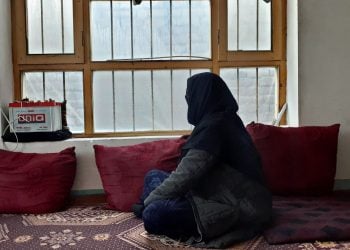
Exhausted and filled with worry, she sat in the corner of her yard, anxiously waiting for her son to return. Her hands trembled, and her strength seemed to vanish. She leaned against the wall for support, only to crawl toward the door moments later. Her eyes scanned the yard restlessly, searching for any sign of him. Each time he was nowhere to be seen, a deep, painful sigh escaped her, and she muttered to herself, “Why is he so late?”
The rising tide of anti-immigrant sentiment in Iran, along with the deportation of Afghan refugees, had already led to the arrest of her twelve-year-old son near his school. The authorities had taken him to a detention camp. Now, she feared her other son might meet the same fate. It had been over two hours since she sent him to the bakery. For Afghan refugees, waiting in long lines for bread was routine, but after her elder son’s arrest, the fear of losing her younger son haunted her.
Nasrin, a woman in her middle age, had lived in Iran for more than a decade. Like thousands of Afghan refugees, she and her husband had fled their homeland due to poverty and unemployment, finding shelter in Iran. Despite the challenges, Iran had become her second home—a place where she had given birth to and raised her children. Leaving this place wasn’t easy. For the first time, Nasrin felt the harsh sting of rising hostility toward refugees. Although her family held legal residency, just a week ago, soldiers had brutally arrested her son near his school gate and taken him to a camp.
She called that day the worst in her life. After hours of effort, they finally managed to free her son: “It was the first week of school. I dressed my son and sent him off in the morning. Around nine, my husband called from work. He said someone had informed him that our son was in a camp and we needed to bring our documents immediately. I was in shock. I couldn’t believe that they had taken my twelve-year-old son in his school uniform. Fear consumed me. I didn’t know how my boy was or what they had done to him. My husband rushed home, grabbed the documents, and hurried to the camp.”
Hours passed without any news of her husband and son. Paralyzed by fear, Nasrin thought that maybe her husband had been arrested and deported as well. The Iranian soldiers had been rounding up Afghan boys from the streets and workplaces, forcing their families to come to the camps so they could deport them all.
Her husband searched through several camps before finally finding their son. But, as she had feared, the authorities detained him too. They were only released after hours of waiting and thanks to his employer’s intervention. “After twelve long hours, I finally received a call. They were released and on their way home, but I didn’t believe it until I saw them both in front of me. Only then did I feel a wave of relief.”
Nasrin’s husband later explained how, after searching two camps, he found their son and showed their documents to the authorities. But instead of listening, the guards grabbed him, insulted him, and dragged him inside the camp. He found their son in a group of Afghan refugees. The boy was trembling, unable to speak. “My son was so scared. He sat in a corner, clutching his bag, refusing to talk to anyone. When he saw his father, he ran into his arms, sobbing. When we got home, he didn’t say a word. He went straight to bed. Days have passed, and he still hasn’t spoken about it. He’s just afraid. I used to send him on errands, but now I send his younger brother instead—and even then, I’m terrified they’ll arrest him too.”
Nasrin’s husband had worked for six years as a skilled employee at a government warehouse. After much persuasion, his employer agreed to go to the camp and vouch for him. “At first, his boss didn’t want to help,” Nasrin explained. “But because my husband is one of the best workers and knows how to operate all the machines, he finally agreed to intervene so his work wouldn’t fall behind.”
For Afghan refugees, especially those who had fled the Taliban’s cruelty, life in Iran had become a nightmare. Every moment carried the fear of deportation, detention, or worse. Recently, the ride-hailing service “Snapp” began working with the Iranian government, pretending to offer rides, only to turn over Afghan passengers to the authorities or take them directly to camps. Nasrin and her husband had faced this danger multiple times. He now left for work early in the morning and returned late at night, avoiding daylight for fear of being caught.
You can read the Persian version of this Afghan woman’s story here:
«ماموران پسر دوازده سالهام را از نزدیک مکتبش بازداشت کردند» | روزنامه ۸صبح