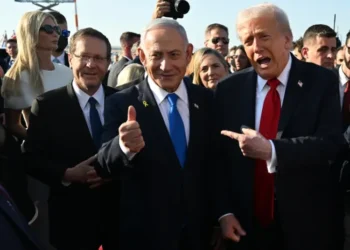

Iran, as one of the key political, economic, and security actors in the South Caucasus, finds itself in a position of diminished direct influence over regional developments following the recent peace agreement between Azerbaijan and Armenia, which was initiated and hosted by the United States. From Tehran’s perspective, this agreement goes beyond a mere bilateral settlement and carries significant geopolitical, security, and economic dimensions.
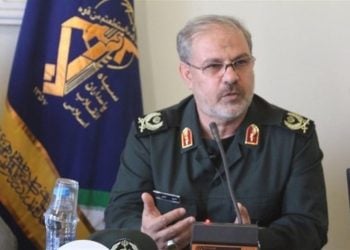
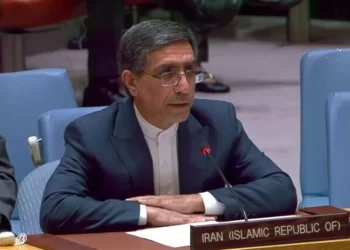
Since the announcement of this agreement, Iranian officials and media outlets have generally reacted negatively. Iranian analysts believe the agreement effectively reduces Iran’s influence in the South Caucasus and paves the way for a stronger U.S. presence along Iran’s northern borders.
An Iranian official has explicitly stated that “this agreement will not be overlooked easily.” On 10 August 2025, the Iranian daily newspaper Kayhan published a lengthy article featuring multiple statements from current and former Iranian officials regarding the Zangezur Corridor. According to this report, concerns over the agreement existed at the highest levels of the Iranian government even before it was formally signed. The newspaper claims the issue goes far beyond a simple peace settlement between two neighboring countries, arguing that it creates a platform for U.S. and NATO presence along Iran’s borders.
Ali Akbar Velayati, the advisor to the Supreme Leader of the Islamic Republic of Iran, also reacted to these developments, declaring that “with or without Russia, we will prevent the security of the South Caucasus from being jeopardized.” Such statements reflect the strategic importance of this region in Iran’s foreign policy and national security doctrine.
Overall, both Iranian officials and analysts assess the agreement as a serious threat to the country. The official Iranian position frames the deal not only as an action against Iran’s interests but also as part of a broader plan to weaken China, Russia, and even other countries such as India.
Some Iranian analyses go beyond the Iran–U.S. rivalry framework, focusing instead on the geopolitical implications of the Zangezur Corridor. This corridor connects Turkic-speaking countries via a secure and stable land route, which, according to certain analysts, strengthens pan-Turkic tendencies in the region. With the implementation of this project, mainland Azerbaijan will be connected to the exclave of Nakhchivan (part of Azerbaijan) and gain direct access to Turkey.
This is particularly sensitive for Tehran due to existing grievances among ethnic Turks in Iran, especially in the border areas of East Azerbaijan Province. Although Turkmenistan, Azerbaijan, and Turkey—as Turkic-speaking states—have previously shared land borders with Iran, and some countries such as Kazakhstan have maritime borders with Iran via the Caspian Sea, the Zangezur Corridor would allow these countries to connect directly over land without relying on Iran. In the event of a formal union of Turkic-speaking countries, this could create an independent trade route that bypasses Iran entirely, removing its transit role.
Although the agreement might open a new chapter toward ending years of tensions between the two South Caucasus neighbors, a pressing question remains: what practical capacity does Iran have to disrupt this agreement, particularly in terms of U.S. presence near its northern borders? Tehran is seeking to rally other countries, such as China and Russia, to oppose the agreement. However, the reality is that the benefits these countries gain from the Zangezur Corridor are far smaller than the costs of engaging in a confrontation with the United States. Consequently, the likelihood of them aligning with Iran on this matter is considered low.
So far, Russia has shown no significant reaction to the peace agreement signed at the White House, maintaining a form of tactical silence. This silence, combined with the scheduled meeting between Vladimir Putin and Donald Trump in Alaska in the coming days, may carry a particular message. It is even possible that the two countries have reached an informal arrangement under which Russia will not oppose the agreement or the U.S. role in the Zangezur Corridor, in exchange for concessions in the Ukraine peace talks. Whether or not this speculation is accurate will depend on upcoming developments and possible agreements between Moscow and Washington.
Iran also understands that any direct military intervention to disrupt this project would mean entering into confrontation with the United States—or at the very least, a clear clash of interests along its borders. Such a move would entail heavy costs for Tehran, which is why the likelihood of direct Iranian military action is considered very low.
Nevertheless, as seen in other regional conflicts, Iran might resort to using its network of proxy forces beyond its borders to protect or advance its interests. One such potential tool is a group of Azerbaijani citizens known as the Hosseinion Brigade, which fought against ISIS in Iraq and Syria and is considered by Tehran as part of the “Axis of Resistance.” While this group’s activities are banned within Azerbaijan and its members are wanted by local authorities, Iran retains the capacity to increase their activities due to religious ties and a history of support. Additionally, the proximity of the Zangezur Corridor to Iranian territory could facilitate “hit-and-run” tactics by proxy forces and allow Tehran to provide indirect support to them.
Any military action against this project could lead to the deployment of U.S. forces along the corridor—essentially, just one meter from Iran’s borders. Such a deployment could be officially justified as “protecting U.S. citizens and interests,” but, in reality, would represent the closest presence of American troops to Iran’s frontier.
As a result, although the Iranian president has publicly stated that the signed agreement and the creation of the Zangezur Corridor have been exaggerated by the media, and that all of the Islamic Republic’s demands—such as the preservation of territorial integrity and the maintenance of Iran’s access routes to Europe and the north—have been met, and although Iranian Foreign Minister Abbas Araghchi has welcomed the peace between the two neighbors, the reality is that Tehran harbors deep concerns about the U.S. presence near its borders and the direct connection among Turkic-speaking countries. These concerns may, in practice, be addressed through non-diplomatic means aimed at raising the costs of U.S. involvement in the project.
Analytical Table: Actors, Interests, and Iran’s Possible Scenarios Regarding the Zangezur Corridor
| Actor | Key Interests/Objectives | Position on Agreement | Possible Action Scenarios |
| Islamic Republic of Iran | Preserve influence in the South Caucasus; prevent U.S. and NATO presence at its borders; block pan-Turkism; protect Iran’s transit role. | Opposed | Diplomatic pressure on Azerbaijan and Armenia; use of proxy forces (Hosseinion Brigade); efforts to build alliances with Russia and China; limited field actions |
| Azerbaijan | Land connection to Nakhchivan and Turkey; strengthen ties with Turkic states; boost regional influence | Supportive and main beneficiary | Rapid implementation of the project; cooperation with Turkey and the U.S.; disregard for Iranian opposition |
| Armenia | Reduce tensions with Azerbaijan; gain economic opportunities; lower security pressures | Supportive, cautious beneficiary | Use U.S. and Western support to balance against regional pressures |
| Turkey | Strengthen pan-Turkic influence; direct connection to Azerbaijan and Central Asia; reduce reliance on Iranian transit routes. | Strongly supportive | Provide logistical and political support for the project; cooperate with the U.S. and Azerbaijan |
| United States | Increase geopolitical influence in the South Caucasus; contain Iran and Russia; ensure military presence near Iran’s borders. | Main sponsor | Diplomatic and security backing; potential troop deployment along the corridor |
| Russia | Maintain influence in the South Caucasus; negotiate with the U.S. over Ukraine-related interests | Tactical silence | Possible neutrality in exchange for concessions in other matters |
| China | Limited economic interests; focus on Belt and Road projects | Neutral, leaning toward non-involvement | Avoid direct interference; pursue economic cooperation with all sides |
About the author:
Besmillah Taban is a Ph.D. student in Security Studies at JU, where he also researches China’s discourse power. He served in various positions within the Afghanistan National Police from 2002 to 2021, including as the Head of the Crime Investigation Department (CID). He can be found on X at @BesmillahTaban.
You can read the Persian version of this article here:
توافق صلح قفقاز جنوبی و دهلیز زنگزور؛ چالشهای نو و فرصتهای ازدسترفته برای ایران