• 8AM.MEDIA
  • ویب‌سایت فارسی
  • پښتو ویب‌پاڼه
  • اۉزبېکچه ویب‌سایت
  • Podcast
Thursday, October 22, 2026
Hasht-e Subh
  • Home
  • News
    • Afghanistan News
    • World News
  • Opinion
    • Editorial
    • Analysis
  • Reports
    • Daily Reports
    • Investigative Reports
  • Society
    • The story of people
  • Women’s Word
  • Columns
    • Three Years After Afghanistan’s Fall: The Taliban’s Resurgence
    • Towards Equality
    • The Resurgence of the Taliban: Two Years Since Afghanistan’s Fall
    • Hebatullah Report Special Edition
    • Resistance for Education Special Edition
    • Special Column on Taliban’s Education Curriculum
    • Nawroz
  • Interviews
  • Contact Us
    • About Us
    • 8AM MEDIA Annual Awards
    • Submit an Article to Hasht-e-Subh
  • 8am.mediaBack
Subscribe
No Result
View All Result
  • Home
  • News
    • Afghanistan News
    • World News
  • Opinion
    • Editorial
    • Analysis
  • Reports
    • Daily Reports
    • Investigative Reports
  • Society
    • The story of people
  • Women’s Word
  • Columns
    • Three Years After Afghanistan’s Fall: The Taliban’s Resurgence
    • Towards Equality
    • The Resurgence of the Taliban: Two Years Since Afghanistan’s Fall
    • Hebatullah Report Special Edition
    • Resistance for Education Special Edition
    • Special Column on Taliban’s Education Curriculum
    • Nawroz
  • Interviews
  • Contact Us
    • About Us
    • 8AM MEDIA Annual Awards
    • Submit an Article to Hasht-e-Subh
  • 8am.mediaBack
No Result
View All Result
Hasht-e Subh
No Result
View All Result

The Taliban’s Detention of Girls Continues, and its Severe Consequences: From Family Pressures to Tragic Suicides

By: Frough

Moqim mehran Moqim mehran
1 February 2024 - Solar Hijri Date: 1402/11/12 [t_time:1706788152]
Growing Concern for Afghan Women: Detained Protesters Should Not Be Forgotten

AFP

Following the Taliban’s Detainment of Girls and Women, citing dress code violations, in various Hazara and Tajik-populated areas of Kabul and other provinces, the Taliban’s arbitrary actions persist. In the recent incident, they detained numerous young girls and teenagers from Dasht-e Barchi, Khairkhana, and Kart-e Char regions of Kabul for not conforming to their dress code, wearing white scarves and colorful trousers, and subjected them to violence, torture, and beatings. Some of the girls, held in Taliban prisons for days, were released upon payment and guarantees from their families, pressured by both family and community. These girls face stringent restrictions from their families and social isolation. According to reports from relatives and friends, some of the detained girls have attempted suicide.

Meanwhile, residents of the Dasht-e Barchi region in Kabul report that the Taliban’s moral police not only patrol public roads but also roam the streets and alleys, detaining women and girls from their homes and transferring them to unknown locations.

Razia, a resident of the Dasht-e Barchi region in Kabul, recalls an incident on Saturday, February 27, where the Taliban detained a fully veiled girl in black attire near the Barchi Center mall. She was taken from the street close to the mall for wearing a white scarf and blue cowboy trousers. Razia recounted, “It was 9 in the morning, and I was heading towards my classes when people had gathered in the lower street of Barchi Center Mall near Imam Ali Mosque. Although I was frightened, I approached and saw the Taliban detaining a girl, fully veiled in black attire, including a black veil and mask, for wearing a white scarf and blue cowboy trousers, and took her away.”

She mentions that recently, the responsibility for detaining girls lies with the women’s department of the Taliban’s moral police. These women torture and beat the detained girls during the process. Last week, they detained two girls from the Doghabad area of the Dasht-e Barchi region in Kabul near their homes. She explains, “Last week, at the end of our alley, they first beat and then forcibly took two girls into a car and drove away. Some women in our area who were there asked why they were beating the girls while taking them away. Those same moral policewomen, with very harsh behavior, turned to them and told them not to talk too much so they wouldn’t be beaten as well.”

Zahid (pseudonym), a resident of Kabul’s Khairkhana area, recalls witnessing the detention of a mother and daughter from Kabul’s Karte Char area last Thursday on his way home from duty. He describes, “The crowd was large, and from inside the car, I could see a Taliban ranger parked, with female members of the Taliban’s moral police forcibly loading a mother and daughter into it. The mother alternated between pleading and begging, and screaming, attempting to protect herself and her daughter from them.”

Video clips released depict the Taliban, aided by female moral police, violently detaining girls from Kabul’s Dasht-e Barchi and Khairkhana areas, transporting them forcefully, and subjecting them to torture inside vehicles. These clips also highlight that the girls detained by the Taliban are more veiled than the female moral police.

However, a close relative of one of the detained girls, speaking on the condition of anonymity, informed the Hasht-e Subh Daily that the Taliban apprehended his first cousin two weeks ago from the Pul-e Khoshk area of Dasht-e Barchi. She was held captive for three days before the group released her in exchange for fifty thousand Afghanis from her family. He further disclosed that upon her release, his cousin had been placed under house arrest by her family, who had imposed strict restrictions, forbidding anyone from contacting her. He expressed, “The condition of my cousin post-release remains undisclosed. Her family prohibits any visits or communication, emphasizing the need for confidentiality regarding her situation. There is a prevailing fear that she might succumb to immense familial pressure and community gossip, potentially leading to suicide.”

It is worth mentioning that many of the detained girls succumb to societal and familial pressures while enduring their situation. Their families impose the strictest restrictions on them after their release, denying them the freedom to speak or leave their homes. These families strive to keep the detention of their daughters concealed from the public eye, and therefore, they refrain from engaging with any media outlets. According to accounts from the detained girls and their close friends, some of these girls have also resorted to suicide due to family pressure and public gossip.

Ferishta, a female student who works in a tailoring factory after the closure of universities, recounts that the Taliban detained one of her coworkers from the neighborhood a few weeks ago for not adhering to their prescribed veil. However, after her release, the coworker committed suicide. Ferishta says, “My coworker didn’t show up in the afternoon. When she came later, she seemed distressed, as if she had been crying. I asked her what happened, and she said the Taliban had detained her neighbor’s daughter a while back for not wearing the veil, and today I found out she committed suicide due to family pressure and public gossip. They brought her body to the mosque today for the funeral and Quran recitation, and I learned about the incident from other neighbors who attended the funeral.”

It is worth noting that the Taliban’s oppressive and misogynistic actions have elicited widespread reactions from political activists, Taliban critics, and international organizations. In the latest development, Afghan human rights activists have issued a statement urging all Afghan citizens, especially religious scholars, community leaders, and influential figures, to condemn the “inhumane” actions of the Taliban, which violate the dignity and honor of Afghan women and girls, contradicting the religious teachings, culture, and norms of Afghan society. They continue to call on international bodies, including the UNAMA and UN Special Rapporteurs, to thoroughly document and report on these “inhumane” crimes committed by the Taliban from all perspectives, and to prevent the institutionalization of these “anti-human” practices by any means possible.
ShareTweetSendSendShare

Related Posts

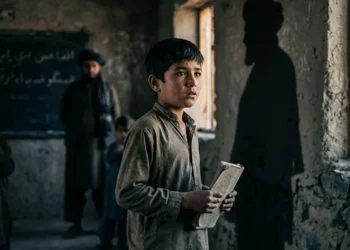
A boy holding a worn book stands in a dim classroom as a long shadow of a bearded man falls across the wall behind him. (Photo credit: AI)
Daily Reports

Childhood Under the Taliban: From Fear and Anxiety to a Generation Shaped by Extremist Views

22 October 2026 [t_time:1792670245]
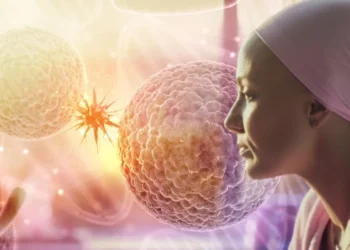
A woman wearing a headscarf looks on beside a 3D illustration of cancer cells, as limited awareness and cultural taboos hinder early breast cancer detection among women in Afghanistan. (Photo credit: Magnific)
Daily Reports

Cultural Taboos and Lack of Awareness Hinder Early Breast Cancer Detection Among Women in Afghanistan

22 October 2026 [t_time:1792666517]
Afghanistan Freedom Front Slogan displayed (Photo: @AfgFreedomAFF/X)
Afghanistan News

Afghanistan Freedom Front: One Taliban Intelligence Member Killed and Three Others Wounded in Takhar

22 October 2026 [t_time:1792664833]

Latest

Loading latest news...

Popular stories

  • Donald Trump – U.S. President with Benjamin Netanyahu – Israeli Prime Minister in a gathering of people (Photo: Getty Images) Donald Trump – U.S. President with Benjamin Netanyahu – Israeli Prime Minister in a gathering of people (Photo: Getty Images)

    US Senator Criticizes Netanyahu’s Remarks Justifying War Against Iran

    Share
    Share Tweet
  • US Defense Secretary Warns Iran of “Destruction”

    Share
    Share Tweet
  • UN Report Reveals Shifts in Family Attitudes and Rise in Domestic Violence in Afghanistan

    Share
    Share Tweet
  • Trump Calls Iran’s Hope of War Lasting Beyond US Midterm Elections a “Dream”

    Share
    Share Tweet
  • Trump Again Says War with Iran Will End “Very Soon”

    Share
    Share Tweet

Podcast

Insights
Insights

Join Lynne O’Donnell for 8AM’s podcast series, Insights.
Lynne talks with generals, diplomats, soldiers, journalists, politicians, activists, people who have front row seats for conflicts around the world, and citizens with a story to tell, happy or sad. For this first series, Afghanistan is the focus. Lynne and her guests talk about the collapse of the republic in August, 2021, and the impact since — for the people of Afghanistan, for the security of the region, for the safety of the world. It’s important, interesting and insightful.

Insights/22: Controlling the Narrative with Mina Sharif
byinsights8am

Controlling the Narrative

Lynne O’Donnell talks with Mina Sharif, author, activist, women’s rights campaigner, educator and mentor. They discuss who controls the narrative and who speaks for Afghanistan’s people when the Taliban appear to have seized control not only of the country but of the message, too.

Have a listen

Insights/22: Controlling the Narrative with Mina Sharif
Episode play icon
Insights/22: Controlling the Narrative with Mina Sharif
Episode Description
Episode play icon
Insights/21: Media Meltdown with Zahra Joya
Episode Description
Episode play icon
Insights/20: Terror Inc with Scott Richards
Episode Description
Episode play icon
Insights/19: Busting Stereotypes with Bushra Gohar
Episode Description
Episode play icon
Insights/18: Media Matters with Waliullah Rahmani
Episode Description
Episode play icon
Insights/17: What Goes Around Comes Around with Sima Samar
Episode Description
Search Results placeholder
Hasht-e Subh

8AM Media, also known as Hasht-e-Subh Daily, stands as Afghanistan's premier independent and non-profit newspaper, resonating as a beacon of journalistic integrity since its establishment in June 2007 by esteemed Afghan journalists and human rights advocates. With a steadfast commitment to citizen journalism and civic education, Hasht-e-Subh Daily has earned its place as the most esteemed publication in the nation.

Publisher: Sanjar Sohail
Email: [email protected]
Executive Director: Parwiz Kawa
Email: [email protected]

Read More

OCHA: 8,000 People Gain Access to Safe Drinking Water in Three Provinces

UNESCO and UNICEF: 53% of Children in Afghanistan Lack Access to Formal Education

Childhood Under the Taliban: From Fear and Anxiety to a Generation Shaped by Extremist Views

Iran’s Revolutionary Guards Say They Are Preparing to Unveil “Father of All Bombs”

Cultural Taboos and Lack of Awareness Hinder Early Breast Cancer Detection Among Women in Afghanistan

Editor’s Choice

Every Saturday morning, 8AM MEDIA English Services Department will guide you through the week’s biggest stories from Afghanistan and the international community.

Subscribe

© 2026 - ©Hasht-e Subh Daily

No Result
View All Result
8am.Media
پښتو ویب‌پاڼه
ویب‌سایت فارسی
اۉزبېکچه ویب‌سایت
  • Home
  • News
    • Afghanistan News
    • World News
  • Opinion
    • Editorial
    • Analysis
  • Reports
    • Daily Reports
    • Investigative Reports
  • Society
    • The story of people
  • Women’s Word
  • Columns
    • Three Years After Afghanistan’s Fall: The Taliban’s Resurgence
    • Towards Equality
    • The Resurgence of the Taliban: Two Years Since Afghanistan’s Fall
    • Hebatullah Report Special Edition
    • Resistance for Education Special Edition
    • Special Column on Taliban’s Education Curriculum
    • Nawroz
  • Interviews
  • Contact Us
    • About Us
    • 8AM MEDIA Annual Awards
    • Submit an Article to Hasht-e-Subh
  • 8am.media

© 2026 - ©Hasht-e Subh Daily