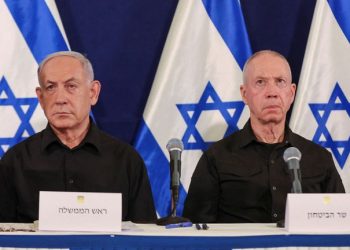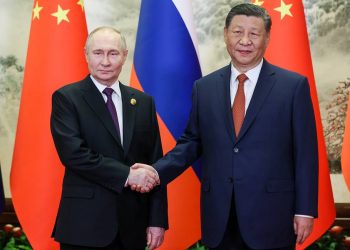
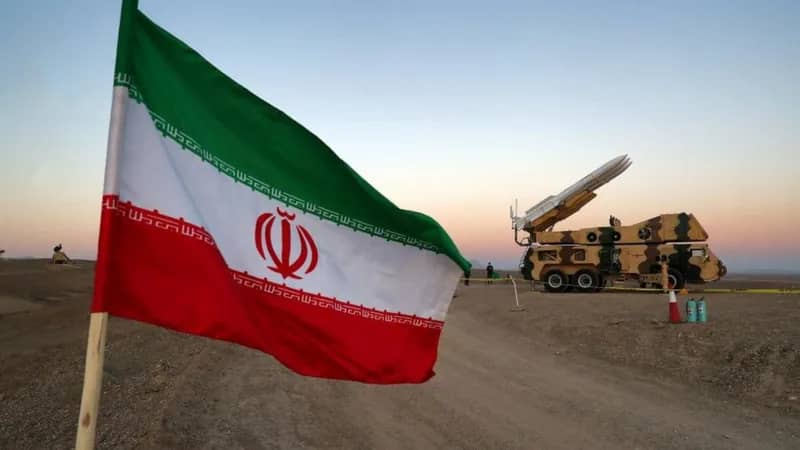
To understand Iran’s stance on the Palestine-Israel issue, it’s crucial to examine the power dynamics in the international system. According to some experts, the liberal international order is in decline, and the world is moving towards multipolarity. The hegemony of the United States is nearing its end, and powerful actors like China and Russia will become the next poles of the post-liberal order. In the view of these experts, the Palestine-Israel issue is currently heavily influenced by the trajectory of the global order. In other words, the resolution of the Palestine-Israel issue is intertwined with the resolution of how the global order evolves.
As mentioned, the fundamental issue at the global level is that the United States no longer holds uncontested power internationally, and the liberal global order it upheld has dissipated. The withdrawal from Afghanistan by the U.S. and the initiation of a new war in Ukraine, now coupled with full-fledged support for Israel, suggest that U.S. Democrats are attempting to revive American hegemonic power contrary to Republican interests.
If Trump pursued an exit strategy from Afghanistan, on the contrary, Biden ignited the conflict in Ukraine. In the Palestine-Israel issue, despite the humanitarian tragedies in Gaza, the United States continues to support Israel and has vetoed three ceasefire proposals in Gaza. Emmanuel Macron, in an interview with BBC Persian about the Ukraine war, stated, “If we did not support Ukraine, we would be defeated; because a new power hierarchy (Russia) was forming.” He added that one of Europe’s major concerns was that they either thought NATO had suffered brain death and Mr. Putin’s kindness had awakened it. NATO’s awakening signifies the awakening and survival of the liberal global order led by the United States of America.
However, Iran also understands that if it doesn’t contribute to the destabilization of the liberal international order alongside Russia and China in the region, it won’t be able to endure severe and harsh sanctions. On the other hand, Iran recognizes that the expansion of the liberal international order in the Middle East necessitates a geopolitical shift in the region; hence, Iran is concerned. Iran is deeply concerned about the movements of the Baloches and Kurds. Iran is deeply concerned about the continuation of sanctions. Iran is deeply concerned about the presence of U.S. bases in the region. Amidst these concerns, Iran is aware of the decline of America’s power and therefore seeks a new order to emerge swiftly so that it can actively and lucratively participate both in dismantling the current order and in establishing a new multipolar international order.
Why is the liberal order collapsing?
The liberal international order is collapsing due to its inherent self-destructive nature, according to Professor John Mearsheimer. He argues that liberal democracy lacks appeal for many people, and there are alternative models available. For example, Russians and Chinese do not think like Westerners and do not wish to assimilate into this liberal order. They stand against it and desire self-determination in national affairs. Mearsheimer believes that the spread of liberal democracy and homogenization of the world not only imposes heavy economic costs but also leads to endless wars. Realistically, in the era of nation-states, global homogenization is impossible. For instance, since the end of the Cold War, the United States has been involved in war for two out of every three years. It has been engaged in seven different wars.
The wars in Iraq, and Afghanistan, Western interventions in the Syrian war, and now in Ukraine and the Middle East have imposed heavy costs, nearly breaking the power of America and its liberal allies. America’s failures in Afghanistan, Iraq, Syria, and now its impotence against Palestine, with significant financial costs and numerous non-combatant casualties, as well as in the Ukraine issue, testify to the self-destruction of the liberal international order.
What Does Iran Want from the Palestine-Israel Issue?
In response to the aforementioned question and considering what has been stated in the introduction, Iran desires the current unipolar order to collapse as soon as possible and for a multipolar world to emerge. As a country that has suffered the most from the liberal democratic international order, Iran seeks to disrupt this order in every possible way. In other words, Iran sees its emergence from sanctions and political isolation as part of the collapse of the current world order.
Iran provides hundreds of millions of dollars in military and economic assistance to the Bashar al-Assad regime and also supports the expenses of Hezbollah fighters in Syria. Iran has a military presence in Syria, Iraq, and Lebanon. The heavy costs incurred by Iran in Syria have enabled the Bashar al-Assad government to survive until now. Additionally, Iran’s comprehensive support for the Houthis in Yemen demonstrates that Iran is standing firmly against the Western liberal order and seeks to ground it in what Mearsheimer calls “endless wars.”
Yuval Noah Harari, a prominent Jewish writer, said in an interview with BBC Persian about the Israel-Palestine issue: “I do not know what Iran’s goal and intention are… Although Hamas is independent, Iran has significant influence over Hamas in Gaza and Hezbollah in Lebanon. Many experts consider one of the reasons for the [October 7 attacks] to be the approaching peace agreement between Israel and Saudi Arabia… The resumption of normalization of relations between Saudi Arabia and Israel may have worried Hamas and Iran. Iran feared the possibility of peace between Israel and Saudi Arabia, which is why many experts believe this could be one of the main reasons for the October 7 attacks.”
Harari further stated: “If we take a philosophical look at this issue and what can be seen behind these attacks, it is important to note that when we look at the bigger picture, we see that we are witnessing increasing wars all over the world, such as the attack on Ukraine and now this war. Ten years ago, there was much more peace in the world. There was a liberal world order based on universal human rights values and common interests of humanity, but after the emergence of Putin in Russia and Trump in the USA, an attack was launched on the liberal world order and it was destroyed. When the liberal order collapsed, chaos and violence emerged in its place. If we do not rebuild the global order based on universal values, the images we see today in Israel and Palestine… will spread to more regions.”
Perhaps Harari does not know what goal and intention Iran pursues in the Israel-Palestine war, but from his perspective on the collapse of the liberal order, Iran’s intentions and goals can be understood.
Yes, the liberal order has collapsed, and Iran also seeks to define a role and interests for itself in the post-liberal order at this time. According to Abolfazl Zohrevand, Iran’s former ambassador to Afghanistan and Italy, Iran is the axis of resistance in the region to maintain regional geopolitics. Iran must convince China and Russia that regional stability is essential for preserving the current regional geopolitics.
Zohrevand sees separatist movements among the Kurds and Baloches as part of Western efforts to promote liberal democracy and believes that if these movements are not stopped, Iran will also be caught up in them in the not-too-distant future. In Zohrevand’s view, the Middle East’s face is in the grip of the results of the Israel-Palestine war.
Iran’s military support for Russia in the Ukraine war and Iran’s Supreme Leader Ali Khamenei’s declaration of support for Palestine and all axes of resistance after the October 7 attacks on Israel show that Iran practically seeks to ground Israel and its allies with war attrition. Weakening Israel in the Middle East means eliminating U.S. military bases in the region and preventing the spread of liberal democracy. In this war, Iran seeks to stabilize its position alongside China and Russia in regional and global interactions.
Therefore, Iran is vigorously striving to appear as a powerful player in the region by reducing America’s influence in the region and weakening its ally (Israel). Iran knows that Israel is one of the pillars of the liberal order in the Middle East, and as long as this pillar remains strong, efforts for the liberal order and its endless wars will continue. The normalization of relations between Saudi Arabia and Israel was one of the plans for the downfall of the Middle East to the liberal order. With the collapse of the liberal international order, the effects of sanctions are greatly reduced, Israel’s power is severely diminished, and Iran also emerges from political isolation. In the end, Iran’s allies will remain alongside it to play more effective roles.
You can read the Persian version of this Analysis here:
ایران از مساله فلسطین-اسراییل چه میخواهد؟