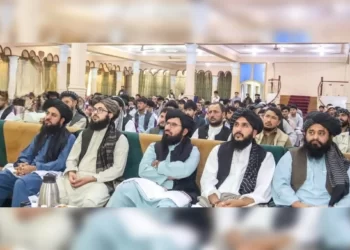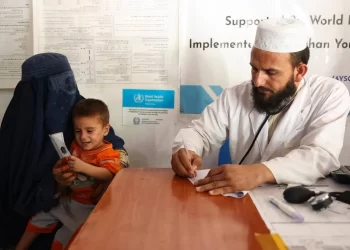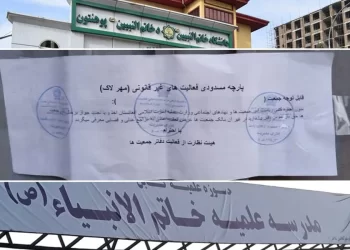
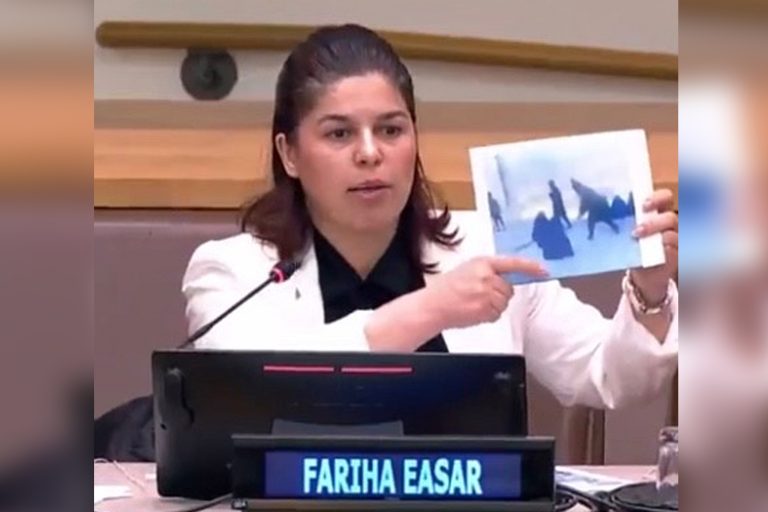
The United Nations convenes in Doha, inviting the Taliban despite the group and some of its members being listed as terrorist entities by countries including the United States, and lacking any form of domestic or international legitimacy. The international community, while striving to engage with the Taliban, seemingly contradicts its previous stance where the United States, in alignment with the international community including the United Nations, once labeled them as a terrorist group and launched military attacks to suppress them and fight terrorism in Afghanistan. However, now, based on a completely mistaken assessment and unsubstantiated narrative claiming the “Taliban has changed” and “moderate Taliban exists,” a policy of engaging with terrorists has been adopted. Presently, advancing and implementing this agenda is also on the UN’s agenda. The question arises: on what legal basis has the global community, particularly the United Nations, initiated unconditional and direct engagement with a terrorist group?
The strategy of engagement and negotiation with the Taliban was first proposed during the Obama administration when the military war with the Taliban by the United States was declared “long, exhausting, and concluded.” The first negotiations between the United States government and the Taliban took place behind closed doors in Munich, Germany, and then in Qatar. As a result, the Taliban’s political office, under the name of the “Islamic Emirate,” with their white flag, opened in Qatar. In 2018, Donald Trump initiated direct talks with a group designated as terrorists by the United States government, the United Nations, and other countries, disregarding the desires of the Afghan people. In 2020, the Washington-Taliban agreement was signed confidentially and without the participation of the Afghan people, without any conditions. The United States used the name “Islamic Emirate” in the agreement instead of “Taliban,” and without any consideration in the text regarding the demands and concerns of the Afghan people, especially women and the observance of values such as democracy, human rights, women’s rights, freedom of expression and media, granted a political identity, legitimacy, and unimaginable power to the terrorist group, the Taliban. The terrorist group, which has regained power in Afghanistan as a result of the intelligence and geopolitical games of foreign countries and the betrayal of first-degree officials during the Republic period and some incompetent and corrupt leaders and politicians, raises the fundamental question: is engaging with a terrorist group that is sanctioned by the United Nations Security Council permissible based on the provisions of international documents or not?
The Taliban; Terrorism and Al-Qaeda
In 1996, the Taliban emerged as an extremist religious and terrorist group, launching suicide attacks under the banner of the “Islamic Emirate” with their white flag, swiftly occupying 90% of the country’s territory upon entering Kabul. On their first day in Kabul, they publicly executed Najibullah, the former President of Afghanistan, and his brother Shahpur Ahmadzai at Ariana Square. According to reports from Amnesty International, on their second day of control in Kabul, they simultaneously executed 30 men and women in public from Herat prison. They detained and tortured soldiers of the previous government, most of whom remain missing to this day. At that time, much like the current situation in Afghanistan, the people suffered under anarchy and absolute lawlessness. The absence of law, access to justice, and the paralysis of judicial institutions were prominent features of their first rule. According to the US Department of State’s human rights report, women were stoned to death in public on charges of adultery and people had their limbs amputated for theft in Taliban’s makeshift courts. Kabul’s sports stadiums and provinces turned into venues for Taliban rulings and desert courts. Just like today, back then, the Taliban, under their special interpretation of Islam, implemented a regime of gender apartheid. Women, like today, were deprived of even the most basic rights, and wearing the burqa was mandatory for them. Women’s employment in government offices and schools was prohibited, and their right to education was taken away.
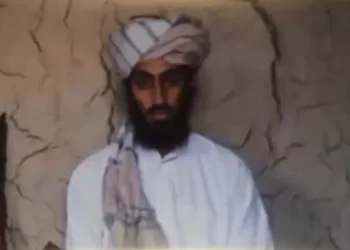
Similar to today, the Taliban began close cooperation with other terrorist groups. In 1996, Osama bin Laden, the leader of Al-Qaeda, along with 30 members of the group, entered Afghanistan from Sudan at the invitation and with the security arrangements of the Taliban. In return, Al-Qaeda provided financial backing to the Taliban. Bin Laden’s fighters fought alongside the Taliban. In 2001, before the September 11 attacks, bin Laden pledged allegiance to the Taliban in a statement and expressed his loyalty oath. He asked Al-Qaeda members to announce their support for the Taliban. As a result of this collaboration with the Taliban, Al-Qaeda attacked the US embassies in Kenya and Tanzania in 1998. In response, the White House targeted Al-Qaeda’s terrorist network in Afghanistan, which operated under Taliban protection, with missile strikes and demanded Taliban surrender bin Laden. However, the Taliban refused to surrender bin Laden. In December 2000, the UN Security Council decided to punish and sanction the Taliban regime for providing training to international terrorists in Afghanistan and sheltering bin Laden.
In 2001, in cooperation with the Taliban, Al-Qaeda successfully launched attacks on the Twin Towers of the World Trade Center in New York. Immediately, the United States launched a military attack on Afghanistan to combat terrorism and suppress the Taliban. In 2005, according to the Special Inspector General for Afghanistan Reconstruction (SIGAR) report, the Taliban regrouped and, in collaboration with Al-Qaeda, initiated guerrilla warfare against Afghan military forces and NATO troops. In 2014, in a new declaration from Mullah Mohammed Omar, the leader of the Taliban, Al-Qaeda members worldwide pledged allegiance to the Taliban, stating that they serve as soldiers of the Taliban. Following that, in 2015, Mullah Akhtar Mohammad Mansour, and in 2016, Mullah Haibatullah Akhundzada, leaders of the Taliban, declared cooperation and allegiance, calling the “Islamic Emirate” of the Taliban the first Sharia state for Muslims worldwide. Concurrently, Ayman al-Zawahiri, the leader of the insurgent group “Jamaat Nasrat al-Islam wal Muslimin” in Somalia, established a new Al-Qaeda network in West Africa, not only pledging allegiance to Al-Qaeda’s leader but also to the Taliban’s leader, and with the withdrawal of US forces from Afghanistan, congratulated the Taliban on their victory through another proclamation.
The close relationship between the Taliban and the Al-Qaeda network is also noted in the Security Council’s monitoring reports. In the fourteenth monitoring report of the United Nations Security Council regarding the reorganization of the Taliban and Al-Qaeda, it is mentioned that Al-Qaeda is actively present in 12 Afghan provinces and has established new training centers in Kunar and Nuristan provinces. The report also mentions that senior Al-Qaeda members have found their way into key positions within the Taliban government. According to this report, the total number of Al-Qaeda members in Afghanistan ranges from 500 to 1,000 individuals who are clandestinely engaging in terrorist activities to challenge the Taliban’s agreement with the United States regarding non-cooperation with Al-Qaeda. Additionally, the report highlights efforts by Al-Qaeda leaders to strengthen cooperation with other regional terrorist groups in Afghanistan, including the Islamic Movement of Uzbekistan, the East Turkestan Islamic Movement, and Ansar Allah. Furthermore, the 2020 report from the US Department of Defense states that due to the close relationship and coexistence between the Taliban and Al-Qaeda, Al-Qaeda members have become integrated into the Taliban’s military structure.
When the Taliban regained power in August 2021 as a result of an international conspiracy and the betrayal of previous regime officials, they demonstrated that they were the same group as they were in 1996 by forming a cabinet composed of notorious figures. The current Taliban cabinet consists mostly of individuals who are not only listed as terrorists by the United Nations Security Council and countries but also have affiliations with other terrorist networks. For example, Mohammad Hassan Akhund, the Prime Minister; Abdul Ghani Baradar, the Deputy Prime Minister; Abdul Salam Hanafi, another Deputy Prime Minister; and Abdul Haq Wasiq, the head of intelligence and a former Guantanamo detainee, are all on the UN Security Council’s terrorist list. Sirajuddin Haqqani, the Taliban’s Minister of Interior, is a terrorist wanted by the US government, with a $1 million bounty on his head. Khalil-ur-Rahman Haqqani, the Minister of Refugees, and Hidayatullah Badri and Khairullah Khairkhwa, respectively the head of the central bank and the minister of information and culture of the Taliban, are also listed on the UN blacklist and sanctioned by the US government. This indicates the undeniable fact that the Taliban and Al-Qaeda are like-minded, allied, and comrades. In their actions, crimes, and launching of terrorist attacks, they are indistinguishable. There are even reports suggesting close familial ties resulting from intermarriages between members of these two groups. Therefore, attempting to separate these two groups seems to be a futile claim.
It is worth mentioning that due to the close relationship and cooperation with other terrorist networks, the Taliban has not yet been removed from the UN Security Council’s sanctions list. Since 1999, the United Nations Security Council has placed the Taliban on its list of terrorist groups through Resolution 1267. The question arises: How has the United Nations decided to engage with this group without conditions and turn a blind eye to the crisis in the country, even though any form of interaction and communication with terrorist groups is prohibited and considered a crime according to international documents?
Terrorism and the International Regime to Combat It
Terrorism in all its forms is considered one of the most recent threats to global peace and security, which has been evolving extensively, especially since 2021, with new forms and manifestations emerging. In the seventy-eighth session of the United Nations General Assembly’s Legal Committee held on October 8, 2023, extremism, Islamophobia, xenophobia, racism, the use of cyberspace, social networks, and artificial intelligence to attract and launch terrorist attacks have been mentioned as new forms of terrorism. The third paragraph of Resolution 1566 defines terrorism broadly: “Criminal acts, including against citizens to cause death or severe bodily harm, hostage-taking to terrorize the public or force governments or international organizations to do or abstain from doing an act that is prescribed as a crime in international conventions and protocols related to terrorism, is not justified under any circumstances, political, philosophical, ideological, racial, ethical, religious, or similar conditions. All countries are called upon to ensure that such acts are subject to punishment.”
The highest international body responsible for conflict resolution and safeguarding global peace and security is the United Nations Security Council. The Security Council has legislative powers based on the provisions of Chapter VII of the UN Charter, which are exercised through resolutions on actions that violate international peace and security, such as terrorism. Resolution 1373 of the Security Council is one of the legal actions taken by this body in the fight against terrorism following the terrorist attacks of September 11, 2001. This resolution introduces international measures to combat terrorism, including the prohibition of arms procurement, travel bans on terrorists, the prevention of terrorist financing, and the blocking of assets of terrorist groups and individuals as international solutions to combat terrorism. The bulk of Resolution 1373 focuses on the issue of terrorist financing, which is one of the Security Council’s most serious requirements for all states in the fight against terrorist financing. To implement this resolution, the Security Council has established the “Counter-Terrorism Committee” and the “Executive Directorate of the Counter-Terrorism Committee.” The responsibilities of these committees in the process of combating terrorism include cooperation with member states to provide technical and technical assistance and to seek solutions to increase the cooperation of governments with international and regional organizations. Furthermore, member states are required to take serious and immediate action to prevent their territories from becoming a haven for terrorists. It is for this reason that the Taliban, due to their criminal and terrorist activities posing a threat to global peace and security, are still subject to the UN Security Council’s blacklist, and based on these resolutions and international documents, any form of communication, proximity, and cooperation with this group is prohibited and considered a crime. The main question that must be answered is how to use international mechanisms to combat terrorism to prevent the continued consolidation of Taliban rule as a terrorist group and to take steps toward normalizing interaction with this group.
The Taliban: Perpetrators of War Crimes, Crimes Against Humanity, and Genocide
Following the resurgence of the Taliban, the people of Afghanistan have been subjected to a plethora of human rights violations, discriminatory behavior, and widespread and systematic attacks by the Taliban. Reports from Amnesty International and other human rights organizations indicate that what has happened in the provinces of Panjshir and Baghlan, especially in the Andarab, Khwaja Bahauddin, and Farang districts, is a clear example of war crimes and genocide. This is while international humanitarian law defines the laws of war and obliges all parties to the conflict to comply with its provisions and prevent the killing and harming of civilians. According to the investigation and statistics of Amnesty International, the Taliban have committed war crimes such as mass punishment of civilians, abduction of non-combatant prisoners on charges of collaboration with the National Resistance Front, murder and massacre of civilians, torture and hostage-taking of people, arbitrary group detentions, deliberate burning of homes and other non-combatant objects, arson and destruction of public places including schools and residential buildings, and imposition of restrictions and deprivation of daily life for non-combatants.
These crimes and atrocities are described as war crimes under the provisions of the four Geneva Conventions of 1949 and their Additional Protocols, the Convention against Torture and other Cruel, Inhuman or Degrading Treatment or Punishment, and the Rome Statute of the International Criminal Court as acts of war crimes.
In addition, extensive reports indicate that the Taliban have committed “crimes against humanity” over the past three years. The crimes of the Taliban are described as “crimes against humanity” in international treaties and conventions such as the International Covenant on Civil and Political Rights, the Geneva Conventions and their Additional Protocols, conventions such as the Convention against Torture and Other Cruel, Inhuman or Degrading Treatment or Punishment, the Convention on the Rights of the Child, the Convention on the Elimination of All Forms of Discrimination against Women, and the International Convention for the Protection of All Persons from Enforced Disappearance, and they are subject to inspection. In a human rights watchdog report released in 2023, the Taliban’s anti-woman policies and crimes have been referred to as “crimes against humanity.” Based on this report, the Taliban have committed crimes such as torture, rape, arbitrary detention and imprisonment, summary executions, and inhumane treatment of individuals and groups, especially women and girls, including forced marriages to Taliban fighters, widespread and targeted attacks on non-combatants, and the use of illegal acts such as coercion, terror, and enforced disappearances.
These crimes, due to their “widespread” and “systematic” nature, are described as “crimes against humanity” according to the provisions of the Rome Statute of the International Criminal Court. The investigation and prosecution of perpetrators of crimes against humanity by the International Criminal Court could pave the way for bringing the Taliban to justice. Since Afghanistan is a party to all the mentioned conventions, including international human rights laws and standards, the Taliban must be prosecuted and punished as a terrorist group, violators of international conventions, and perpetrators of international crimes.
Taliban and Gender Apartheid
Following the Taliban’s return to power in Afghanistan, the human rights situation has deteriorated significantly each year in various dimensions. According to the recent findings of Human Rights Watch, the human rights situation in Afghanistan in 2023 has worsened compared to 2022 due to the commission of crimes such as violation of the right to life, including revenge attacks against women protesters, former government employees, and their family members, human rights defenders, and non-combatants, and targeted, mysterious, and extrajudicial killings. There is extensive evidence and cases indicating that the Taliban, due to their adoption of a comprehensive set of anti-women and discriminatory policies, directives, and policies, to marginalize and eliminate women and girls from all social, economic, and political spheres, have committed gender apartheid. Of the 140 orders issued by the Taliban since the occupation of Afghanistan, 90 orders have been against women and girls, deliberately depriving them of their fundamental freedoms as part of human society. According to a report by the US Institute for Peace, in the latest Taliban decree, the broadcasting of women’s voices through radios has been banned. Furthermore, in the provinces of Farah and Paktia, women are forced to wear black hijab, gloves, and face masks, and in the Paktia province, wearing a burqa and full-face covering for women has been mandated. In previous Taliban decrees, women have been prohibited from going to recreational places, sports clubs, shrines, and free-roaming, and have even been subjected to torture. Based on the report of Human Rights Watch, the Taliban’s Ministry for the Promotion of Virtue and Prevention of Vice in the Bamyan province has publicly flogged and subjected women and girls to violence in public places because of their clothing, which is not Islamic. The Taliban have even interrogated and subjected women seen outside without a male guardian to interrogation and violence at checkpoints and returned them to their homes. This severe and systematic discrimination by the Taliban is a clear example of gender apartheid as an institutionalized system of discrimination, segregation, humiliation, and expulsion of women.
There is no international definition of gender apartheid in international documents; however, the Rome Statute addresses apartheid in South Africa. In the apartheid regime in South Africa, the rights and privileges of white people were considered higher in social classification compared to other races, including colored people and Indians. In the apartheid regime, one race is considered superior to another. Just like the Taliban’s misogynistic regime, which considers women as “second-class” and “inferior” and men as “superior” and “noble.” Based on international documents, any act that has three essential elements, including the intent to maintain the dominance of one group over another, systematic suppression of one group over another, and inhuman acts against one group or specific groups, is considered a “crime against humanity” and is subject to prosecution. Criminalizing gender apartheid, on the one hand, puts an end to ignoring the voices of women’s freedom in Afghanistan and puts pressure on the Taliban based on their systematic and suppressive actions, and they will be sentenced in international courts. On the other hand, member countries of the United Nations are obligated to take immediate action to combat gender apartheid and will take measures and specific programs to prevent the normalization of interaction with a terrorist group and the continuation of their rule in Afghanistan.
The United Nations, as the foremost global legislative body and guardian of peace and security, should refrain from unconditional engagement with a terrorist group that violates all international treaties and conventions, as well as the core values of the United Nations such as democracy, human rights, fundamental freedoms, and gender equality. Instead, it should work with regional and global countries, engaging directly with the people of Afghanistan, civil groups, and diverse democratic political and military factions to define a unified policy and coordination in confronting the Taliban and aiming to resolve the existing political and humanitarian crisis in Afghanistan. The United Nations must understand that the Taliban, due to their ideology and belief in the sacred system they seek to establish, are unchangeable and do not see any need for change. The reality is that if the Taliban change, they cease to be the Taliban. Therefore, any perception that dialogue and reasoning can be pursued with the Taliban is futile and far-fetched from their true and intrinsic identity. Because the Taliban are alien to any phenomenon outside the confines of their beliefs, ideologies, and approaches, such as freedom, equality, modern civility, governance, modern civil society, pluralism, tolerance, and human rights values, they are in absolute contradiction. Therefore, the United Nations should recognize the Taliban not as a ruling group, but as a terrorist group and act immediately and urgently at the behest of the people of Afghanistan, especially women who are victims of gender apartheid, to take immediate steps. The ongoing historical struggle and political representation of Afghan women and the region in the fight against discrimination and injustice, which aims for freedom, equality, and liberation, must also be acknowledged.