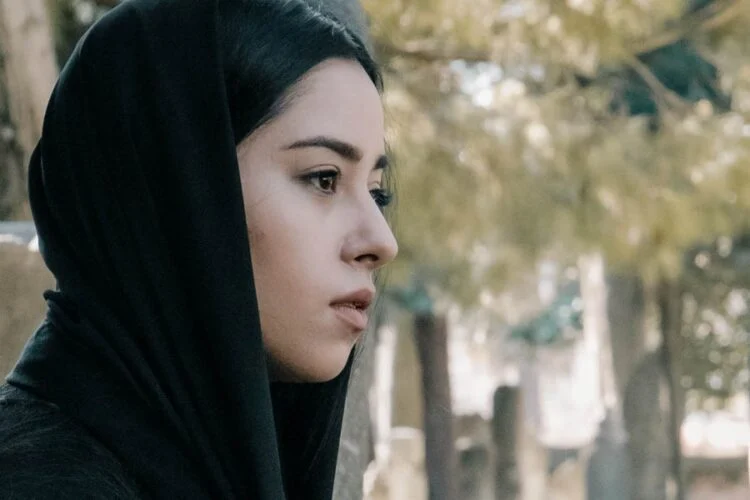
Yousra is 13 years old. Her mornings are spent going to school, while her evenings are filled with studying and learning English. Yet among her schoolbooks and notebooks, there is always an empty space: the place of a father who has been away from her for three years.
For Yousra, her father is not simply someone whose voice she hears from far away over the phone or whose image she sees on her mobile screen. He was part of her childhood; someone whose presence was so ordinary and constant that she never imagined she would one day have to continue her life without him for three years.
Three years ago, when her father said goodbye to her for the last time, Yousra did not imagine that the goodbye would last this long.
“The last time my father said goodbye to us, I thought it was like his other work trips. He said he was going to Dubai and would return after 10 days. But three years have passed since that day, and my father is still away from me,” she says.
That day, Yousra may have thought about her father leaving, but she was certain he would return. To her, “10 days” seemed like a short time: a few mornings passing, a few nights ending, and then her father would be home again. Perhaps she expected him to bring her something from his trip, or perhaps she was simply waiting to hear his footsteps in the house again.
But those 10 days became three years.
Yousra’s father worked at a government office under the previous government. After the change in government, his living conditions changed, and he eventually left Afghanistan for Canada. Since then, the distance between father and daughter has been more than thousands of kilometers. It is a distance that makes itself felt in Yousra’s daily life: on school days, during family occasions and in moments when she wants to share something with her father, but he can only be present through a video call.
Yousra still goes to school. She still studies English and makes plans for her future. Like many 13-year-old girls, she talks with her friends about school, lessons and the things that matter to them. But amid all these ordinary days, she carries an unusual expectation: the hope of seeing her father in person again.
She says that if the political situation in Afghanistan had not changed, her father might not have been forced to leave.
“If the government had not changed, my father would not have left. He would have stayed in his own country.”
For Yousra, this is more than an imagined possibility. It is part of the regret she has carried over the past three years. She wishes things could have been different: her father could have stayed in Afghanistan and continued working, while she could see him at home every day. There might have been no flight for her father to take and no distance between Yousra’s room and her father’s life in Canada.
Now, however, her father is in Canada and Yousra is in Afghanistan.
On one hand, Yousra is eagerly waiting to join her father. She wants the immigration process to be completed as soon as possible so that, after three years, she can see him in person again. For a 13-year-old girl, three years is a long time. It means a large part of childhood: growing taller, moving from one grade to another, learning new things and gradually entering another stage of life.
Throughout those years, her father has witnessed most of these changes through a mobile screen.
“I will be happy to go to my father. It has been a long time since I saw him, and I want the Canada process to be completed sooner so I can go to my father.”
But leaving does not simply mean reaching her father for Yousra. It also means leaving behind another part of her life: her friends, classmates and the school she has grown accustomed to.
Perhaps this is the most difficult part of her story.
She is happy that she will eventually be able to join her father, but at the same time, she knows that reaching that happiness means leaving behind things that are dear to her: the friends she sees every day at school, the classmates with whom she has made memories, and the streets and days where she spent her childhood.
For Yousra, moving to Canada is a new beginning, but that beginning comes with a goodbye.
“I will also miss my friends and classmates very much. I wish I could go to my father without losing my friends.”
She wishes she could have her father beside her in Afghanistan without having to choose between her father and her friends. She wishes her father could work in his own country while she continued studying at the same school alongside the same friends. She wishes families did not have to leave their homes, countries and parts of their past behind just to be together again.
Yousra now stands between two feelings: the happiness of being reunited with her father and the sadness of leaving behind the things she loves.
She is still 13, an age when she should be thinking more about school, friendship and her dreams than about migration and separation. But like many children in Afghanistan, she has become familiar with distance, migration and waiting earlier than she should have.
Still, Yousra continues to look toward the future. She studies English, goes to school and prepares for the day when she will begin a new life alongside her father.
Perhaps one day, her father will no longer wave to her only from behind a mobile screen. Perhaps one day, the three-year wait will end and Yousra will be able to embrace him in person.
But within that wait, she also carries a simple wish, one that may be bigger than leaving: that one day, no girl will have to leave her school and friends just to be with her father, and no father will have to live thousands of kilometers away from his 13-year-old daughter to continue his life.
For Yousra, her father is still the traveler who was supposed to “return after 10 days.” Only three years have passed, and those 10 days still have not ended.