Since the Taliban returned to power, women in Afghanistan have faced widespread restrictions on their economic and social activities. Alongside being barred from education and many employment opportunities, these restrictions have left a large number of working women unemployed and struggling financially. The closure of women’s beauty salons was one such decision, depriving thousands of women of their workplaces and sources of income. For many of them, hairdressing was more than just a profession; it was a way to cover living expenses, support their families, and maintain financial independence.
For women who were the primary breadwinners in their families, losing this income had even more serious consequences. Some tried to continue working from home after their salons were shut down, but the lack of regular customers and restrictions on their ability to work caused their earnings to drop sharply.
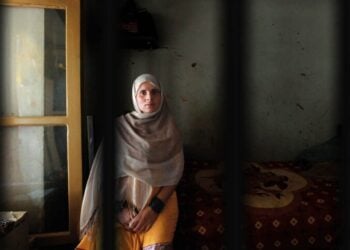
Fariba is one of these women. She is responsible for supporting a family of seven and previously covered her family’s expenses through her work as a hairdresser. After her salon was closed, she was forced to continue working from home. However, she says her current income is nowhere near what she earned when she had her own salon.
“When I had my shop, things were better, business was thriving, and I could cover household expenses through hairdressing. But now, the economic situation is very bad. The shops have been closed, and I have been forced to work from home. As you know, working from home is not the same as having a shop. Many women either do not feel comfortable coming to someone’s home or their husbands do not allow them to go. As a result, sometimes I get customers and sometimes I don’t,” Fariba says.
Fariba’s income has declined even as she remains responsible for supporting a family of seven. The family lives in a rented house and pays 4,000 Afghanis a month in rent. Her mother is ill, and one of her brothers is unemployed.
After her father’s death, Fariba took responsibility for providing for her family. She says her father was killed about eight years ago, and she has been the family’s breadwinner ever since.
“I have no father. He was killed around this time of year, nearly eight years ago. I am the head of my family and responsible for covering our expenses. These days, we don’t even have enough food to eat at home. Because of financial difficulties, I had to borrow money, and now I am in debt as well,” she says.
Fariba’s financial difficulties extend beyond meeting her family’s daily needs. Her mother’s illness has added to her worries. She recalls that one day, when her mother’s blood pressure rose, the family could not even afford the cost of a medical examination.
“The authorities only know how to issue orders. Who cares what happens to the poor and the helpless? Just yesterday, my mother’s blood pressure went up. Can you believe we didn’t even have the money for a medical checkup? This unemployment and this life are driving me crazy. I am under pressure from every direction,” she says with distress.
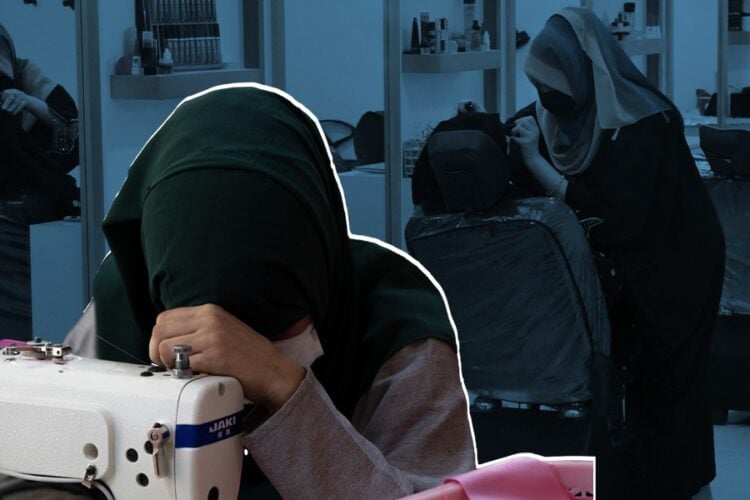
Fariba is not the only woman facing these circumstances following the closure of beauty salons. In 2023, the Taliban ordered the closure of women’s beauty salons across Afghanistan. According to published estimates, around 12,000 women’s beauty salons were operating in the country at the time, employing nearly 60,000 women. Following the implementation of the order, thousands of salons shut down, leaving many women working in the sector without a source of income.
The decision affected not only salon owners but also the many women employed at these establishments, who relied on their jobs to cover their own living expenses and support their families. Some salon owners had also provided employment opportunities for other women, which disappeared when the businesses closed.
In families where women’s earnings played an important role in covering daily expenses, losing that income increased financial pressure on every household member. Paying rent, buying food, covering medical costs, and meeting other basic needs became more difficult for many of these families.
Beyond the economic consequences, the closure of salons also disrupted the professional paths of women who had spent years learning their trade and building their businesses.
Khadija, a resident of Kabul, is another woman affected by the ban. She had opened her own salon six years before the Taliban returned to power and contributed to her household expenses through her work. She had invested considerable effort in learning hairdressing and developing modern professional skills. However, the order to close women’s beauty salons brought her professional career to a halt.
Khadija says, “When I heard that we had been told to close our salons, it was truly heartbreaking. I felt as though all the efforts I had made and all the goals I had set for my career had suddenly been destroyed.”
She adds, “When the Taliban came to power, I never imagined that even beauty salons, places specifically for women, would be closed. It was difficult for me to believe this was happening, and after the decision, I struggled emotionally for a long time.”
For Khadija, the closure of her salon meant more than losing a workplace. She had spent years learning her profession and building a future for herself, and her salon was an important part of the plans she had made for her life.
“I used to ask myself, why shouldn’t I be able to live freely in my own country? Why should a woman’s dreams be taken away from her? What is our crime? What are we being punished for? I wanted to find a way to leave a country where women are not even allowed to breathe freely and never return,” she says.
Despite these difficulties, Khadija remains hopeful that she will one day be able to return to her profession.
“Despite all these difficulties, one of my greatest dreams is still to reopen my salon one day and resume the work I spent years striving to build,” she says.
Alongside Khadija and Fariba, other female hairdressers are also trying not to abandon the skills they spent years and money acquiring. Some continue to work from home and accept a limited number of customers, but working from home cannot replace the income they earned before their salons were closed.
Restrictions on women’s employment opportunities continue, even though many women previously helped support their families through their own businesses and economic activities. Losing these opportunities has increased women’s financial dependence and added to the pressures they face.
For women like Fariba, the closure of a beauty salon means more than losing a shop. She must provide for a family of seven and, with fewer customers, is struggling to earn a living from the skill she spent years learning.
For Khadija, too, the salon was more than a workplace. It represented years of effort, training, and planning for the future—a future that now depends on whether she can return to her profession.
All this is happening as economic and social restrictions on women in Afghanistan continue and their employment opportunities grow increasingly limited. For many of these women, the demand is not simply to have a job. They want to use the skills they have learned, work, and contribute to their families’ living expenses.
Behind every closed beauty salon is a woman who spent years trying to build a future for herself. For Fariba, reopening her salon could mean regaining the income she needs to pay household expenses and cover her mother’s medical costs. For Khadija, it would mean an opportunity to resume the profession she worked for years to establish.
For these women, returning to their salons would mean more than returning to a workplace. It would mean reclaiming their profession, their income, and a part of their lives that was taken away when the salons were closed.