Amid a surge in watermelon and melon production, several farmers and vendors in Afghanistan are voicing concerns over the lack of a viable market for their goods. They attribute the low demand primarily to the economic hardships faced by the population, noting that even reduced prices have failed to boost sales.
Some farmers report that, despite higher yields of watermelons and melons compared to the previous year, the absence of modern cold storage facilities and limited export capabilities has led to a stagnant market.
Khudadad, a farmer from Kunduz Province who traveled to Kabul to sell his produce, expresses frustration: “All our efforts have gone to waste. We toil from dawn to dusk under the scorching sun, hoping our hard work will translate into sustenance, but the market is lifeless.”
He adds, “In Kunduz, sales are poor because everyone has their land and doesn’t buy from others. We come to Kabul, but when it’s time to sell, there’s either no market or no customers.”
Ashraf, a fruit vendor in Kabul’s District 15, says he has been purchasing watermelons and melons from the market for days but finds no buyers. “People can barely afford dry bread, let alone fruit. For many, watermelons have become a non-essential luxury. I come every morning, sprinkle water on the fruits multiple times, but where are the buyers? Even with low prices, there are no customers,” he laments.
In one corner of the market, a stall brimming with vibrant fruits like apples, cherries, and plums catches the eye. Yet, despite the colorful display, customers are conspicuously absent. The vendor, seated behind the stall, appears exhausted and disheartened, not from laziness but from despair.
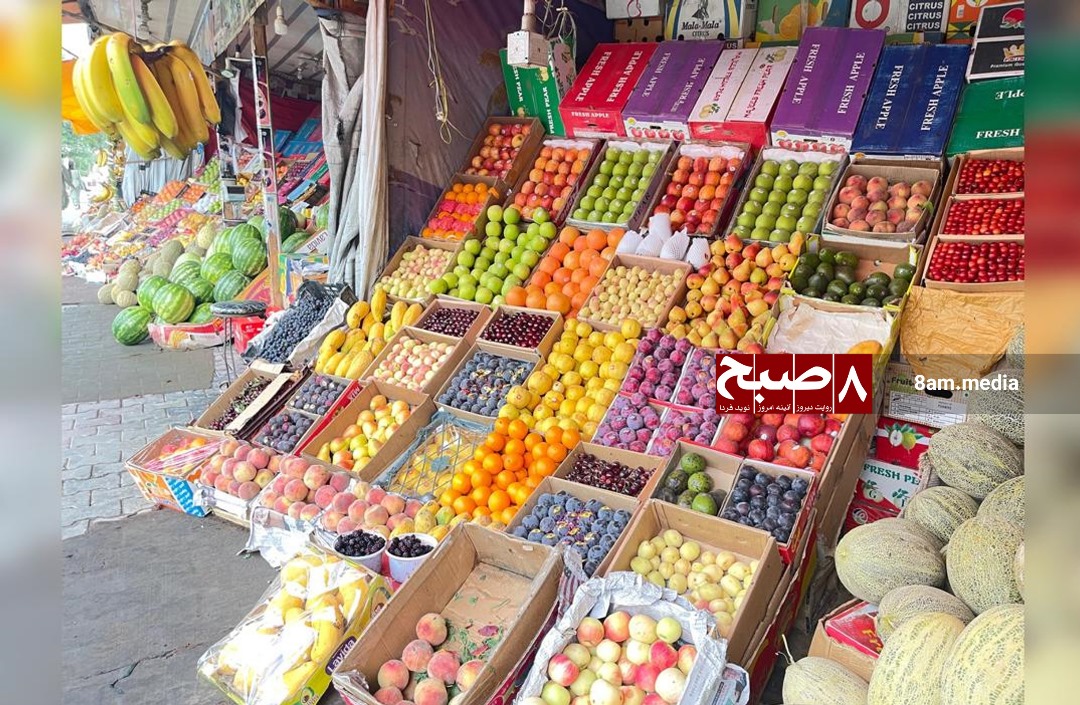
The vendor, named Esmat, with a somber expression and weary eyes, says, “We wait from morning to night for customers. When no one comes, I end up dozing off… There’s no market. People don’t have money for bread—who thinks about fruit? We hire laborers for our fields, pay for transportation, but we don’t even recover the minimum costs.”
Aref, another farmer who traveled from Farah to Kabul to sell his watermelons and melons, explains, “Prices start at 20 Afghanis per seer (7 kgs) and go up to 70 Afghanis. Some watermelons get damaged during transport, and others are forced to sell at lower prices due to the lack of proper storage or cold facilities. In the end, farmers are left with nothing but the toil of their journey.”
Farmers across Afghanistan during the harvest season are grappling with the absence of a robust market. The lack of modern cold storage, inability to export, and insufficient planning to process these products into other forms are key factors contributing to the poor market performance despite increased yields.
Additionally, rising food prices, declining household incomes, poverty, and unemployment have exacerbated the challenge.
Meanwhile, the World Food Programme (WFP) has reported that tensions between Iran and Israel have impacted Afghanistan’s markets. According to the organization, halted imports through Iran have driven up the prices of staples such as flour, rice, and oil, with diesel prices reaching 68.6 Afghanis, a 15 percent increase from last year.
The agency further noted that one in five people in Afghanistan urgently needs food assistance. To sustain aid for those in need, the organization requires at least $25 million in immediate funding.
You can read the Persian version of this report here:
رنجهای بیحاصل؛ افزایش حاصلات تربوز و خربوزه و رکود بازار فروشات