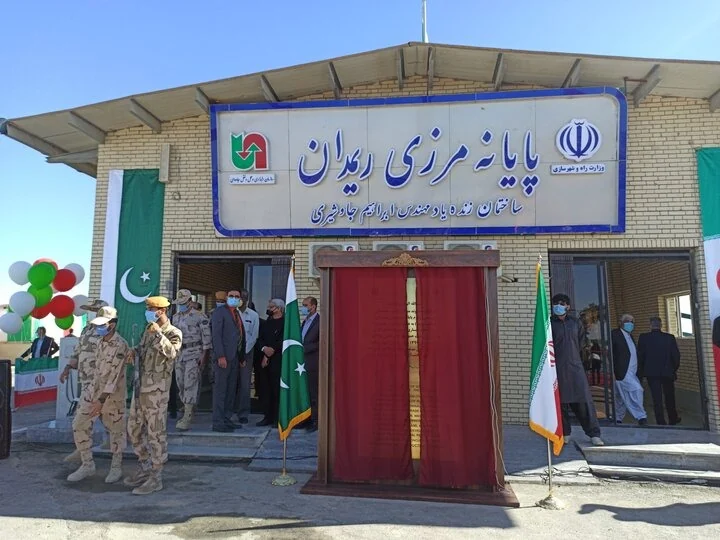
A number of traders from Afghanistan are complaining about delays in transporting their fruit and vegetable shipments through Iran’s Rimdan route. They say trucks carrying their commercial cargo are sometimes held up on this route for 25 days to a month. According to them, these delays cause part of the produce to spoil before reaching its destination, inflicting heavy financial losses on traders and orchard owners. They add that Iranian border officials give priority to Iran’s own gas and oil trucks over the trucks of traders from Afghanistan, and that this situation, along with growing congestion, has accelerated the spoilage of the cargo.
Yamin Watanyar, a fruit and vegetable trader from Afghanistan, says that after the closure of trade borders with Pakistan, he and a number of other traders were forced to send their shipments to Pakistan through Iran’s Rimdan route. According to him, the prolonged stoppage of trucks carrying produce on this route has raised transport costs and made exports difficult. Watanyar adds that in some cases his trucks have been stuck on the road for 10 to 15 nights, and that these delays have left him unable to cover even the cost of renting the freight trucks.
Mr. Watanyar says: “We face many problems on the Iran route. We export grapes to Pakistan through Rimdan, but our trucks are stuck on the road for 10 to 15 nights. When they finally reach Pakistan, sometimes the truck rental cost is not even covered. Iran gives priority to its own gas and oil trucks, and truck congestion is also heavy. The route to Pakistan was closed for several days; after that, we faced problems in Iran and then at the border of Afghanistan too. At the Rimdan border, they also stopped the refrigerated trucks and did not allow transit. If our own trade borders were open, there would be no need to use the route through Iran.”
Ramin Haidari, another trader in the country, says that delays in moving cargo through the Rimdan border have caused heavy losses not only to traders but also to orchard owners. According to him, some products such as grapes, pomegranates and apples have spoiled before reaching their destination markets because of the long time spent in freight trucks.
This trader says: “Every truck that is loaded to leave through the Rimdan border stays at the border for 20 to 25 days, or even a month. During this time, the produce inside the trucks is destroyed. Our orchard owners had loaded grapes and pomegranates, but when the shipments reached their destination, the produce had spoiled. They had also loaded apples, and those were lost as well. This situation has inflicted great losses on us traders and on orchard owners.”
Gada Mohammad Kohdamani, another trader in the country, says the closure of the Taftan border and the problems of transporting goods through the Rimdan route have limited the export options available to traders from Afghanistan. He adds that, because of restrictions on moving large shipments through the air corridor, traders cannot easily use this route to export their products. According to Kohdamani, the lack of standard and sufficient cold storage facilities in the country also increases the risk of agricultural produce spoiling during border delays.
This trader says: “We traders face many problems. We export apples and our other products through the Rimdan route, but the Taftan border is closed, and more than 10 to 20 of our freight trucks are stuck. On the other hand, because the Taliban are not recognized, exporting through the air corridor is also not possible for traders, and we cannot transport even two to four tons of cargo through this route. Our request is that standard cold storage facilities be built in Afghanistan so that the produce of orchard owners and traders does not perish. Traders and orchard owners are the backbone of the country’s economy, and our people depend on farming and orchard cultivation.”
Meanwhile, the Afghanistan Chamber of Agriculture and Livestock Products (ACALP) attributes the current problems in exporting agricultural products to recent clashes and tensions, and says traders are using alternative routes to move their products. The chamber adds that Afghanistan is largely self-sufficient in cold storage capacity, but that some provinces face a shortage of such facilities.
Omid Haidari, head of international relations and a member of the board of directors of ACALP, says the capacity of existing cold storage facilities in the country is sufficient for storing agricultural products, and that the main shortage exists in some provinces.
Haidari adds: “We are almost self-sufficient in cold storage, and we only have shortages in some provinces. The recent clashes have affected our exports, and for this reason, we currently cannot use Iranian ports as we did in the past. However, traders are exporting through alternative routes, including the Dubai and Tashkent air corridors. The capacity of cold storage facilities for keeping products is eight to 10 months. When the clashes end, the existing problems in the export sector will also be resolved.”
After the border clashes between the Taliban and Pakistan, Islamabad closed its border crossings with Afghanistan to goods transit and passenger travel. Currently, the crossings between the two countries are closed to transit and trade, and on some routes only migrant families are allowed to enter Afghanistan.
Following these restrictions, traders from Afghanistan have increasingly turned to Iranian routes, particularly the ports of Chabahar and Bandar Abbas, to transport their commercial goods. While these routes provide an alternative option for Afghanistan’s trade, they have been accompanied by challenges such as higher costs, delays in moving goods, and transit problems.
According to statistics from the Taliban’s Ministry of Industry and Commerce (MoIC), the volume of trade between Afghanistan and Iran last year rose by 6.7 percent to $3.632 billion. Of this amount, only $72 million was Afghanistan’s exports to Iran.
You can read the Persian version of this report here:
توقف موترها در ریمدان؛ میوه و سبزی صادراتی افغانستان فاسد میشود