After the disastrous U.S. withdrawal from Afghanistan, in December 2021 President Biden dodged journalists’ questions with the response, “I want to talk about happy things, man.” People like me thought Afghanistan would be off the American radar screen again like in the 1980s following the Soviet withdrawal. We know what the consequence of that policy was, letting Afghanistan turn into a haven for terrorists and opening the path to the 9/11 terrorist attacks. I hope the US government and international community will not forget their past mistake and let the Taliban repeat its criminal misrule of the 1990s. I am sure they will not.
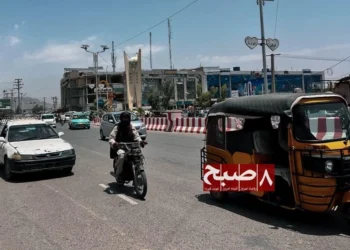
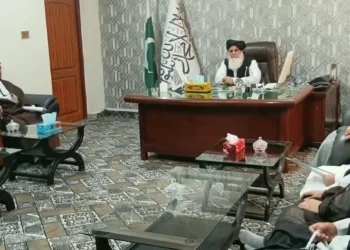
In the last 20 months of Taliban rule in Afghanistan, the regime’s only selling point has been that security has been expanded all across Afghanistan. On numerous domestic and international occasions, Taliban officials have made the claim that day or night, alone or with friends, with or without money, one can travel from Pamir in the extreme Northeast to the Islam Qala in the West, from Spin Boldak in the South to the Hairatan port in the North, without any concerns or fears for one’s safety. Using this tactic, Taliban officials deceive the international community, seeking to convince world leaders that there is no choice but to engage with their government. They lied about allowing girls to attend schools and women to work outside the home; they lied about forming an inclusive, broad-based government. They lied about ceasing their relations with extremist groups such as al-Qaida. Their lie was revealed when women were banned from public life by the fatwa of the Taliban supreme leader and subsequently, the doors of schools and universities were shut for the girls. When the leader of Al-Qaida was gunned down by American drones, in the heart of Kabul, the lie and double standard of the Taliban were revealed further to the international community.
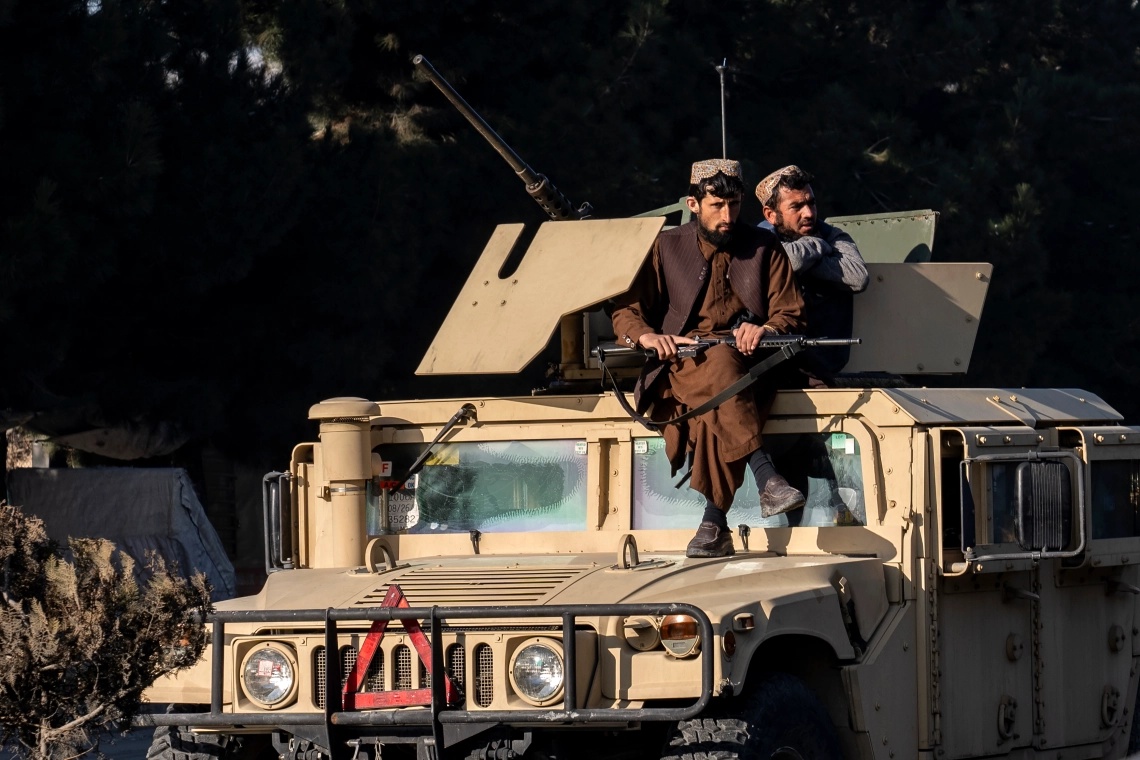
The Taliban’s claims about security might be true for certain parts of the country but they do not apply to the whole territory of Afghanistan. Looking at the structure of the Taliban proves the opposite. The Taliban is composed of three layers: the high leadership or ideologues, the foot soldiers, and the criminals and drug traffickers. The first layer of the high leadership, located in Kabul or Kandahar, issue assurances of security, but it is the foot soldiers and the criminals that endanger the physical safety of the citizens of Afghanistan. They engage in organized crime, targeted killings, violations of people’s fundamental rights, drug trafficking, extorsions and rape. On June 16, 2022, Amnesty International published a report that revealed large numbers of extrajudicial killings and arrests carried out by the Taliban foot soldiers. Another Amnesty report revealed the gang rape of a girl by Taliban soldiers on 28 February 2023 at Khanaqah village, Suzma Qalah District of Sar-i-Pul province. Along with these documented crimes, there are many kidnappings and killings of the opposition that go unreported. Unfortunately, the human security situation in Afghanistan is much direr.
Conceptually speaking, the United Nations Development Report (UNDR) came up with a new definition of security in 1996 and added the concept of human security to mainstream security studies. This new concept has six dimensions including, economic, food, health, environment, personal, community and political security. To stop the violation of human security and to find the solution to it, the Canadian government came up with the concept of Responsibility to Protect or R2P that later 150 heads of state and government endorsed at the World Summit in 2005. Mary Kaldor, a prominent scholar in the field, has described how to secure human security in a society facing conflict. First, there should be a focus on the primacy of human rights, including social, economic, political, and civil rights. Second, there should be a legitimate political authority and civilian government that should come up through political debate using a bottom-up approach and involving every section of society and not by using brute force. Third, the international community and the regional countries through multilateralism and regionalism should work together to bring changes.
How does human security in Afghanistan look according the criteria advanced by UNDR and Professor Kaldor? With organized crime, target killings, violation of citizens’ fundamental rights, drug trafficking, extorsion and rape, it is obvious that the people of Afghanistan are not feeling safe under the Taliban regime. The people of Afghanistan have no economic security in terms of per capita income or adequate employment. Thousands are in the queue for appointment to receive their passports to apply for neighboring countries’ visas and thousands more cross Afghanistan borders daily for work and a better life. Recently, an asylum seekers’ boat hit the rocks on the Italian shore, killing 80 people, the majority from Afghanistan. One of the victims was Zaman Haidari from my village whom I grew up with.
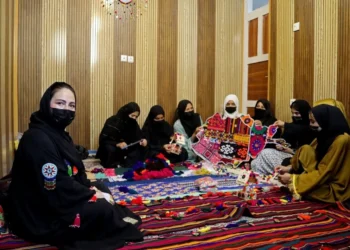
Concerning food and nutrition, according to WFP, out of the 41.7 million population of the country, 19.9 million people face serious food insecurity. Six million people face a food emergency and require urgent help. Due to food insecurity, the level of malnutrition is high, and it affects the health of children and mothers. According to UNICEF, 41% of children below the age of five face stunting and malnutrition, one in three baby girls faces anemia and only 12% of Afghan children (ages 6-24 months) receive proper food for their age. If we combine, personal community and political security together, their situation is much worse. Anyone who dares to question the Taliban system of governance will be arrested, tortured, and imprisoned. Recently the girls’ protests against the continuation of the ban on education for girls in the western part of Kabul were brutally suppressed and the protesters were arrested and imprisoned. In another incident, Matiullah Weesa, an educator who used to distribute books among children in villages in East and Southern Afghanistan, was arrested and imprisoned, his house was searched, and the family was tortured.
Despite the dire situation, one can imagine two types of solutions: short-term and long-term. In the short term, as Kaldor argues, first, the Taliban must submit to the demand of Afghanistan people to respect human rights, including women’s rights and their right to education and work. Second, the Taliban must be pressured to open the path for establishing a legitimate and broad-based government in Afghanistan. It should be done by consulting with each section of Afghanistan society, particularly the women. Third, countries in the region and the international community, must put aside their differences on Afghanistan and work together to press the Taliban to fulfil these demands. If this attempt does not work, then it is the responsibility of the international community to think about a longer-term strategy. It could entail tightening the sanctions further against the Taliban regime and officials, and even military options: surgical strikes inside Afghanistan, targeting the Taliban military complex and Taliban officials. The international community should think about arming the Taliban’s opposition and even using military force directly to push the Taliban to compromise—to engage in power sharing and respect human and women’s rights. If the current fiasco does not solve on time, the cycle of violence will be repeated in Afghanistan, and it will turn into a civil war.
About the Author:
Sharif Hozoori is a research scholar at South Asia Program, Einaudi Center for International Studies at Cornell University.