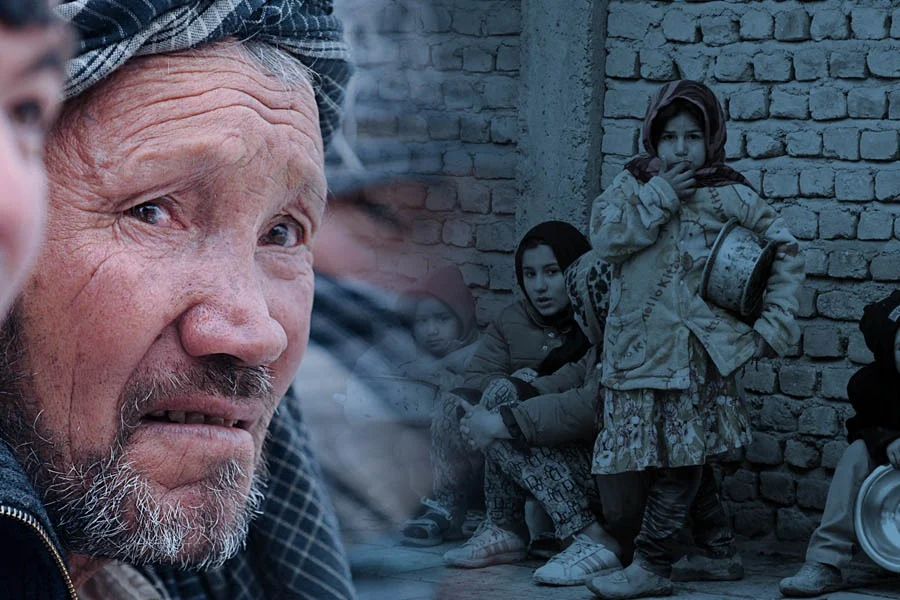
A number of citizens of Afghanistan have expressed deep concern over rising unemployment and the persistence of the situation. They say that, despite the Taliban’s claims, job opportunities are becoming more limited by the day, and that in government institutions, employment is offered only to Taliban members and their families. At the same time, a number of shopkeepers speak of a decline in people’s purchasing power and stress that they have suffered losses instead of profits. Other citizens say that, because of continuing poverty and unemployment, they have removed many important foods from their diets. Meanwhile, the Norwegian Refugee Council (NRC) has said that one third of the population of Afghanistan will face hunger in the coming winter. According to the council, at least two million people have been added this year to the number of those without access to sufficient food.
Despite the Taliban’s claims of economic prosperity, several citizens of Afghanistan express deep concern over the continuing crisis of poverty and hunger. They say that, because of the lack of work and the failure to create job opportunities, the unemployment crisis has spread to such an extent that some young people have lost hope in life and see their future as bleak. According to them, the Taliban continue to treat the institutions under the group’s control as “spoils of war” and offer recruitment opportunities only to those who are Taliban members or were former associates of the group.
Akbar Jan, a resident of Kandahar, says: “Unemployment here is very widespread. I have a university education, but I cannot even find an ordinary job, because people are hired here who lack the merit and the ability needed to carry out the duties of the post concerned. Many young people in Kandahar province are unemployed and are forced to go abroad through illegal and smuggling routes. People like me are forced either to migrate to foreign countries, or to commit suicide, or to turn to criminal activity.”
The Kandahar resident adds: “Life has become very difficult for us. I too sometimes think about suicide. The main reason for this situation is the lack of job opportunities. No one can find work or an income. Some of my family members have gone abroad and lost their lives along the way. All of these problems stem from unemployment and injustice. Otherwise, no one would impose such great suffering and hardship on themselves.”
Sadaf (pseudonym), a woman in the city of Herat, says: “I want to send my 16-year-old son to Iran through smuggling, because his father has not been able to find a job and all of us are hungry.” According to her, many people who were previously employed have lost their jobs because of continuing poverty and the lack of job opportunities.
Anbarin (pseudonym), another woman in Herat, says: “For two days now, I have not been able to bring even half a loaf of bread home, and because of weakness and thinness, I can neither work nor is there any work to be found.”
A journalist in Herat also confirms that he has seen women begging on the roadside together with their husbands. According to this journalist, they say that despite great efforts, they have not been able to find work and have been forced to turn to begging.
A resident of Ghor says: “I cannot find even a piece of dry bread to give to my children. There is no work, and there has also been drought. We are at a loss as to what to do. We have given up on different kinds of food and only want a piece of dry bread, but we cannot find even that. Our situation is very bitter and sorrowful.”
Meanwhile, Omar, a resident of the Tawhidabad area in central Ghazni, says that he owns a shop selling cosmetics and handicrafts. In an interview with the Hasht-e Subh Daily, he says that because of the decline in people’s purchasing power and the unprofitability of his business, he has put his shop up for sale.
The Ghazni resident says: “People’s economic situation is weak, and a high percentage of people cannot afford the food they need. When people have no income, undoubtedly no one buys goods from us, and we suffer losses as well. I cannot cover the shop rent, electricity, and my apprentice’s wages. For this reason, I decided to sell my shop and go to Iran or another country myself.”
A woman who, by her own account, had set up a pickle-making business to earn a piece of bread has been forced to close her business because of the decline in people’s purchasing power and the rise in the price of raw materials. She says: “This year we did not produce even one kilogram of product. In short, our work is currently suspended. The reason is the high price of raw materials and the low purchasing power of the people. We produce pickles and jam, but people are desperate to get dry bread and cannot easily buy pickles and jam. Not only have prices gone up, but people are also having difficulty buying raw materials. These products are not even on the list of people’s purchasing priorities.”
Meanwhile, Jan Egeland, head of the NRC, recently said that one third of the population of Afghanistan will face hunger in the coming winter. He added that at least two million people have been added this year to the number of those without access to sufficient food.
In a post on the social media platform X on Friday, October 16, Jan Egeland wrote that nearly 16 million people in Afghanistan currently do not have access to sufficient food. According to him, this situation results from the simultaneous effects of inflation, a high unemployment rate, climate change, and a reduction in humanitarian aid. He stressed that the number of people deprived of sufficient food is steadily increasing.
The head of the NRC warned that if the hunger crisis in Afghanistan is not addressed quickly, the number of hungry people will continue to rise. He also said that mothers are deeply afraid of the arrival of the cold season and the continuation of hunger.
You can read the Persian version of this report here:
از سفرههای خالی تا کودکان گرسنه؛ بیکاری و درماندهگی مردم در افغانستان عمیقتر میشود