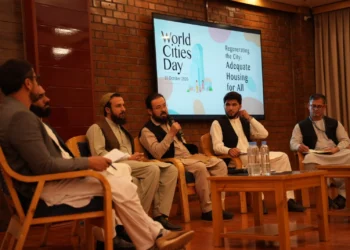

In Afghanistan’s contemporary history, December 2022 was recorded as a dark, painful, and apartheid-like turning point, a day when the doors of universities were closed to half of society. This decision was not merely a simple educational deprivation but a structured and ideological attempt to systematically eliminate women from public life, social participation, the generation of power, and the economic cycle. In such a despairing, suffocating atmosphere overflowing with hopelessness, the emergence of the Woman Online University was not a passive response or a fleeting project, but was regarded as an intelligent civil resistance rising from the very core of society’s vital needs. This educational institution, beyond a traditional academic structure, became a symbol of the collective will to break the monopoly on education and dismantle imposed geographical boundaries. Today, in 2026, this university, having enrolled and managed more than 20,000 female students from across the country, has become the largest center of intellectual resilience and women’s soft struggle in the region. As someone who has the honor of teaching, managing classes, and accompanying this scholarly caravan around the clock, this article is an attempt to examine the structural dimensions, geopolitical and technical challenges, unparalleled achievements, and future horizons of this unprecedented educational phenomenon in our contemporary history.
The deprivation of girls from education in Afghanistan dealt an enormous shock to the country’s body of knowledge, sustainable development, and human capital. Millions of talents were confined to the corners of their homes, and the risk of severe depression, suicide, absolute despair, and intellectual decline threatened the young generation of women. Amid this, academic elites and compassionate, patriotic professors rightly recognized that silence and passivity were nothing but complicity in the country’s scientific blockade. The idea of the Woman Online University sprouted from this vital point, aiming to harness the boundless capacities of digital technology to circumvent physical and geographical restrictions. This university proved to the world that a classroom is not a concrete wall, a mudbrick structure, or the high walls of traditional universities; rather, wherever there is a thirst to learn and a candle to light, that is where the heart of academia lies. This paradigm shift transformed the traditional concept of an educational place, and technology entered the scene as a liberating and anti-authoritarian tool. The internet, despite all the weak infrastructure and severe telecommunications restrictions in Afghanistan, became a bridge connecting intellectual minds outside the country with talents thirsty for knowledge inside it, and this strategic transition from physical space to cyberspace was the first solid step toward preserving academic identity and safeguarding the dignity of the women of Afghanistan.
Managing and directing an institution of such large scale, with over 20,000 students, in an environment that is entirely online, decentralized, and without access to large government budgets or direct international financial support, is a managerial feat and miracle within the higher education system. The Woman Online University is built on two ethical and strategic principles: “fully free education” and “a volunteer, specialized academic faculty.” Hundreds of professors, doctors, researchers, and senior experts from around the world, including former professors who had lost their jobs at public and private universities inside the country and had been pushed to the margins, rolled up their sleeves to teach on an honorary, round-the-clock basis. The university’s academic structure is now organized into sixteen degree programs and several key faculties, including the Faculty of Clinical Medicine and Advanced Midwifery, aimed at meeting the urgent health needs of women and children; the Faculties of Law, Political Science, Economics, and Journalism, aimed at training the next generation of leaders and truth-tellers; and the Faculties of Psychology, Education, Agriculture, Language and Literature, and Fine Arts. This deep diversity of fields shows that the structural goal of the Woman Online University is not merely to entertain girls or fill their free time, but that its main aim is to train specialized cadres who will tomorrow carry the burden of rebuilding, managing, and modernizing this homeland.
As a professor at the Woman Online University, my classroom experience differs from any other teaching experience. When I enter the virtual classroom as an instructor, I am faced with a list of names, behind each of which lies a moving story of talent, longing, repression, and defiant, unrestrained hope. Teaching in this space is not merely the transmission of mathematical formulas, complex economic theories, legal texts, or health advice; it is not a purely professional duty but a sacred civic act. In these classes, we inject hope like blood into the veins of a generation, and we remind the student that her worth as a thinking human being will never be erased by decrees of suspension. The professors of this university are unarmed fighters whose pens, laptops, and platforms such as Zoom, Skype, and Google Meet are their tools of struggle against ignorance. Our challenges as instructors are not few: coordinating class hours across global time differences, the lack of stable electricity, low internet speeds in Afghanistan, the stress of the external environment, and the need to safeguard student security make the work extremely exhausting and demanding. Yet all this fatigue turns into pride and redoubled motivation when we see a girl in the most remote and deprived villages of Afghanistan, sitting in the dark of her room, listening to a lesson by the dim light of a mobile phone, taking notes, and responding to the world’s most up-to-date scholarly resources with care and reflection.
One cannot write about the Woman Online University while fairly closing one’s eyes to the bitter realities, grinding obstacles, and logistical challenges that lie ahead. Afghanistan’s telecommunications infrastructure is damaged, expensive, and highly unreliable. The high price of internet packages and their low speed place a doubled, crushing burden on economically vulnerable families amid the country’s current crisis. Many of our students are, quite literally, forced to make a painful choice between buying bread for their family and buying an internet package to attend class. The second issue is cybersecurity and the psychological pressure stemming from the atmosphere of suspension. Students live in a state of constant fear. The persistent worry over power outages during online exams, the lack of a quiet place to study in crowded homes, and, most importantly, anxiety over the fate of these academic credentials and their lack of official recognition inside the country under its current rulers impose severe psychological pressure on their morale. In addition, fields such as clinical medicine, midwifery, and agriculture require practical, clinical, and laboratory work that faces serious limitations in a purely online system. The university has made every effort to fill this gap through virtual simulations and the provision of practical videos and rich visual materials, but the need for a more comprehensive international strategy to resolve these challenges remains evident.
Despite all these obstacles, threats, and moments of despair, the record of the Woman Online University is brilliant, tangible, and immensely hopeful. The successful holding of the third round of the students’ graduation ceremony simultaneously in eleven provinces of Afghanistan in 2026 was a historic triumph. This courageous event was a decisive and unequivocal response to those who claimed that educational motivation among the girls of Afghanistan had dried up or been suppressed. These graduates are ambassadors of light and knowledge in the darkest period of our contemporary history. This university has managed to maintain scientific and professional standards. Our graduates today write coherent academic papers, participate as interns in international online research projects, and acquire vital soft skills such as critical thinking, digital literacy, coding, and foreign languages at an excellent level. This institution has proven to the international community that the woman of Afghanistan is not a passive being, a mere victim, or submissive; she carves her own path to freedom and awareness, and if no path exists, she creates one.
The prestigious and pioneering Hasht-e Subh Daily has always been known as the leading platform for freedom, justice, and democracy, and as a voice reflecting the marginalized and the intellectual class of the region. Publishing this analysis in this media outlet is not merely a functional report but a national and diplomatic call. As the academic staff and professors of this university, we call on the international community, international human rights institutions, countries that support women’s rights, major global educational organizations, particularly UNESCO, and international entrepreneurs, to move beyond repetitive statements and ineffectual expressions of diplomatic concern. The Woman Online University today needs structural and practical support to continue this great mission. We not only urgently need additional scholarships, free access to digital libraries, and technical assistance for cybersecurity and affordable internet, but our most vital request from international institutions and global companies is “the provision of remote work infrastructure for the graduates of this university.” Education without employment leaves the cycle of empowerment incomplete. The international community must, by creating secure job platforms and assigning digital projects in translation, research, programming, and online health consultation, allow these skilled young women to taste the flavor of economic independence and an independent professional identity from within their own homes. Supporting this institution and creating employment opportunities for its graduates is not support for an ordinary university; it is support for the primary stronghold of women’s economic and intellectual resistance against systematic erasure.
The Woman Online University is not a temporary, transient, or reactive structure for a time of crisis; it is the founder of a new model of democratic, inclusive, cross-border, and irreversible education in the history of higher education in Afghanistan. The thought, awareness, and knowledge that now flow through the minds and spirits of more than twenty thousand young girls across every corner of this country is not a phenomenon that can be contained or suppressed by decree, weapon, monopoly, or force. This multiplied awareness has taken root and rightly grown into a sturdy tree. As a professor who witnesses every day the hopeful heartbeat of my students in the flickering light of virtual classrooms, I declare, with complete faith in the bright and certain future of the girls of my homeland, that our pens will not break, our thoughts will not be censored, and our classrooms will continue their work with strength and resolve until the day all the physical universities of this country reopen, and even beyond. The Woman Online University stands as a living and eternal testament to the historical truth that light triumphs over darkness, and that awareness is humanity’s most borderless and enduring possession.
You can read the Persian version of this article here:
دانشگاه آنلاین زن: تبلور مقاومت مدنی و بازتعریف آموزش در عصر انسداد