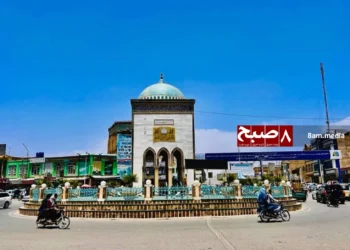

The Taliban have killed four people and wounded several others in the Shekay and Argo districts of Badakhshan province after residents protested against mining operations and the destruction of opium poppy fields. Local sources in Badakhshan say hundreds of fresh Taliban fighters have been deployed from the south to the province to eradicate poppy cultivation. As the group pressed ahead with the destruction in Argo, it once again ran into public protests. Taliban fighters then opened fire on residents, and the deaths of one child and one man have so far been confirmed. In a separate incident at a gold mine in Shekay district, two more people were killed, and two others were wounded. In recent days, numerous videos have circulated on social media showing Taliban fighters using livestock and schoolchildren to destroy poppy fields.
Local sources in Argo say the Taliban killed a child and a young man over the past two days in the Atinjalu area. The slain child, according to these sources, was the son of a local Taliban commander.
One local source said, “While people were tending their poppy fields, Taliban fighters opened fire on them, and the children fled. This boy ran with several others to escape the bullets, but he came across a ditch on his way, fell into it, and died. When residents found out, they carried the body away and began to protest.”
The source added: “The boy was the son of Qari Zaman, the mayor of the Atinjalu bazaar. He is a Taliban member himself, but a man with a popular following. When people saw that his son had been killed, they grew emotional and attacked the Taliban Ranger vehicles. They smashed the windows of several Rangers and blocked the road for hours. The Taliban dispersed them with gunfire, but after Friday prayers, people gathered again and chanted slogans against the Taliban. Several were detained that Friday.”
Another source said that clashes between residents and the Taliban on the second day of the protests left two people dead and three others wounded. The source added: “After the funeral prayers yesterday, people came out into the streets and blocked the road. The Taliban deputy governor arrived in the evening and promised residents that their poppy fields would not be destroyed if they stopped protesting. The people then took down their protest tents. The situation has now calmed somewhat.”
Following the killings, dozens of residents blocked the Faizabad–Takhar highway for several hours. The Taliban surrounded the crowd and opened fire in an attempt to disperse the protesters, but local sources stress that despite the deaths, injuries, and arrests, they failed to fully break up the gathering. Through the mediation of local elders and Taliban officials, tensions eventually eased by the evening.
Several protest videos from the area have also surfaced, showing dozens of people in the streets carrying rudimentary tools and burning vehicle tires to vent their anger. The protesters accuse the Taliban of applying a double standard on poppy fields, saying the group does not destroy the crop in the south, yet has come from there to Badakhshan to carry out the eradication.
The unrest comes despite a recent order from Hibatullah Akhundzada, the Taliban Supreme Leader, instructing the group’s forces in Kandahar not to enter people’s orchards and homes during poppy destruction operations.
In a separate incident in Shekay district, two residents were killed by Taliban gunfire. According to local sources, the two men were wounded in the shooting and later died at the district health center from blood loss and the severity of their injuries.
Local sources, sharing video of the incident, say a clash erupted between residents of Shekay district and the Taliban over a mine, leaving four residents wounded by Taliban fighters. The men were wounded by fighters loyal to Musa Shahryar, the brother of Juma Fateh, the Taliban deputy governor of Zabul province. Residents also say that fighters under Mawlawi Ghulamullah Kufi, the Taliban border battalion commander in Jawzjan, were involved in the clash.
Sources stress that Abdul Fatah and Musa Shahryar, the brothers of Juma Fateh, personally opened fire on residents the previous day. Both Fateh brothers are armed and hold no formal position even within the Taliban regime, yet they continue to extort and intimidate the local population.
Over the past two years, the Taliban have repeatedly responded with bullets to local protests against the destruction of poppy fields. During a public protest in the Khash district of Badakhshan in June 2025, the Taliban shot dead at least six people and wounded twelve others. Several more people were killed and wounded by the Taliban in the Argo and Darayim districts of the province.
Residents say the Taliban destroy poppy crops without offering any alternative livelihood, moving in only once the harvest is ready and leaving farmers with no chance to plant anything in its place. They add that the Taliban have also barred residents from gold extraction, while the group itself, through its contracted companies, is engaged in widespread looting and unregulated mining of the province’s gold deposits.
Various United Nations (UN) agencies have also confirmed that banning poppy cultivation without alternative livelihood programs, particularly in resilient agriculture, has not only deepened poverty and economic instability but has also expanded the production and consumption chain of synthetic drugs. According to reports, the decline in opium production has opened the door to increased production of synthetic narcotics such as methamphetamine and possibly fentanyl. The reports note that without comprehensive economic and agricultural alternatives, the ban on poppy cultivation has produced rising poverty, weakened economic capacity, and the likelihood of further instability.
You can read the Persian version of this report here:
خون و خشم در بدخشان؛ اعتراض بر سر معادن و تریاک با مرگ پاسخ داده میشود