Introduction
Would the Taliban have existed without Deoband? To put it more precisely: is India today confronting an ideology that was born on its own soil more than a century ago and has now returned to its doorstep in the form of the “Islamic Emirate”?
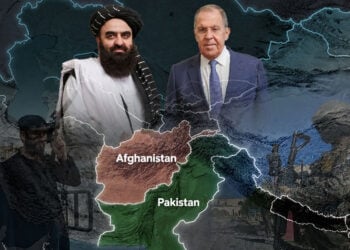
The recent visit of several Taliban officials to India, including their tour of the Darul Uloom Deoband, the seminary regarded as the principal source of the Taliban’s religious doctrine, has reignited a pressing question: Is India attempting to use the Taliban’s ideological roots as a strategic tool to counterbalance Pakistan?
At first glance, the Taliban appear to be the natural offspring of Pakistan’s religious seminaries. Yet it is less often acknowledged that the intellectual seed of this movement was sown long before Pakistan’s existence in India itself, in a small town called Deoband. Now, after years of proxy wars and political rivalries in Afghanistan, it seems that the same ideology that originated in India and was militarized in Pakistan has come full circle, returning to India not merely as a religious current but as a political force compelling even the world’s largest democracy to reckon with its ideological demands.
What Is Deoband? From an Anti-Colonial Movement to the Taliban’s Ideological Seminary
The Darul Uloom Deoband was established in 1866 in the Indian state of Uttar Pradesh, following the failed uprising of Muslims and Hindus against British colonial rule. Its founders believed that to resist Western political and cultural domination, Muslims needed to return to “authentic Islam” and rebuild their community upon the foundations of Sharia and ascetic piety.
At its inception, Deoband was not a militant movement but rather a religious and cultural initiative aimed at preserving Islamic identity in the face of Western hegemony. It emphasized simplicity, strict adherence to the Hanafi school of jurisprudence, and rejection of innovation (bid‘a). Over time, however, the movement, which began as a defensive and civilizational effort, evolved in diverse and sometimes contradictory directions amid the shifting political landscapes of South Asia.
In secular India, Deoband graduates largely became mosque leaders and peaceful preachers. Yet, when the same ideology took root in post-partition Pakistan, it found itself armed with the support of intelligence agencies and foreign funding, transforming from a pietistic tradition into a doctrine of armed resistance and, later, transnational jihad. The fusion of Deobandi theology with Pakistan’s military ambitions produced the phenomenon the world now knows as the Taliban.
In essence, while Deoband in India remains an academic and theological seminary, in Afghanistan and Pakistan, it has evolved into the intellectual backbone of an ideological emirate. The Taliban may outwardly appear as products of Pakistan’s religious schools, but their ideological roots lie, above all, in the narrow streets of Deoband, the very heart of India.
How Deobandi Ideology Moved from India to Pakistan and Transformed into the Taliban in Afghanistan
With the partition of India and the creation of Pakistan in 1947, Deoband did not remain confined to Indian soil as a mere intellectual movement. Dozens of scholars affiliated with the seminary migrated to Pakistan, where they established an extensive network of religious schools in cities such as Karachi, Lahore, and Peshawar. Over time, these institutions evolved into the country’s largest ideological infrastructure.
In the 1980s, as the Afghan war against Soviet occupation began, Pakistan’s military and its Inter-Services Intelligence (ISI) agency turned these Deobandi seminaries into primary recruitment centers for the so-called Jihad. Financial backing from Saudi Arabia and military, as well as intelligence support from the United States, further accelerated this process.
The Taliban were, in essence, the product of Pakistan’s “privatization” of a religious school of thought. Afghan youths educated in Pakistan’s Deobandi seminaries were organized as a cheap, obedient, and ideologically driven force to advance Pakistan’s geopolitical objectives in Afghanistan.
At this stage, Deoband evolved from a school of thought into a mechanism of military mobilization. The teachings originally designed to preserve religious identity in the face of colonial rule were transformed into tools for building a theocratic state under the Taliban’s leadership.
India and Deoband: From Distancing to Geopolitical Utility
For decades, India sought to draw a clear line between “religious Deoband” and “political Deoband.” Successive governments in New Delhi attempted to keep Indian Deobandi seminaries within a regulated and lawful educational framework, distinguishing them from the militant offshoots in Pakistan and Afghanistan. Yet India could never remain entirely indifferent to an ideology born on its own soil, particularly as it watched that same doctrine being weaponized by Pakistan through the Taliban to expand its influence in Afghanistan.
The recent visit of a Taliban delegation to India and their tour of the Deoband seminary carried a message that was far more political than religious: India appears to be signaling that just as Pakistan once leveraged Deobandi ideology to gain sway in Afghanistan, New Delhi now seeks to use those same ideological roots to secure its own foothold among the Taliban.
But this is a perilous game. On the one hand, India portrays itself as the “world’s largest democracy”; on the other, it remains silent in the face of the Taliban’s ideological restrictions, such as the exclusion of female journalists from official meetings. Although domestic media pressure in India eventually compelled the Taliban to hold another session with women reporters present, the episode raised a fundamental question:
Is India prepared to sacrifice its democratic principles for the sake of geopolitical expediency in its rivalry with Pakistan?
The Taliban’s Visit to India and the Test of Democracy: What Was the Symbolic Message behind the Women Journalists’ Incident?
During the Taliban delegation’s visit to India, the group barred female journalists from attending their press event, a move that immediately sparked public and media backlash across India. The outcry on social and mainstream media placed the Indian government in a politically sensitive position: accepting the Taliban as an official interlocutor while allowing gender-based exclusion risked undermining India’s democratic credibility.
Ultimately, mounting public and media pressure forced the Taliban to hold a second briefing with women journalists present. The episode revealed two key dynamics: even one of the region’s most rigid ideological movements cannot fully resist public and international scrutiny, and India managed to exert influence through a combination of soft diplomacy and media leverage.
Is India Playing with Fire?
India’s attempt to engage the Taliban through their ideological roots in the Deobandi movement may be diplomatically skillful, but it carries serious risks for the broader region:
- Intensifying the India–Pakistan rivalry:
For decades, Pakistan has leveraged Deobandi networks to cultivate and sustain the Taliban. Now, New Delhi’s outreach to the same ideological base signals a new front in the India–Pakistan competition, one that could further inflame proxy tensions in Afghanistan, as recent clashes have already suggested. - Manipulating ideological movements:
When external powers engage with the Taliban through the prism of Deobandi ideology, they risk reshaping or fragmenting the group’s doctrinal trajectory, or, at the very least, forcing the Taliban to balance between domestic ideological purity and foreign political pressures. - Human rights and social repercussions:
Any major power that accommodates aspects of the Taliban’s ideology, even temporarily, risks legitimizing their misogynistic or anti-press behavior. The exclusion of women journalists in India underscored how such compromises can normalize regressive standards under the guise of diplomacy. - A challenge to India’s international legitimacy:
India’s willingness to yield to the Taliban’s ideological sensitivities could be interpreted globally as a form of concession to extremism, calling into question the integrity of the world’s largest democracy and its commitment to liberal values.
Conclusion: The Taliban, Deoband, and the Regional Power Game
The Taliban remain ideological descendants of Deoband, a school of thought born in India more than a century ago, whose teachings now underpin one of South Asia’s most influential religious-political movements. Yet that same intellectual heritage has become a geopolitical instrument. India, by drawing on the historical and ideological legacy of Deoband, seeks to secure political footholds within the Taliban, even if doing so requires temporary compromises with the group’s gender restrictions and media censorship.
This engagement carries profound implications for South Asia. Pakistan, long the chief patron of Deobandi-inspired militancy, now faces competition from India, which is leveraging the same ideological roots to pursue influence in Afghanistan. The episode involving women journalists in New Delhi illustrated that even the region’s most hardline actors cannot operate entirely beyond the reach of public accountability and democratic scrutiny.
In the end, the central question remains unresolved:
Will India succeed in expanding its strategic influence in Afghanistan through its engagement with Deoband and the Taliban, or will this dangerous experiment only ignite a new wave of regional rivalry?
As history has shown, Deobandi ideology is more than a theological doctrine; it is a geopolitical instrument that continues to shape the trajectories of power and politics across South Asia. The Taliban, Deoband, and the region’s competing powers are still testing the boundaries of this influence, and the future of the region may well hinge on how this delicate interplay between ideology and statecraft unfolds.
You can read the Persian version of this analysis here: