• 8AM.MEDIA
  • ویب‌سایت فارسی
  • پښتو ویب‌پاڼه
  • اۉزبېکچه ویب‌سایت
  • Podcast
Friday, October 23, 2026
Hasht-e Subh
  • Home
  • News
    • Afghanistan News
    • World News
  • Opinion
    • Editorial
    • Analysis
  • Reports
    • Daily Reports
    • Investigative Reports
  • Society
    • The story of people
  • Women’s Word
  • Columns
    • Three Years After Afghanistan’s Fall: The Taliban’s Resurgence
    • Towards Equality
    • The Resurgence of the Taliban: Two Years Since Afghanistan’s Fall
    • Hebatullah Report Special Edition
    • Resistance for Education Special Edition
    • Special Column on Taliban’s Education Curriculum
    • Nawroz
  • Interviews
  • Contact Us
    • About Us
    • 8AM MEDIA Annual Awards
    • Submit an Article to Hasht-e-Subh
  • 8am.mediaBack
Subscribe
No Result
View All Result
  • Home
  • News
    • Afghanistan News
    • World News
  • Opinion
    • Editorial
    • Analysis
  • Reports
    • Daily Reports
    • Investigative Reports
  • Society
    • The story of people
  • Women’s Word
  • Columns
    • Three Years After Afghanistan’s Fall: The Taliban’s Resurgence
    • Towards Equality
    • The Resurgence of the Taliban: Two Years Since Afghanistan’s Fall
    • Hebatullah Report Special Edition
    • Resistance for Education Special Edition
    • Special Column on Taliban’s Education Curriculum
    • Nawroz
  • Interviews
  • Contact Us
    • About Us
    • 8AM MEDIA Annual Awards
    • Submit an Article to Hasht-e-Subh
  • 8am.mediaBack
No Result
View All Result
Hasht-e Subh
No Result
View All Result

From Herat to a Memory of Justice

Arian Nasiri Arian Nasiri
10 June 2026 - Solar Hijri Date: 1405/03/20 [t_time:1781117776]
A symbolic illustration depicts a Taliban fighter shooting a veiled woman against the backdrop of Herat's historic architecture, with the city's great poets and scholars looking on in silence. (Photo Credit: Exclusive)

Exclusive

Herat, once known for its culture, literature, art, and the dignity of its people, is again breathing under fear, humiliation, and repression. Today, when we hear of women being arrested, threatened, or humiliated in the streets and markets of Herat, this is not just another local incident. It is a warning to our collective memory. If the suffering of Herat’s women is not recorded today, those responsible will return tomorrow with new faces and deny that these days ever existed.

This is the second time the Taliban have ruled our land. Their ideology and survival are shaped, in part, by foreign interests and powers. But the more painful truth is that much of their project is carried out by internal collaborators: people who live among us, who have eaten the bread of this society, who grew up with our language and culture, yet now sell their own people to fear, humiliation, and oppression.

No outside force can break a nation without local hands. The Taliban did not return only with guns and slogans. They learned from their first rule and now rely on opportunistic clerics, local informants, obedient officials, ethnic and political dealers, and those willing to sacrifice public dignity for money, rank, or influence. Betrayal does not always come from outside. Sometimes it comes from our own streets, our own mosques, and our own offices.

For decades, Afghanistan has seen one regime replace another: communist rule, civil war, the Mujahideen, the first Taliban regime, the Republic, and now the Taliban again. In every period, people have taken part in repression, corruption, looting, humiliation, and killing. Yet with every political change, instead of justice, society has been given political amnesty, backroom deals, and forced forgetting. This has created a dangerous culture of impunity: a person can commit crimes under one regime, change clothes after its fall, raise a new slogan, and return to power.

This impunity has made the corrupt and the self-serving even more shameless. Yesterday they held office in one government; today they stand beside the Taliban; tomorrow they may return in the name of democracy, justice, or a government in exile. They are loyal neither to the people, nor to the country, nor to religion, nor to any moral value. They are loyal only to power and money.

The issue is not only politics, or what we falsely call politics. It is the psychology of power without accountability. When a person learns that he can do anything under one regime and faces no consequences after its collapse, crime gradually becomes normal to him. He learns that society forgets, governments bargain, and victims are left alone.

I have witnessed this myself in Herat. After the fall of different regimes, the gates of the prison were opened several times, and many prisoners and criminals were released under the name of “general amnesty,” without accountability. This culture of impunity has not only protected war criminals, corrupt politicians, and powerful men. Even smaller criminals have learned from it: when the regime changes, crime too can be erased from the memory of the law.

This is why those who helped destroy the Republic through corruption, betrayal, and the selling of people’s hopes can now shamelessly claim to build a government in exile. This is also why figures from previous regimes, some involved in violence or repression, return years later with new faces and ask society to trust them again. This cycle must be broken. A society without memory becomes a victim of the same people again.

Today, if a Taliban morality officer in Herat abuses a woman, if an armed group carries out field trials, if a local Taliban member, an official, or a mosque cleric helps oppression, these acts must not disappear from our collective memory. Forgetting is the continuation of oppression. Silence helps build a future for criminals. A mosque cleric who, in a time of repression, refuses to stand with the people and instead hides behind false neutrality or supports the Taliban, is complicit and must be remembered as a collaborator in injustice.

But justice without evidence is not justice. Truth must be spoken with reason, documentation, and responsibility. The first step is to build a public memory. People must know who participated in repression, intimidation, humiliation, and collaboration with oppression. From the cleric who supports the Taliban to the local Taliban member or official who serves the machinery of fear, all must be documented through a careful, responsible, and evidence-based process. This must not be based on rumors, revenge, or personal accusations. It must rely on credible testimony, documents, images, and verified reports. The goal must be justice, not chaos.

For this reason, Afghanistan needs a national and people’s archive of oppression, collaboration, and human rights violations. Such an archive should be managed outside the country by Afghan journalists, human rights defenders, and independent groups, so that evidence is not destroyed and may one day serve justice.

The stories of victims must also be recorded: women who were humiliated, families who lost loved ones, young people who were detained or tortured, and ordinary citizens living under the Taliban and their local collaborators. History must not be written only by the powerful. Real history is the memory of victims.

The Afghan diaspora also has a responsibility. Those who live in relative safety must help document, translate, and bring these voices to international institutions, media, and courts. The burden of seeking justice cannot be left only to those who live under fear.

The culture of unconditional amnesty must end. Peace without justice only gives criminals another chance. Any future government in Afghanistan, if it wants to be humane and stable, must accept accountability.

Resistance is not only armed struggle. Sometimes the greatest resistance is to preserve memory, speak the truth, and refuse to leave victims alone. Afghanistan suffers not only from the Taliban but also from forgetting, deals, internal betrayal, and the absence of accountability.

We must keep our memory alive, not for blind revenge, but for justice; not for hatred, but to prevent repetition; not for the past alone, but for a future in which no Taliban member, collaborator, corrupt politician, ethnic broker, or self-seller can trade the fate of the people and return later with a smile.

Our collective memory must become the moral court of history. If we fail to record the truth today, lies will replace it tomorrow. A nation that loses its truth will again fall captive to those who have sold it once, twice, and perhaps many times before.
ShareTweetSendSendShare

Related Posts

Women and children sit on a street in Afghanistan amid poverty and a deepening humanitarian crisis, with a map of the country outlined over the scene. (Photo credit: AFP)
Analysis

Has the World Grown Accustomed to the Crisis in Afghanistan?

22 October 2026 [t_time:1792693189]
Citizens of Afghanistan return home after being released from prisons in Pakistan, crossing through Torkham and Spin Boldak border crossings. (Photo credit: MoRRAfg)
Afghanistan News

Taliban Report Release of 291 Citizens of Afghanistan from Pakistani Prisons

22 October 2026 [t_time:1792675539]
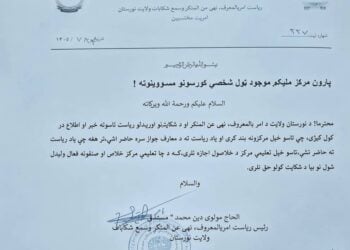
A decree orders the closure of private educational centres in Parun, Nuristan Province, as the Taliban tighten restrictions on education. (Photo credit: Exclusive)
Afghanistan News

Taliban Shut Down All Private Educational Centres in Nuristan

22 October 2026 [t_time:1792675322]

Latest

Loading latest news...

Popular stories

  • Donald Trump – U.S. President with Benjamin Netanyahu – Israeli Prime Minister in a gathering of people (Photo: Getty Images) Donald Trump – U.S. President with Benjamin Netanyahu – Israeli Prime Minister in a gathering of people (Photo: Getty Images)

    US Senator Criticizes Netanyahu’s Remarks Justifying War Against Iran

    Share
    Share Tweet
  • US Defense Secretary Warns Iran of “Destruction”

    Share
    Share Tweet
  • UN Report Reveals Shifts in Family Attitudes and Rise in Domestic Violence in Afghanistan

    Share
    Share Tweet
  • Trump Calls Iran’s Hope of War Lasting Beyond US Midterm Elections a “Dream”

    Share
    Share Tweet
  • Iran’s Revolutionary Guards Say They Are Preparing to Unveil “Father of All Bombs”

    Share
    Share Tweet

Podcast

Insights
Insights

Join Lynne O’Donnell for 8AM’s podcast series, Insights.
Lynne talks with generals, diplomats, soldiers, journalists, politicians, activists, people who have front row seats for conflicts around the world, and citizens with a story to tell, happy or sad. For this first series, Afghanistan is the focus. Lynne and her guests talk about the collapse of the republic in August, 2021, and the impact since — for the people of Afghanistan, for the security of the region, for the safety of the world. It’s important, interesting and insightful.

Insights/22: Controlling the Narrative with Mina Sharif
byinsights8am

Controlling the Narrative

Lynne O’Donnell talks with Mina Sharif, author, activist, women’s rights campaigner, educator and mentor. They discuss who controls the narrative and who speaks for Afghanistan’s people when the Taliban appear to have seized control not only of the country but of the message, too.

Have a listen

Insights/22: Controlling the Narrative with Mina Sharif
Episode play icon
Insights/22: Controlling the Narrative with Mina Sharif
Episode Description
Episode play icon
Insights/21: Media Meltdown with Zahra Joya
Episode Description
Episode play icon
Insights/20: Terror Inc with Scott Richards
Episode Description
Episode play icon
Insights/19: Busting Stereotypes with Bushra Gohar
Episode Description
Episode play icon
Insights/18: Media Matters with Waliullah Rahmani
Episode Description
Episode play icon
Insights/17: What Goes Around Comes Around with Sima Samar
Episode Description
Search Results placeholder
Hasht-e Subh

8AM Media, also known as Hasht-e-Subh Daily, stands as Afghanistan's premier independent and non-profit newspaper, resonating as a beacon of journalistic integrity since its establishment in June 2007 by esteemed Afghan journalists and human rights advocates. With a steadfast commitment to citizen journalism and civic education, Hasht-e-Subh Daily has earned its place as the most esteemed publication in the nation.

Publisher: Sanjar Sohail
Email: [email protected]
Executive Director: Parwiz Kawa
Email: [email protected]

Read More

Has the World Grown Accustomed to the Crisis in Afghanistan?

International Criminal Court Wins Sakharov Prize for Freedom of Thought

Guterres Calls for an End to Conflicts Worldwide

UNICEF: Millions of Children in Afghanistan Face Climate Risks

From the Shadows to Finding My Voice: A Story of Struggle and Resilience

Editor’s Choice

Every Saturday morning, 8AM MEDIA English Services Department will guide you through the week’s biggest stories from Afghanistan and the international community.

Subscribe

© 2026 - ©Hasht-e Subh Daily

No Result
View All Result
8am.Media
پښتو ویب‌پاڼه
ویب‌سایت فارسی
اۉزبېکچه ویب‌سایت
  • Home
  • News
    • Afghanistan News
    • World News
  • Opinion
    • Editorial
    • Analysis
  • Reports
    • Daily Reports
    • Investigative Reports
  • Society
    • The story of people
  • Women’s Word
  • Columns
    • Three Years After Afghanistan’s Fall: The Taliban’s Resurgence
    • Towards Equality
    • The Resurgence of the Taliban: Two Years Since Afghanistan’s Fall
    • Hebatullah Report Special Edition
    • Resistance for Education Special Edition
    • Special Column on Taliban’s Education Curriculum
    • Nawroz
  • Interviews
  • Contact Us
    • About Us
    • 8AM MEDIA Annual Awards
    • Submit an Article to Hasht-e-Subh
  • 8am.media

© 2026 - ©Hasht-e Subh Daily