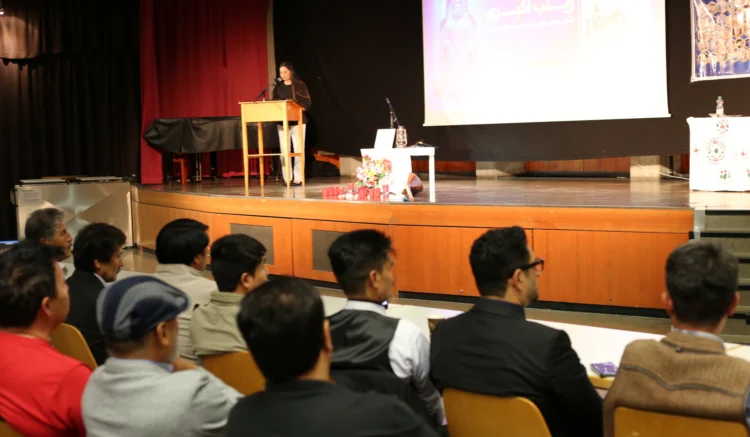
The International Day of Remembrance for the Hazara Genocide and the Day of Solidarity with the Hazara people were commemorated in Munich, Germany, with the participation of cultural figures, academics, civil society activists, German government officials, and Afghan citizens. The event emphasized solidarity among different groups within Afghan society.
The event was organized on Saturday, September 26, by the Hazara Cultural Center in Munich. Its stated objectives were to honor the victims of historical violence and the genocide against Hazaras, strengthen solidarity within the community, and draw attention to the need for advocacy and justice.
Speakers at the event emphasized the recognition of the Hazara genocide and the need to responsibly address the past. They said such events provide an opportunity to strengthen solidarity, dialogue, and lasting justice.
Mubarez Rashidi, one of the speakers, stressed the need to acknowledge historical responsibility and respect the rights of all ethnic and social groups. He said achieving lasting solidarity requires an honest reckoning with past suffering and injustices.
Meanwhile, a study on the identity, sense of belonging, and social, economic, and political integration of the Hazara diaspora in Germany was presented during the event.
The study stated that the identity of Hazara migrants in Germany is not one-dimensional or fixed. Instead, it is shaped by factors including ethnic, religious, and cultural belonging, migration experiences, education, and social conditions.
A documentary titled “Recess,” directed by Sami Ataei, was also screened. The film focuses on the August 15, 2018, suicide attack on the Mawoud Education Center in western Kabul.
At the end of the event, a resolution by the Hazara Cultural Center in Munich was read out. Live music and poetry readings were also performed.