
Recently, the Dera Ismail Khan neighborhood of Khyber Pakhtunkhwa Province in Pakistan witnessed a deadly attack, leaving 23 Pakistani policemen dead. Tehreek-e-Jihad Pakistan (TJP), which is reported to be a prominent branch of Tehreek-e-Taliban Pakistan (TTP), claimed responsibility for the attack. The suicide bomber was reported to be a member of the Taliban group named Qari Shakir, a resident of the Musa Qala district of Helmand province. In response to the attack, the Ministry of Foreign Affairs of Pakistan summoned the Taliban ambassador in Islamabad, asking him that the group should arrest the TTP leaders and hand them over to that country in addition to strongly condemning the incident and conducting a thorough investigation, which however, does not seem very practical. Khawaja Muhammad Asif, the former defense minister of Pakistan, has attributed the origin of terrorism to Afghanistan, eliciting the reaction of Zabihullah Mujahid, the Taliban Spokesperson, “Attributing every issue to another country is not a solution.” John Achakzai, Minister of Information of Balochistan State, has also stated in a bizarre statement that Pakistan is gathering forces opposing the Taliban. This issue, if implemented, can well represent the grimness of the relationship between the parties. Achakzai has suggested that Washington should establish a drone base in Pakistan to target Islamic State-Khorasan (ISIS-K) and al-Qaeda groups in Afghanistan. Meanwhile, General Asim Munir, the Chief of Staff of the Pakistan Army, embarked on a trip to the United States, meeting with Lloyd Austin, the Minister of Defense, and other officials of this country. This article is aimed at answering three questions.
1- Why did the Taliban group not pay attention to Pakistan’s request regarding TTP?
Four points are discussed below to answer this question:
1-1. The Taliban seeks to be recognized by Pakistan, but the country’s position in this regard is still ambiguous. Islamabad, a prominent Taliban supporter, was the first country to unilaterally recognize the Taliban Emirate between 1996-2001, making the countries of Saudi Arabia and the United Arab Emirates also its friends. Unlike in the past, this time Pakistan has not unilaterally entered the arena for the official recognition of the Taliban, but it is lobbying for it. The Taliban are of the view that if Islamabad initiates the process of recognition of the Taliban as it did in the past, other countries will also move in this direction. The difficulty of recognizing the Taliban lies precisely in taking the first step that no country dares to take.
1-2. The Taliban states that Pakistan has provided its airspace to the US to attack Afghanistan under the domination of this group. This allegation was further exposed when Ayman al-Zawahiri, the leader of al-Qaeda, was killed in Kabul by an airstrike launched by the US military. The Acting Minister of Defense of the Taliban Mullah Yaqoob Mujahid said in a statement that American drones are violating Afghanistan’s airspace through Pakistan. Additionally, Sher Mohammad Abbas Stanikzai, the Taliban Political Deputy of Foreign Affairs, remarked that Pakistan receives millions of dollars in exchange for the United States using its airspace. He suggested Islamabad adopt other methods to resolve its economic problems, not receiving money by auctioning its airspace.
1-3. The position of some Pakistani officials is not very pleasant for the Taliban officials. The Taliban aspires to solve the TTP problem in bilateral secret talks, not to expose it to the media. The Taliban make this seemingly unreasonable demand because they consider Pakistan to be their only strong support. For example, Anwar al-Haq Kakar, the Interim Prime Minister of Pakistan, recently stated that the TTP fighters were armed with advanced equipment left over from the American forces in Afghanistan, which could feasibly hunt down the target. According to this claim, the TTP fighters are equipped and armed by the Taliban group. The statements of Khawaja Asif and John Achakzai mentioned above, will also lead to the dissatisfaction of the Taliban with Pakistan.
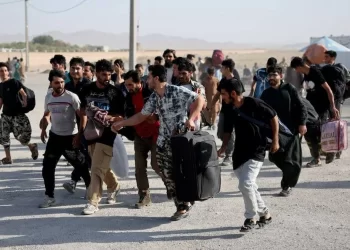
1-4. The expulsion of Afghan refugees from Pakistan has made the Taliban more determined to support the TTP instead of encouraging them to meet the country’s expectations. This is because, on the one hand, a novel problem has arisen for the Taliban, and on the other hand, the strained relationship with the neighbors and the failure to address the situation of the deported refugees have been interpreted as the failure and infamy of this group. Deporting refugees is a tool of pressure in the hands of Pakistan, which has been used against the Taliban out of necessity, but it does not seem to have moderated the behavior of this group.
2- Will Pakistan engage in a hot war with the Taliban?
Pakistan has only one problem with the Taliban: harboring the TTP. This country not only has no problem with an entity called the Taliban but also welcomes it. Pakistan’s preferred government for Afghanistan is the Taliban emirate. The Taliban merely require paying some attention to Pakistan’s request to suppress TTP and it will not be long before they are recognized unilaterally by this country. Islamabad wants to keep the Taliban on its side by coddling or threatening, not to drive it away by entering the hot war field. Islamabad’s concern is that the Taliban will take refuge in other countries, especially India, which is evidenced by the recent incident at the Afghan embassy in New Delhi and the statements of the previous government’s diplomats, some members of the Taliban, and the Indian media. Therefore, Pakistan’s effort is to avoid any action that will lead to breaking the relationship with the Taliban. Islamabad officials believe that TTP is supported by India through the Taliban group. Therefore, Pakistan attempts to cut this link peacefully.
3- Why did the Chief of Staff of the Pakistan Army go to the United States during this period?
To answer this question, two points are mentioned:
3-1. Asim Munir’s prime goal of traveling to the United States is to magnify the danger of TTP in the eyes of the authorities of this country. Additionally, providing shelter to the TTP and the necessity of an armed war against it will also be discussed with the American authorities. Justifying the deportation of refugees can also be the purpose of the trip because Washington is somewhat worried about this area. Islamabad knows that the survival of the Taliban emirate in the past two years depended on the financial support of the United States. Furthermore, with the military power that the United States holds, if it wants to, it can attack the groups that it considers to be enemies, anywhere in the world. In the first step, Asim Munir wants the United States to persuade the Taliban to suppress the TTP, and if this option does not work, he may ask for military service. John Achakzai said this by publishing an article on the X and then deleting it. It appears that Washington will ponder Pakistan’s request since this country is a long-time ally in South Asia, having used it well in difficult situations. For example, although Islamabad is accused of supporting terrorism, Thomas West, the US special representative for Afghanistan, said during his visit to that country: “America stands by Pakistan against terrorism in the region.” Also, Pakistan’s indiscriminate deportation of refugees has not resulted in a serious reaction from the United States. Asim Mounir’s trip to the United States may be the final proof of Islamabad’s argument with the Taliban that if they do not show interest in suppressing the TTP, it is not clear what the prospects of the relationship between the parties will be.
3-2. Asim Munir’s trip to Washington can be considered Pakistan’s disappointment with China. This is because Islamabad asked Beijing to encourage the Taliban to suppress the TTP. In the fight against TTP, Pakistan has given less value to the role of the United States in the past two years. Conversely, it has resorted more to China, which has not been fruitful. Pakistan’s coordination with China in the realm of suppressing TTP became more obvious when a trilateral meeting was held in Islamabad in May of this year with the participation of Mawlawi Amir Khan Muttaqi, the foreign minister of the Taliban. In that meeting, China, as a mediating force, had asked the Taliban to take action to contain the TTP, which has yet to be implemented. On the contrary, China managed to obtain a written commitment from the Taliban group to fight against the Uighur Islamist separatists. Now that Pakistan has been disappointed by China, it tends to put an end to the problem of TTP by referring to the United States, which does not seem to achieve its wish anytime soon.