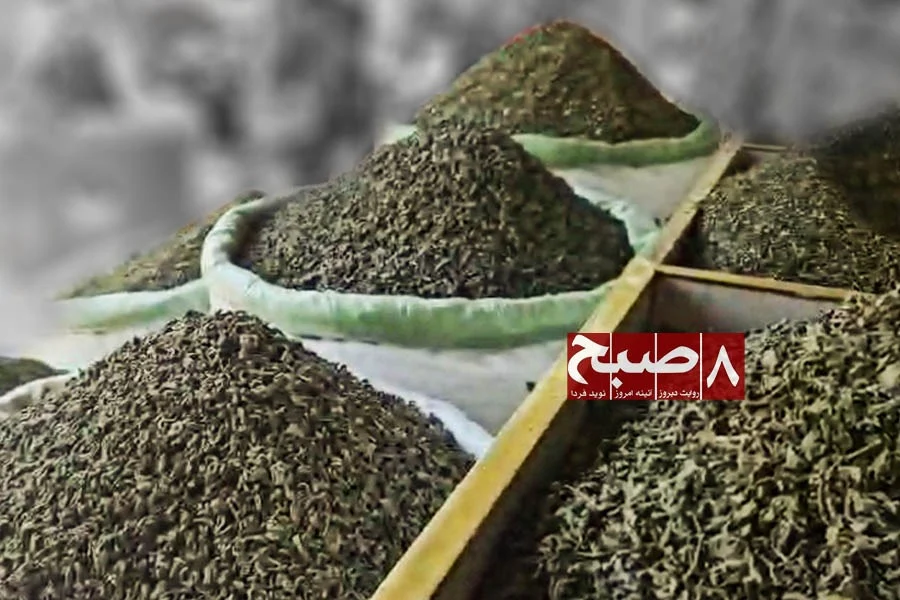
A number of Kabul residents are complaining about the poor quality of tea imported into the country. They say some traders are importing low-quality tea containing artificial colors and chemicals under the name “premium tea” and selling these products at high prices. They add that consumers’ limited awareness of tea quality and the lack of oversight have paved the way for the supply of these products. These residents are calling for an inspection of the quality of imported tea and for monitoring of its import and sale.
Saber, a Kabul resident, expressed concern about the declining quality of tea available in the city’s markets. According to him, some traders import low-quality tea under the name “premium tea” and sell it at high prices. He urges traders to refrain from importing low-quality tea and asks people to pay attention to the quality of tea when buying it.
Saber says: “Several times, we rejected teas that had been brought to our office because of their low quality. The quality of tea has changed a great deal. Some teas turn a bright green when brewed in a teapot, but when you drink them, they have no flavor at all. People pay more attention to the appearance of tea and buy it as good tea, while they are unaware of its real quality.”
Sayed Ghulam, another Kabul resident, says some teas containing artificial colors are being sold in the city’s markets with an attractive appearance. According to him, consumers pay more attention to the color and appearance of tea when buying it and are unaware of the quality and composition of these products. He is calling for increased oversight of the quality of imported tea and for an examination of its ingredients by the relevant departments under Taliban control.
This Kabul resident says: “I was once scammed with fake tea myself, and when I put it in a thermos, it had a very good color. But when we drank it, it had no flavor and its quality was very low. People pay more attention to the color and appearance of tea and are deceived. We ask the officials to stop the import of poor-quality tea and to examine the quality of the tea sold in the market.”
Hadid and Nasir, two Kabul residents, say poverty and the weak economic capacity of families have led many people to focus more on the price of tea than its quality when buying it. They add that this situation has paved the way for the sale of low-quality tea under the name of premium tea. In the view of these two Kabul residents, the lack of effective oversight by the Taliban over the quality of tea in the market, along with consumers’ limited awareness of the ingredients in these products, has contributed to the continuation of this situation.
Nasir says: “The lower the price of tea, the more color and the less flavor it has. Some teas lose their flavor when left in a thermos for three or four hours. Because people think foreign tea is of good quality, they buy it and do not pay attention to its quality. I do not know why the relevant ministries do not examine the quality of these teas and do not take samples from them.”
Hadid adds: “People who do not have a good economic situation are forced to buy cheap tea, but many of them do not know what harm low-quality tea can cause. Counterfeit tea has become widespread in the market. Because it has a good color and appearance, people buy it, while they should also pay attention to the taste and smell of the tea.
Meanwhile, Hamed Wardak, a physician in the country, says consuming tea contaminated with unauthorized industrial dyes and heavy metals can put human health at risk. He adds that some toxic substances, if consumed continuously, can damage the liver and kidneys and cause digestive problems. According to him, children, pregnant women, and people with chronic illnesses may be more vulnerable to certain toxic substances.
Hamed Wardak says: “Consuming tea contaminated with unauthorized industrial dyes, pesticides used during tea cultivation, and heavy metals can cause poisoning and harm human health. Some of these substances, if consumed continuously, damage liver cells and kidneys and cause digestive problems, including nausea, vomiting, abdominal pain, and diarrhea. The severity of these effects depends on the type of toxic substance, its quantity, and the duration of consumption, and it may not be the same for all consumers.”
The physician adds: “Some unauthorized industrial dyes, such as Sudan and Rhodamine B, are banned in food products because of their toxic effects and the possible risk of cancer. Children, pregnant women, and people with liver and kidney diseases may be more vulnerable to certain toxic substances. An unusual color, a very low price, and non-standard packaging can be warning signs, but only laboratory tests can definitively determine the presence and type of contaminants.”
The physician stresses that the dark or light color of tea alone does not indicate that it is contaminated, and that laboratory testing is essential to detect the presence of unauthorized substances.
According to statistics from the Taliban’s Ministry of Industry and Commerce (MoIC), in 2024 Afghanistan imported tea worth about 80 million dollars from 13 countries, including Vietnam, China, Pakistan, Iran, the United Arab Emirates, Turkey, Kenya, Malaysia, Qatar, and Switzerland.
According to this information, green tea makes up the bulk of Afghanistan’s imported tea, and the consumption of black tea is lower. However, the information available for this report contains no specific figures on the volume of tea imports in 2025 and 2026.
Efforts to cultivate tea have continued in Afghanistan. According to the information provided, a farmer in Tani district of Khost province has grown green tea on his land for the first time, and the results have been largely positive. The provinces of Kunar, Laghman, Nuristan, Nangarhar, and Badakhshan are also considered regions with the capacity for tea cultivation.
You can read the Persian version of this report here: