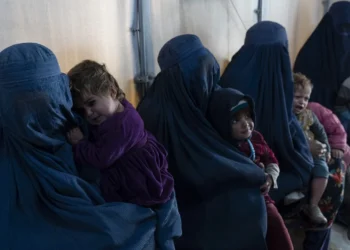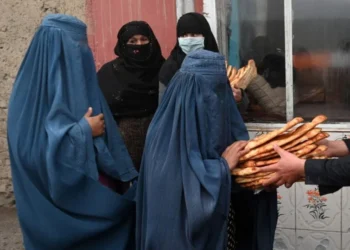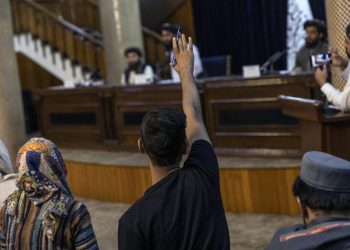

Today, Sunday, March 8, is International Women’s Day, a day celebrated in many countries around the world in recognition of women’s achievements and their role in society. However, women in Afghanistan have been experiencing this for nearly five years of Taliban rule, during which their presence in society has been ignored, and the Taliban regime does not recognize them as human beings with rights and freedoms. All Taliban decrees issued over these years have restricted various aspects of women’s lives and violated their fundamental rights.
Several women and girls in Afghanistan say that the restrictions imposed by Hibatullah Akhundzada, the Taliban Supreme Leader, have turned their lives upside down, forcing them to abandon their true aspirations and pursue paths they would never have chosen before. According to these girls, before the Taliban takeover, they had hoped to be active members of society and play various roles, but now many of these opportunities and hopes have been taken from them. In their view, the continuation of such policies has posed a serious challenge not only to the future of women but to the future of all of Afghan society.
Speaking to the Hasht-e Subh Daily, these girls say that March 8 is an opportunity for the world to remember that women of Afghanistan also have the right to enjoy education, employment, and free participation in society, just like women elsewhere in the world. They say that virtual statements and reactions alone will not compel the Taliban to change, and they call on the international community to place practical support for the rights of women in Afghanistan on its agenda.
Sediqa Toofan is one of the women who, before the Taliban seized Kabul, had dreamed of becoming a doctor and healing people’s suffering. She says that the Taliban’s return on August 15, 2021, took that dream from her and pushed her toward paths she had never intended to pursue.
This young woman now runs a small shop in a corner of Kabul, and adds: “After the Taliban took over, it became clear that every dream a girl had before the fall of the country was extinguished. I always wanted to study medicine and become a successful doctor, but now I see no way to achieve that goal, and I was forced to turn to working in the market.”
Asma, another girl who has been deprived of education since the Taliban’s return, says the Taliban took her dreams and aspirations from her solely because of her gender. She adds that after enduring years of hardship and psychological pressure, she has been forced to change the course of her dreams. This girl, who has now turned to other activities under conditions of educational deprivation, says that pursuing this path was never her choice, but under the current circumstances, she has had no option but to continue.
She added, “The Taliban played with our dreams and our spirit. God openly forgives wrongs done to Himself, but not the wrongs done to His servants. How, then, can the Taliban claim to be Muslim, when thousands of girls have been deprived of their dreams and are now occupied with things and concerns they never wanted to pursue?”
Anoushe, another girl, says that with the Taliban’s takeover of the country, her path to education and personal freedoms has been blocked, and her aspirations have been shattered all at once. She adds that the only way out of this situation for her is to emigrate abroad, but the high cost of travel and visa restrictions have diminished her hopes and those of her peers.
This young woman stresses that statements and virtual reactions from the international community have no effect on the Taliban, and that practical measures to support the rights of women in Afghanistan are essential. She says: “Every path, whether in education or in daily life, has been closed. Everything from the type of clothing we wear to our way of life has been restricted, and our education is completely forbidden. All my dreams were suddenly reduced to dust. The only way out is to go abroad, but the exorbitant costs and visa restrictions diminish my hope a little more every day.”
This girl, who is now continuing her education through online courses, holds little hope and says that under Taliban rule, any kind of restriction on girls can be imposed at any time. She adds, “I am studying in an online course, but what guarantee is there that these conditions will not persist? The internet has been restricted or cut off many times, and there is no assurance that our opportunities will not be taken away all at once.”
Following the Taliban’s takeover of Afghanistan, the first restriction imposed on women and girls was the ban on their education beyond the sixth grade. As a result of this decision, girls were completely barred from accessing education, and their fundamental right to schooling was violated.
Despite these restrictions, some girls have tried to find alternative means of learning. Some of them use online education, while others pursue skills such as painting, sewing, and handicrafts. Nevertheless, the greatest wish of these girls remains the reopening of schools and free access to education, as they see education as the only path toward a better future for themselves and their communities.
Recently, UN Women warned that Afghanistan is the only country in the world where girls are banned from attending school beyond the sixth grade. These restrictions have deprived millions of girls in Afghanistan of their fundamental right to education.
The organization stresses that the current situation must not be treated as normal and that change is still possible if the international community does not allow the future of these girls to be taken from them.
The same UN body had previously stated in a report that 92 percent of the citizens of Afghanistan support the continuation of girls’ education. This figure was gathered through a nationwide door-to-door survey of more than two thousand people.
The United Nations Children’s Fund (UNICEF) had also announced that more than 2.2 million adolescent girls in Afghanistan have been deprived of education, and warned that the continuation of the ban could have catastrophic consequences for the country’s future. The organization says that deprivation from education severely limits girls’ ability to make decisions about their own lives and futures.
You can read the Persian version of this report here:
۸ مارچ؛ محدودیتهای طالبان مسیر آرزوها و آینده زنان افغانستان را تغییر داده است