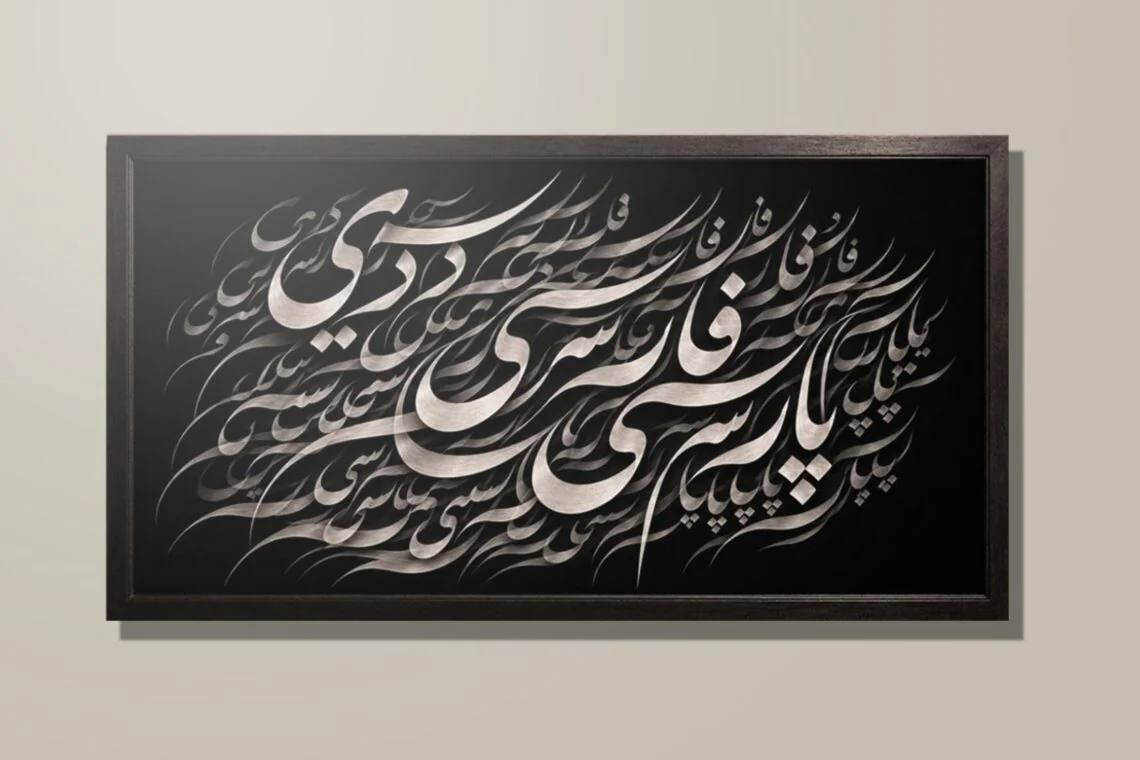
The Persian language in this land has not been a wall of separation but a bridge for the unity and convergence of its people. It is a language that has moved beyond the boundaries of ethnicity and tribe, taken root in the shared memory of generations, and, by linking diverse ideas and cultures, shown that civilization is built not by blood and lineage but by the knowledge, creativity, and coexistence of human beings.
Some bonds are so deeply rooted in history that they are no longer noticed, just as some divisions are repeated so often that they begin to seem natural. In Afghanistan, for generations, ethnicity, tribe, and lineage have been discussed in such a way that the people of this land appear to have been separate from one another before anything else. But the question is this: how is it that a people who have lived for centuries within a single cultural sphere now rely more on their differences than on what they share?
I believe that one of the most important historical bonds of Afghanistan is the Persian language, a language that has never been the exclusive property of one ethnic group and did not emerge within today’s political borders. For centuries, Persian was the language of scholarship, literature, administration, and cultural dialogue across a large part of Khorasan and Central Asia. People of different lineages and mother tongues have thought and written in this language. Beyond being the mother tongue of millions of people, Persian has, in different periods, served as a means of communication between diverse communities.
This does not mean that Persian is superior to Pashto, Uzbeki, Turkmeni, Balochi, Pashayi, or other languages. If, in defending one language, we deny another, we have reproduced the very logic we criticize. Persian is a shared heritage, not a deed of ethnic ownership. Perhaps the first spell that must be broken is the notion that a language, like a state, must have an “owner.”
But how did this cultural bond become a field of conflict in contemporary politics? To answer this, a distinction must be made between social identity and political identity. Ethnicity and tribe existed before colonialism, and colonialism did not create them out of nothing. Even so, colonial powers in some cases classified existing differences and turned them into tools of demarcation, administration, and political competition. Domestic governments also helped sustain this process through the concentration of power, the unequal distribution of resources, and the use of group loyalties.
In the nineteenth century, Afghanistan found itself in the position of a buffer state amid the rivalry between Britain and Russia. The security of empires took precedence over the lives and ties of local people. The Durand Line, drawn in 1893, was an example of a political demarcation that cut across social and historical spheres. British support for the centralization of power also affected the consolidation of the state’s structure. However, attributing all subsequent crises to colonialism conceals the responsibility of domestic governments and elites. Colonialism did not create ethnicity, but it helped strengthen an order in which ethnic differences could become instruments of power.
When a state is built on bargains between leaders and the center of power rather than on the equal rights of citizens, the central question changes. We no longer ask why political rights should depend on lineage; we ask which leader received what share. One takes a ministry, another a command, and a third a deputy post, but what lasting right have the people, in whose name the bargain was made, gained? If the achievements of a community collapse once its leader departs, the structure has not changed. A right has meaning only when it is recorded in law and institutions, not in proximity to the holder of power.
This logic has also found its way into language. Farsi, Parsi, and Dari are sometimes set against one another as if they were three unrelated histories, whereas “Parsi” is the historical form of the name “Farsi,” and “Dari” is the official name of the Afghanistan variety of the same language. The differences in names and dialects should be recognized, but they should not be turned into exclusive boundaries of identity. When language becomes a tool of competition for power, even its name becomes a test of political loyalty. Why should a heritage that has made dialogue possible for centuries become a means of division today?
In such a context, the question of partition is also often explained with easy certainties. Some see the prolonged crisis as an inevitable prelude to partition, while others believe the interests of global powers guarantee the survival of the borders. Neither is a law of history. A state can erode from within without its borders changing, just as the preservation of borders alone is not a sign of social cohesion.
Afghanistan’s location between Central Asia, Iran, Pakistan, and China gives it strategic importance. Changing its borders could affect the security and economy of the region. Yet from this reality one cannot conclude that there is a single and permanent Western plan, or that all powers agree on the future of Afghanistan. The interests of states change. Therefore, ruling out partition purely on the basis of calculations about external powers is as open to question as treating it as certain based on the internal crisis.
Even if we assume partition, difficult questions arise: Who would determine the new borders, and on what basis? How would the rights of people living in cities and regions with mixed populations be guaranteed? Would disputes end, or would they simply be moved to either side of the new borders? The cultural bond between Persian speakers of Afghanistan and Iran and Central Asia is real and long-standing, but preserving it does not necessarily require partition. Universities, books, education, and cultural exchange can cross political borders without any need to move those borders.
The history of population displacement in Afghanistan also deserves serious examination. In different periods, governments have used the settlement and transfer of groups to consolidate power, and these policies have at times led to conflict over land and resources. Nevertheless, the decisions of past governments should not be turned into the hereditary guilt of today’s people. Historical justice means recognizing harm, examining rights, and redressing injustice, not answering one form of discrimination with another.
Here the difference between a civilizational outlook and ethnic ownership becomes clear. The exclusive outlook asks who is the “owner” of the land, the language, and the state; the inclusive outlook asks how a shared heritage can be recognized and the equal rights of all guaranteed. Of course, civilization too, if it becomes a tool of supremacy, will be a new form of the same spell. Defending Persian has meaning only when it is accompanied by the freedom of education and the growth of all the languages of Afghanistan.
The fundamental problem of Afghanistan is not only which ethnic group has ruled more or which foreign power benefits from the preservation of the borders. The question is why a citizen must still depend on lineage, language, or a leader to enjoy their rights. If rights are guaranteed in accountable institutions, no community will need an exclusive hold over the state to preserve its culture.
Perhaps the deeper spell of Afghanistan is that we have defined our identity more by what separates us than by what we have built together. Breaking this spell begins not with denying ethnic groups, but with ending ethnic ownership of the state and history: moving from the leaders’ pursuit of shares to the rights of citizens, from language as a tool of competition to language as a bridge of communication, and from the mental borders of “us” and “others” to the acceptance of equal rights.
And once again the same question remains: if language and culture have throughout history been able to bring the people of this land closer together, why should politics continue to keep them apart?
You can read the Persian version of this article here: