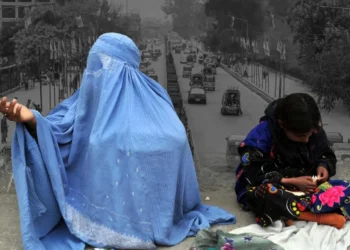
Several girls are criticizing the Taliban’s ban on photography of women at historical and recreational sites. They say that solely because they are women, they have been deprived of many of their basic rights and freedoms. In their view, even taking a keepsake photo has become tied to whether a person is a man or a woman, and women have been deprived of even the most basic opportunities to be present in public spaces. According to these women, the restrictions are not limited to individual photography alone; the Taliban do not even allow women to appear in family photographs at some historical and recreational sites. Meanwhile, one television host says these restrictions have gone beyond public places and have extended into women’s personal lives as well. According to her, the Taliban also monitor women’s activity on social media and have asked female presenters and media workers to publish their images wearing masks even on their own personal pages.
Mozhgan (pseudonym) criticizes the Taliban’s ban on photographing women at historical and ancient sites. She says: “A few days ago I was passing by Pul-e Kota-e Sangi. I saw several photographers there taking keepsake photos of boys. I also wanted to have my photo taken. I approached one of the photographers, but he said he would not photograph me. He had his camera in his hand, but it was clear he did not want to state the real reason so as not to upset me, and he did not say that the Taliban do not allow photographs of women.”
This woman adds: “Then I approached another photographer. He said outright that because I am a woman, he was not allowed to photograph me. I told him that I wanted the photo myself and had not forced anyone, so what was the problem? But he replied that if he photographed me, he would face consequences from the Taliban and might even lose permission to keep working and continue his photography at that location.”
Mozhgan says: “I felt very disappointed and heartbroken. I thought to myself that I wished I had never asked for a photo at all, so I would not have had to hear these words. It was painful for me that even taking a keepsake photo has become dependent on whether one is a man or a woman. Today, women have been deprived of many rights, from education and work to recreation. I stood there for a few minutes watching people come in groups to take keepsake photos, while I alone was denied this right simply because I am a woman.”
Obaid (pseudonym) says that when he wanted to take a keepsake photo with his family, the Taliban did not allow his wife to be present alongside them in the picture. He says: “My wife, our two children and I went to Shah Do Shamshira to take a family photo to keep as a memento. There is no work here, and we may have to migrate again, so we wanted to have a photo from these days. When we all stood together and asked the photographer to take our picture, he said that my wife could not be in the photo. When I asked why, he said the Taliban do not allow photographs to be taken of families that include women. He said that if he did this, the Taliban would take action against him and he might no longer be allowed to continue working.”
Obaid also criticizes the restrictions imposed on women, saying: “For years we lived in Iran, and we always hoped that one day we would return to Afghanistan and visit the recreational and historical sites of our country. But when we returned, we saw that women are not even allowed to freely enter parks. My wife and daughters, who used to go to parks freely in Iran, feel here as though they are in prison. Since we came to Afghanistan, my daughters have suffered psychologically. I have decided to migrate again to save my family from this situation.”
Roya (pseudonym), a television host, says the Taliban’s restrictions are not limited to public places alone but also extend to women’s activity on social media, where they are required to publish their images wearing masks even on their own personal pages. She says: “The Taliban even monitor our activity on social media. Some time ago, after finishing the recording of a program, I posted a few photos of myself without a mask on my Instagram page. Sometime later, a member of the Taliban from the Ministry of Information and Culture sent me a private message saying: You are a television host, and others look to you as a role model. You must not post photos of yourself without a mask on social media.”
Roya adds that this message made her feel, more than ever before, that even her personal life and her presence in the digital space are under surveillance and restriction.
Meanwhile, Nawid (pseudonym), one of the photographers, says that they too are under pressure from the Taliban and are not permitted to photograph women. He says: “The Taliban have told us not to photograph women; otherwise they will take legal action against us. Our daily bread depends on this work, and if we act against their orders, they confiscate our cameras. For us, it makes no difference whether the customer is a man or a woman; this is our profession. Sometimes some women insist that we photograph them, but I am forced to apologize to them and turn down their request.”
This comes as the Taliban, since retaking control of Afghanistan, have imposed increasing restrictions on women and girls.
These restrictions cover education, employment, freedom of movement and women’s dress code, and have drawn widespread domestic and international reaction.
You can read the Persian version of this report here:
ممنوعیت عکاسی از زنان؛ طالبان حضور زنان در قابهای یادگاری را نیز ممنوع کردند