• 8AM.MEDIA
  • ویب‌سایت فارسی
  • پښتو ویب‌پاڼه
  • اۉزبېکچه ویب‌سایت
  • Podcast
Monday, November 16, 2026
Hasht-e Subh
  • Home
  • News
    • Afghanistan News
    • World News
  • Opinion
    • Editorial
    • Analysis
  • Reports
    • Daily Reports
    • Investigative Reports
  • Society
    • The story of people
  • Women’s Word
  • Columns
    • Three Years After Afghanistan’s Fall: The Taliban’s Resurgence
    • Towards Equality
    • The Resurgence of the Taliban: Two Years Since Afghanistan’s Fall
    • Hebatullah Report Special Edition
    • Resistance for Education Special Edition
    • Special Column on Taliban’s Education Curriculum
    • Nawroz
  • Interviews
  • Contact Us
    • About Us
    • 8AM MEDIA Annual Awards
    • Submit an Article to Hasht-e-Subh
  • 8am.mediaBack
Subscribe
No Result
View All Result
  • Home
  • News
    • Afghanistan News
    • World News
  • Opinion
    • Editorial
    • Analysis
  • Reports
    • Daily Reports
    • Investigative Reports
  • Society
    • The story of people
  • Women’s Word
  • Columns
    • Three Years After Afghanistan’s Fall: The Taliban’s Resurgence
    • Towards Equality
    • The Resurgence of the Taliban: Two Years Since Afghanistan’s Fall
    • Hebatullah Report Special Edition
    • Resistance for Education Special Edition
    • Special Column on Taliban’s Education Curriculum
    • Nawroz
  • Interviews
  • Contact Us
    • About Us
    • 8AM MEDIA Annual Awards
    • Submit an Article to Hasht-e-Subh
  • 8am.mediaBack
No Result
View All Result
Hasht-e Subh
No Result
View All Result

Why Is the Durand Line Singled Out Among Afghanistan’s Borders?

Translated by Farhad Farhaad | Originally written in Persian by Moheb Babak

Mohammad Mohammad
16 November 2026 - Solar Hijri Date: 1405/08/25 [t_time:1794814354]
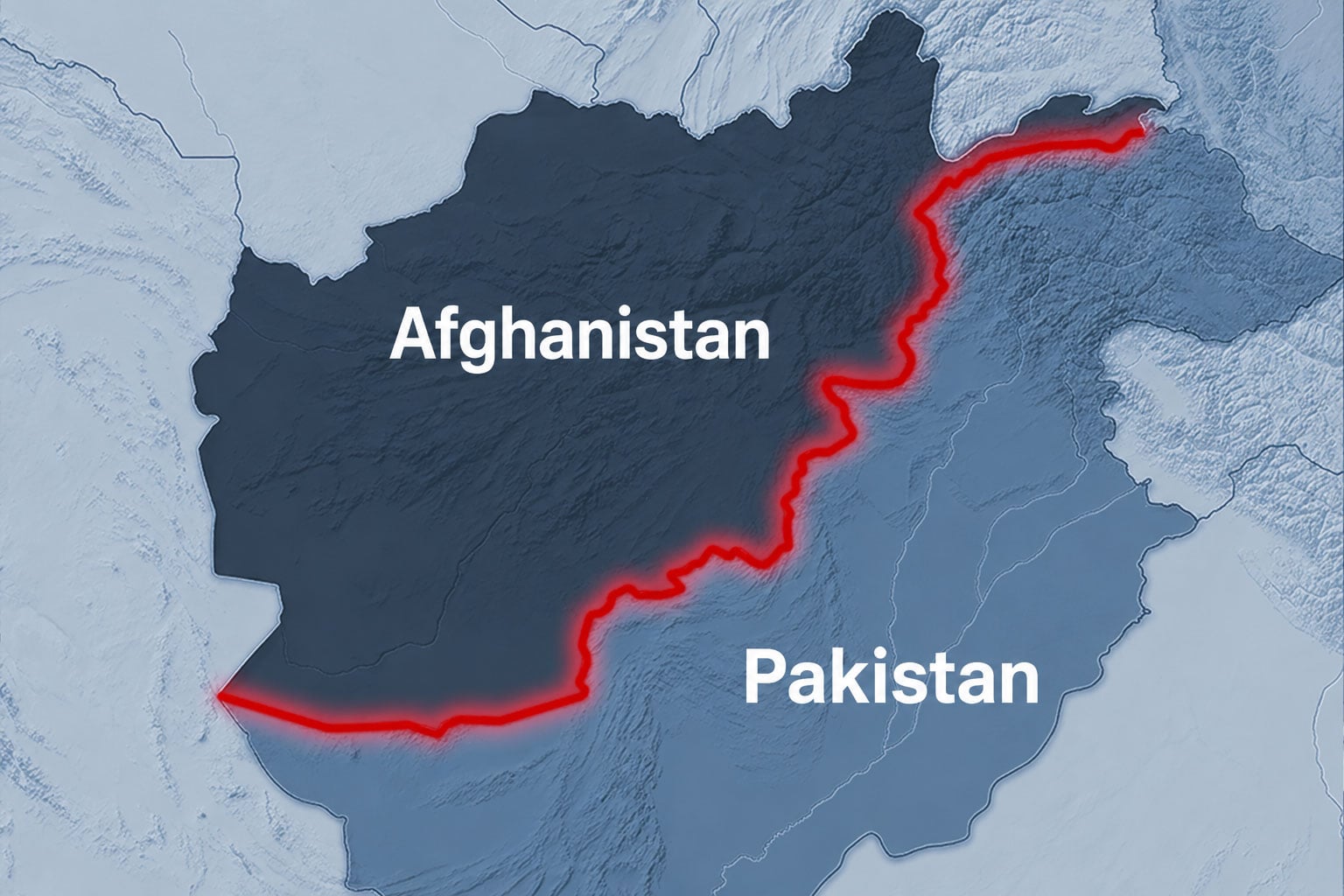
A map highlights the Durand Line in red, marking the border between Afghanistan and Pakistan. (Photo credit: Magnific)

Magnific

Present-day Afghanistan, as an independent country, is a product of colonialism, shaped by the yardstick of two great powers, Britain and Tsarist Russia. Its borders were drawn during the reign of Amir Abdul Rahman Khan (1880) through an understanding between these two powers, and they formed the country’s present-day geography.

Afghanistan shares borders with Iran, Turkmenistan, Tajikistan, China and Pakistan. Among these, the Durand Line between Afghanistan and Pakistan has been one of the most critical and challenging borders for both countries. The dispute over it can be considered as old as the state of Pakistan itself.

This border was signed on November 12, 1893, between the British representative, Sir Henry Mortimer Durand, and Amir Abdul Rahman Khan. The agreement was also affirmed by subsequent governments of Afghanistan in 1905, 1919, 1921, and 1930.

The formation of Pakistan in 1947 can be regarded as the beginning of a border crisis for Afghanistan, because after the creation of that country, most of Afghanistan’s rulers have considered the Durand Agreement to have expired. Yet international institutions have recognized the Durand Line as the border between the two countries.

The main question is why, among the borders shaped under the influence of colonialism and great powers, only the Durand Line holds special importance for Afghanistan, and why the country’s rulers call it an “imaginary line.” This piece seeks to answer that question within the historical context of Afghanistan after 1880 and to explain the logic by which this border became a special case for the country’s later rulers.

Amir Abdul Rahman Khan and the Borders of Afghanistan

There are numerous and differing views on Afghanistan and the formation of the country. The “Afghan nationalism” view recognizes the official history of the country as beginning in 1747 and also attaches to it a history of five thousand years. In the critical view, or more precisely the academic view, however, present-day Afghanistan begins in 1880, and Amir Abdul Rahman Khan is considered its first executive official. On this basis, Afghanistan’s borders in that period were formed on the basis of an understanding between two great powers, British India and Tsarist Russia.

To prove that the Durand Line is imaginary, the Afghan nationalist view emphasizes that it was imposed. The historical reality, however, is that Afghanistan as a whole is also the result of imposition and of an understanding between two great powers. After two major wars in the region, the British concluded that they should recognize Afghanistan as a buffer zone.

According to the notes of Amir Abdul Rahman Khan in the book Taj al-Tawarikh, which is attributed to him, the Amir did not consider present-day Badakhshan, among Afghanistan’s border regions, to be part of his domain. He argued that controlling this region was difficult because of its remoteness from the center of Afghanistan and its mountainous terrain. Nevertheless, the British added this region to his domain by force, and as a result, the country’s borders were fixed.

Afghan Nationalism and the Durand Line

With the formation of Pakistan, which divided the Pashtuns on the two sides of the Durand Line, the border dispute began, and this crisis has continued to this day. If we look at the history of Afghanistan after the coup of Sardar Mohammad Daoud Khan, the issue of the Durand Line is evident in all of the country’s developments and has always played a decisive role in them. In other words, it is considered one of the important factors behind the changes of government in Afghanistan.

Pashtun rulers, throughout the years in which they have called the Durand Line imaginary, have argued that the imposition of this border caused the Pashtuns to be divided between two countries. On this basis, they emphasize that “Greater Pashtunistan” must be part of Afghanistan’s territory. If we accept this argument, all of Afghanistan’s borders have likewise placed other ethnic groups on both sides of the border and in separate national territories. Greater Badakhshan has divided the Tajiks between Tajikistan and Afghanistan. The Uzbeks and Turkmens in northern Afghanistan have been left on the two sides of the Amu River, and in the west, the same situation has arisen between Iran and Afghanistan. Nevertheless, what is questionable about the claim of Afghanistan’s rulers is that they have not said a single word about these borders even once, while legally and historically these borders are no different from the Durand Line.

It appears that the main root of this debate, before the formation of Pakistan, goes back to the formation of the idea of “Afghan nationalism,” which was put forward by Mahmud Tarzi during the reign of Amir Habibullah Khan. According to his view, the foundations of the state were built on the basis of Afghan national identity and the Afghan language (Pashto). This plan was pursued seriously by later rulers, particularly during the reigns of Amanullah Khan and Nader Shah. Although this idea failed to provide Afghanistan with a stable state and a progressive, forward-looking society, it claimed many victims in different periods, and the people and society of Afghanistan are still paying the cost.

During the First Republic, Daoud Khan raised this issue based on “Pashtunistan-seeking” and made it so prominent that Afghanistan’s relations with Pakistan became extremely tense. This idea was pursued in Afghanistan’s subsequent systems as well. The issue of the Durand Line is therefore directly linked to ethnic demands and Afghan nationalism, and it is only within this framework that we can understand it.

In conclusion, the Durand Line, like all of the country’s borders, is a finalized and recognized border, and a border claim in this regard is an ethnic demand centered on Afghan nationalism. As this idea has sought, from its very foundation, a cultural and ethnic homogenization in this country, it pays attention to only one border of the country and calls it imaginary. Yet the Durand Line was signed by Amir Abdul Rahman Khan, and the rulers of Afghanistan in later governments also affirmed it. The reactions of Daoud Khan, Dr. Najibullah, and finally the Taliban to this border have been based on a tribal and ethnic temperament, a reaction that has had and continues to have no result other than regression and a deepening of Afghanistan’s crisis. All historical and international documents show that the Durand Line has defined the official boundary between the two countries. In this respect, the claims of Afghanistan’s rulers that the border is imaginary, or that its validity ended after the emergence of Pakistan, have often been raised at important historical moments and with the aim of gaining domestic legitimacy and popularity.


You can read the Persian version of this article here:
چرا دیورند خودش را برای افغانستان خاص می‌کند؟

ShareTweetSendSendShare

Related Posts

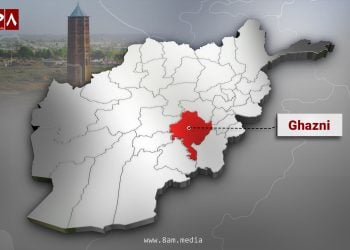
Ghazni province map in red inside a 3D map of Afghanistan.
Afghanistan News

Child Killed in Unexploded Ordnance Blast in Ghazni Province

16 November 2026 [t_time:1794809249]
A woman in a blue burqa and a young girl sit on a roadside as poverty and unemployment push families toward begging in Nangarhar. (Photo credit: AFP + Social Media)
Daily Reports

Nangarhar: Poverty and Unemployment Drive Women and Children to Beg

16 November 2026 [t_time:1794809088]
A pediatric specialist stands beside a young girl receiving treatment in a hospital ward amid warnings over pneumonia in children. (Photo credit: Exclusive)
Daily Reports

Traditional Pneumonia Remedies Endanger Children’s Lives in Afghanistan

16 November 2026 [t_time:1794807294]

Latest

Loading latest news...

Popular stories

  • A scanned copy of the Taliban order outlining new restrictions requiring female doctors to have a mahram when working with male colleagues. (Photo credit: 8am.media)

    Taliban Order Female Doctors to Have Male Guardians to Work With Male Colleagues

    Share
    Share Tweet
  • ISIS-Khorasan: A Real Threat to the People of Afghanistan and a Political Opportunity for the Taliban

    Share
    Share Tweet
  • UN Report Reveals Shifts in Family Attitudes and Rise in Domestic Violence in Afghanistan

    Share
    Share Tweet
  • Taiwan Accuses China of Escalating Military Activities in the Western Pacific

    Share
    Share Tweet
  • World News Day 2024: We need your help

    Share
    Share Tweet

Podcast

Insights
Insights

Join Lynne O’Donnell for 8AM’s podcast series, Insights.
Lynne talks with generals, diplomats, soldiers, journalists, politicians, activists, people who have front row seats for conflicts around the world, and citizens with a story to tell, happy or sad. For this first series, Afghanistan is the focus. Lynne and her guests talk about the collapse of the republic in August, 2021, and the impact since — for the people of Afghanistan, for the security of the region, for the safety of the world. It’s important, interesting and insightful.

Insights/22: Controlling the Narrative with Mina Sharif
byinsights8am

Controlling the Narrative

Lynne O’Donnell talks with Mina Sharif, author, activist, women’s rights campaigner, educator and mentor. They discuss who controls the narrative and who speaks for Afghanistan’s people when the Taliban appear to have seized control not only of the country but of the message, too.

Have a listen

Insights/22: Controlling the Narrative with Mina Sharif
Episode play icon
Insights/22: Controlling the Narrative with Mina Sharif
Episode Description
Episode play icon
Insights/21: Media Meltdown with Zahra Joya
Episode Description
Episode play icon
Insights/20: Terror Inc with Scott Richards
Episode Description
Episode play icon
Insights/19: Busting Stereotypes with Bushra Gohar
Episode Description
Episode play icon
Insights/18: Media Matters with Waliullah Rahmani
Episode Description
Episode play icon
Insights/17: What Goes Around Comes Around with Sima Samar
Episode Description
Search Results placeholder
Hasht-e Subh

8AM Media, also known as Hasht-e-Subh Daily, stands as Afghanistan's premier independent and non-profit newspaper, resonating as a beacon of journalistic integrity since its establishment in June 2007 by esteemed Afghan journalists and human rights advocates. With a steadfast commitment to citizen journalism and civic education, Hasht-e-Subh Daily has earned its place as the most esteemed publication in the nation.

Publisher: Sanjar Sohail
Email: [email protected]
Executive Director: Parwiz Kawa
Email: [email protected]

Read More

Why Is the Durand Line Singled Out Among Afghanistan’s Borders?

Nikki Haley Urges US Allies in Middle East to Help End Iran War

UNESCO Emphasizes Role of Education in Promoting Peace

Fox News: Iran Threatens to Track Down Two US Navy Officers

Child Killed in Unexploded Ordnance Blast in Ghazni Province

Editor’s Choice

Every Saturday morning, 8AM MEDIA English Services Department will guide you through the week’s biggest stories from Afghanistan and the international community.

Subscribe

© 2026 - ©Hasht-e Subh Daily

No Result
View All Result
8am.Media
پښتو ویب‌پاڼه
ویب‌سایت فارسی
اۉزبېکچه ویب‌سایت
  • Home
  • News
    • Afghanistan News
    • World News
  • Opinion
    • Editorial
    • Analysis
  • Reports
    • Daily Reports
    • Investigative Reports
  • Society
    • The story of people
  • Women’s Word
  • Columns
    • Three Years After Afghanistan’s Fall: The Taliban’s Resurgence
    • Towards Equality
    • The Resurgence of the Taliban: Two Years Since Afghanistan’s Fall
    • Hebatullah Report Special Edition
    • Resistance for Education Special Edition
    • Special Column on Taliban’s Education Curriculum
    • Nawroz
  • Interviews
  • Contact Us
    • About Us
    • 8AM MEDIA Annual Awards
    • Submit an Article to Hasht-e-Subh
  • 8am.media

© 2026 - ©Hasht-e Subh Daily