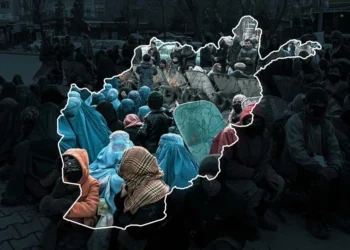

During the two and a half years of Taliban rule, Afghanistan’s health situation has reached a critical point. The World Health Organization (WHO) now declares a humanitarian crisis, emphasizing the instability of the healthcare system. The Taliban’s heightened restrictions on women, as per the WHO, significantly diminish their healthcare access. These concerns stem not only from Taliban management’s interference in healthcare but also from non-professional entities associated with the group meddling in healthcare center affairs.
Recently, the Moral Police of the Taliban have requested information and a list of female staff from private hospitals, including their details. This audit is taking place at a time when, according to the Ministry of Public Health, under the Taliban’s control, there are no specialized female doctors in more than 300 districts, and out of nearly 400 districts, healthcare centers are only operational in 90 districts. Nevertheless, health experts argue that the Taliban’s non-professional conduct and increased restrictions on women have pushed the healthcare system toward a catastrophe.
In a report published yesterday, the World Health Organization (WHO) highlighted that Afghanistan is still in the grip of a persistent humanitarian crisis. The organization emphasizes that Afghan citizens contend with an unstable healthcare system and confront severe food shortages.
The report highlights that malnutrition, recurring disease outbreaks, severe drought, and natural disasters have compounded the fragility of the healthcare system in Afghanistan. The situation of women is particularly described as sorrowful in the report. It adds that due to the intensified barriers imposed by the Taliban and the lack of access to healthcare due to restrictions on education, the humanitarian aid needs have significantly increased.
The World Health Organization (WHO) states in the report, “Unfortunately, in 2024, at least 9.5 million people in over 20 thousand villages remain with limited or no access to basic health and medical services.” The organization further notes that the most severe long-term consequences of the health crisis are borne by marginalized women and vulnerable children. According to the report, the displacement of women to the margins has increased health risks in terms of reproductive health, maternal and neonatal health, child health, and preventable maternal mortality.
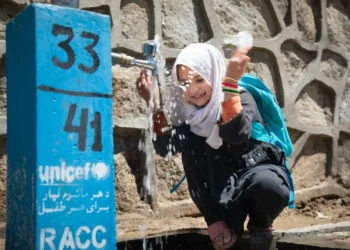
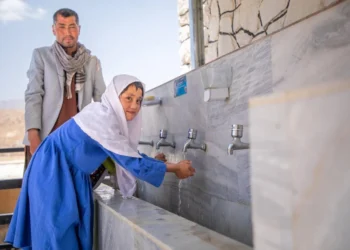
The World Health Organization has expressed concerns over the prolonged drought in Afghanistan, which has led to a water crisis. According to the organization’s report, out of the 34 provinces in Afghanistan, 30 provinces are facing severe water shortages or very low water quality.
The report from the World Health Organization explicitly states that the long-term humanitarian crisis in Afghanistan remains unresolved due to unaddressed geopolitical considerations, leading to a reduction in international support for the health sector in the country. The organization emphasizes the need for the world to prioritize the health of women and children in Afghanistan.
Meanwhile, health sources confirmed to the Hasht-e Subh Daily that the Taliban’s Moral Police have requested a list and details of female staff from private healthcare centers in Kabul. These sources add that Taliban Moral Police have visited several private clinics in the past week, demanding the collection of information on female healthcare workers.
Nigin (pseudonym), a female specialist, speaking to the Hasht-e Subh Daily, states, “The scrutiny of personal information by the Taliban’s Moral Police has consequences for women, as these ideologues do not create anything other than prohibition and degradation for women.” She expresses concern that the personal information of female healthcare workers, including their social media addresses, is perceived as another threat to the healthcare system, especially for women.
This doctor expresses, “It’s terrifying. Each department of the Taliban separately collects information, and they have established a formidable intelligence and security apparatus within the healthcare system. We are concerned about what they will do with our information, and we are truly bewildered about what to do. Tomorrow, the responsible party for any action against female staff will be the Taliban.”
On the other hand, Sayed Abdullah Ahmadi, the former head of the Wazir Mohammad Akbar Khan Hospital, speaking to the Hasht-e Subh Daily, says, “The healthcare service situation in Afghanistan, especially the current healthcare system managed by the Taliban, is very critical because healthcare services are not provided equitably and according to the people’s needs.” Mr. Ahmadi adds that the restrictions imposed on women by the Taliban are irrational and have adversely affected the provision of healthcare services. According to him, the recent request for personal information from female healthcare workers in private hospitals is the latest restriction imposed by this group, making the healthcare crisis more severe.
The former head of the Wazir Mohammad Akbar Khan Hospital emphasizes that with the continuation of restrictions against women, the healthcare system will witness a catastrophe, with mothers and children being the most affected. He expresses hope that the Taliban will lift the restrictions on the healthcare delivery process in the country and allow the healthcare system to function smoothly without interference from political groups. He describes the future of the healthcare system under the Taliban’s management as dark and tragic.
Taliban have recently introduced new regulations and imposed fresh restrictions against women in the healthcare system. According to the Ministry of Public Health under the control of this group, out of nearly 400 districts in the country, only 90 districts have active healthcare centers. According to this governmental body under the Taliban’s management, there are no female specialist doctors in more than 300 districts in Afghanistan. The scarcity of female specialists, strict Taliban regulations, and challenging rural conditions have resulted in the majority of districts lacking access to female specialist doctors.
Over the past two years, the Taliban have imposed significant restrictions on women in the healthcare system. According to their directives, women and girls graduating from medical schools have been deprived of the right to enter medical specialty institutions. Furthermore, this group has conducted general medicine student exams at public and private universities without the presence of women and excluded women from participating in the Exit Exam and the Speciality Completion Program, while Afghanistan faces a severe shortage of female specialists. Currently, in many healthcare centers, midwives are dealing with women’s health issues instead of specialists.
It is noteworthy that the Taliban have intensified restrictions against women in the healthcare system, while, according to the United Nations report, one mother dies every two hours during childbirth in Afghanistan. The United Nations Children’s Fund (UNICEF) also states that Afghanistan is one of the most perilous places in the world for infants and mothers.