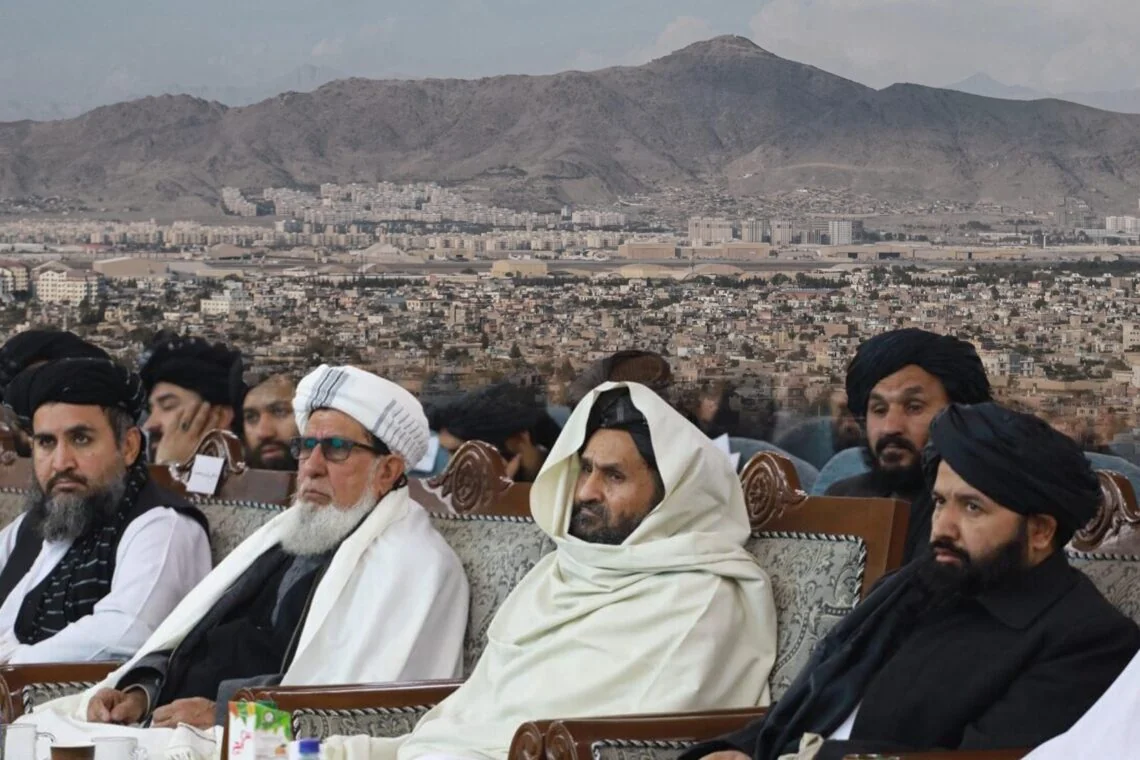
When a gathering is held by the Taliban, and with great fanfare, with religious scholars invited from various provinces and senior officials of the group delivering speeches, one expects to hear new and encouraging remarks about the future of Afghanistan, the country’s political situation, and responses to the demands of the people. This is also what public opinion in Afghanistan, opponents of the Taliban, and the international community expect to hear.
But in such an atmosphere, Abdul Hakim Haqqani, the Chief Justice and one of the most senior officials of the Taliban, spoke not of political openness but once again stressed the necessity of keeping power concentrated in the hands of the group. Hakim Haqqani even described the lack of power-sharing with political currents and officials of the former government as a blessing for the Taliban, saying that had it happened, those forces would have been strengthened with foreign support, and the Taliban would have been weakened.
Experience suggests that these remarks are not merely the expression of a personal view. The speaker is one of the senior officials of the Taliban regime, and his statements were made at a gathering held in the name of the group’s leader and in support of the unquestioning pursuit of his decrees. This means that, from the Taliban’s perspective, the distribution of power and the participation of all forces in the decision-making structure do not resolve the crisis but rather aggravate it. Such an understanding of power-sharing, particularly in a society like Afghanistan’s, which is diverse and fragmented, is certainly astonishing.
The significance of this position lies in the fact that the Taliban are expressing satisfaction over the absence of an inclusive government at a time when one of the main issues criticized by society in Afghanistan and the international community is precisely the monopoly of power in the hands of this group. In other words, what society in Afghanistan and the international community see as a serious obstacle on the path to stability and to resolving Afghanistan’s political crisis is, in the eyes of the Taliban, and particularly this official of the group, an achievement worth making sacrifices to preserve.
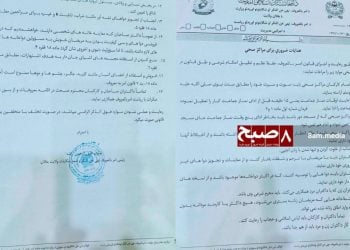
Another notable point about this gathering is the very fact of its being held on the decrees of Hibatullah Akhundzada, and its emphasis on their unquestioning implementation. When a gathering is held with the participation of religious scholars and Taliban officials to review the decrees of one individual and stress the necessity of their full implementation, while at the same time portraying a kind of sanctity and immunity from criticism for his person, this approach cannot be seen merely as an emphasis on obedience to the leader. It is also a sign of restricting the possibility of participation and expression of opinion within the Taliban themselves.
Participation becomes meaningful when different individuals and currents can voice their views, debate decisions, and even disagree with them. But when the ultimate criterion is the decree of one person, and others are expected to carry it out without question, there is no room left for such participation. In this model, dissenting opinion has no place, and there is no possibility of criticizing the leader’s decisions.
This issue even raises a more fundamental question about the nature of the Taliban regime: if all decisions and policies are to be determined by the vote and decree of one person, then what is the place of other officials, institutions, and rules of governance? Every political structure, even an “authoritarian” one, needs some mechanism of decision-making and interaction among the components of power to run its affairs. But an emphasis on absolute obedience to the leader’s decrees effectively pushes these mechanisms to the margins and turns the will of one individual into the ultimate criterion for running the country.
Of course, within the Taliban, not everyone necessarily agrees with the group leader’s understanding of how to run the country. Some officials and factions within the group may want a greater role in decision-making and to have their views heard. From this perspective, the Kabul gathering can be seen as an effort to strengthen a reading of power that destroys not only political participation with other currents in Afghanistan, but also participation and the right to express opinion within the Taliban themselves.
An important point to add to the discussion is that the emphasis on unconditional implementation of Hibatullah’s decrees is directed not only at the people and citizens of Afghanistan but also encompasses the pillars and officials of the Taliban regime itself. Citizens are expected to accept the leader’s decrees not as governmental decisions about which one can raise questions or voice criticism, but as sacred commands beyond criticism. On the other side, Taliban officials and institutions must also use all their strength and resources to implement these decrees.
It appears that one of the concerns of Hibatullah and his inner circle is that this unquestioning obedience has not become a “lasting culture” within the Taliban structure. Earlier, reports and speculation had been published about the non-implementation of some of the Taliban Supreme Leader’s decrees by a number of the regime’s pillars, and the repeated emphasis on full implementation of the decrees may indicate the Taliban leadership’s sensitivity to this very issue.
From this perspective, the Kabul gathering can be seen as an attempt to institutionalize a culture of “absolute obedience,” a culture in which citizens would have no right to question the leader’s decrees and regime officials could not defer their implementation to their own discretion and expediency. The reality is that the issue is not merely the implementation of a few specific decrees. The issue is that obedience to the will of one individual becomes the primary rule in governing society and the state.
You can read the Persian version of this analysis article here:
نشست طالبان در کابل؛ وقتی فقدان دولت فراگیر «نعمت» خوانده میشود