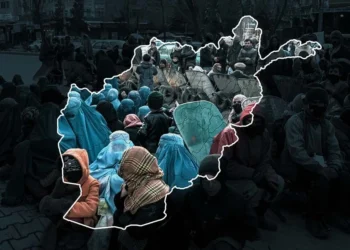
The Taliban’s new “Principles of Separation of Spouses,” published in the official gazette of the group’s Ministry of Justice, addresses marriage, divorce, and separation. The content of this document and the approach underlying it are in open conflict with fundamental human rights principles and standards in several core respects, particularly regarding the rights of women and children. Its various provisions formalize child marriage, restrict and in some cases entirely strip women of the principle of free consent in marriage, reinforce a patriarchal structure, and place women in a subordinate position with unequal legal standing.
This document follows the adoption and enforcement of the Taliban’s Criminal Procedure Code for Courts and has been issued as part of an effort to institutionalize various forms of discrimination and social control. Like other documents issued by the Taliban, this one also lacks legitimacy and fails to meet the formal and substantive standards expected of recognized legal instruments.
Formalizing Child Marriage
The official recognition of child marriage is one of the most alarming aspects of this document. Chapter Two, titled “Separation on the Grounds of the Option of Puberty,” covers Articles Five through Ten and addresses the marriage of male and female minors, treating it as valid. Article Five explicitly states: “Whenever a relative other than the father or grandfather concludes the marriage contract of a male or female minor, the contract is valid.” This provision clearly demonstrates that the Taliban regard child marriage as legitimate and binding, granting the child only a limited and largely unattainable right after reaching the age of puberty, known as the “option of puberty.”
In addition, Article Six addresses “the marriage of a male or female minor to a non-equal partner” and discusses the conditions of such a union. Taken together, these provisions show that by regulating the details surrounding the marriage of minors, the option of puberty, and the authority of guardians, the Principles of Separation of Spouses formally recognize child marriage as a legal act and establish a legal framework for it.
While paragraph twelve of Article Five of the Law on the Elimination of Violence Against Women lists “marriage before reaching the legal age” as an instance of violence against women and criminalizes it, Article Twenty-Eight of the same law stipulates that anyone who marries a woman who has not reached the legal age of marriage shall, depending on the circumstances, be sentenced to a medium-term imprisonment of no less than two years. By issuing such documents, however, the Taliban are turning conduct that is treated as a crime under the laws in force in Afghanistan into an official practice supported by the ruling structure.
The provisions of the Principles of Separation of Spouses also stand in open conflict with the principles and standards of human rights. International human rights instruments prohibit child marriage and recognize it as a violation of the rights of the child and as one of the “harmful practices.” Article 1 of the Convention on the Rights of the Child defines every human being below the age of eighteen as a child, and paragraph 2 of Article 16 of the Convention on the Elimination of All Forms of Discrimination Against Women (CEDAW) stipulates that “the betrothal and the marriage of a child shall have no legal effect” and is not valid. This means that the marriage of persons below the legal age is invalid and must not be officially recognized. Moreover, in their joint general recommendation and general comment, the Committee on the Elimination of Discrimination Against Women and the United Nations Committee on the Rights of the Child have emphasized that the minimum age of marriage must be eighteen, and that child marriage constitutes a violation of human dignity, health, and the fundamental rights of the child.
The legal and social consequences of child marriage are severe, wide-ranging, and deep. The practice typically leads to the denial of girls’ right to education, economic dependency, early pregnancy, increased risk of maternal mortality among adolescents, permanent physical harm, severe psychological damage, domestic violence, and the loss of the child’s natural development.
The Option of Puberty and Disregard for the Will and Consent of Girls
Article Seven of the document explicitly states that a girl’s option of puberty is forfeited through silence, while a boy’s option of puberty is not. This provision draws an open distinction between girls on one side and boys on the other, treating the silence of a girl as consent, whereas a boy’s silence does not extinguish his right.
This distinction constitutes a direct form of gender-based discrimination, since it defines the right to object to and dissolve a marriage in narrower terms for girls than for boys. In effect, the Principles of Separation of Spouses grant boys a more active and expansive role in deciding the fate of their marriage, while placing girls in a position where even their silence can be interpreted as consent. Yet in many cases, the silence of girls is not the product of genuine consent but rather of fear, family pressure, social threats, economic dependency, or an inability to express disagreement.
Such a provision stands in clear contradiction to the principle of equality and the prohibition of discrimination enshrined in Article 2 of the Universal Declaration of Human Rights (UDHR) and Article 2 of CEDAW. In addition, paragraph 1 of Article 16 of CEDAW emphasizes that women and men must enjoy “equal rights in the free choice of a spouse and in entering into marriage with full and free consent.” Interpreting a girl’s silence as consent is incompatible with the concept of “free and full consent,” because under human rights standards, consent must be explicit, informed, and free from any form of coercion or pressure.
This provision also conflicts with the principle of the “best interests of the child” set out in the Convention on the Rights of the Child. Girls who have been forced into marriage as children may, in practice, lack the capacity or safety required to object to the marriage immediately. The document nonetheless interprets their silence to their detriment and denies them the right to dissolve the marriage.
The practical consequence of such a rule is the confirmation and entrenchment of forced and underage marriages and the restriction of girls’ access to justice. This provision not only weakens girls’ independent will but also reproduces the unequal power structure within the family and society. It is a structure in which the voices of women and girls are seldom heard, and in which their silence, rather than being recognized as a sign of pressure and vulnerability, is treated as consent.
Restrictions on Women’s Right to Divorce and Separation
Articles 18, 19, and 22 of the document show that, in many instances, women seeking to end a marriage are dependent on the consent of the husband or the ruling of a judge. For example, Article 18 refers to “obtaining the husband’s consent for khula,” which reflects the dependence of a woman’s right to divorce on the will of her husband.
Tying divorce to the consent of the husband creates conditions ripe for abuse and extortion, since the husband may demand large sums of money or property, the relinquishment of the dowry, or the surrender of other financial rights in exchange for agreeing to a divorce. This situation is even more difficult for women who, under Taliban rule, have been deprived of the right to work, economic independence, and income. Many women have neither the means to pay for the husband’s consent nor effective access to legal and social support. As a result, they are forced to remain in violent or degrading relationships.
These provisions stand in clear conflict with Article 16 of CEDAW, which emphasizes the equality of men and women in marriage and its dissolution. They perpetuate and formalize structural injustice against women.
Continued Injustice in Women’s Right to Make Decisions
Various provisions of the Principles of Separation of Spouses, including Articles 3, 5, and 8, emphasize the decisive role of the father, grandfather, and guardian in determining the fate of a girl’s marriage. This structure reflects a reality in which women and girls lack the legal independence they need, and in which fundamental and life-defining decisions are made by men. Tying a girl’s marriage to the will of a guardian, particularly in the case of girls who have lost their parents or are under the care of relatives, stepfathers, or others, increases the risk of abuse and of trading their fate.
This danger is more serious for girls whose fathers are addicted to drugs, impoverished, or abusive. In such circumstances, marriage can become a tool for obtaining money, settling debts, or making family deals, while the will and interests of the girls are entirely ignored. The situation is made worse by the fact that mothers, owing to systematic gender-based discrimination and the sweeping restrictions imposed by the Taliban, are in practice unable to effectively protect the rights and best interests of their daughters.
This situation conflicts with Article 2 of the UDHR and Articles 1 and 2 of CEDAW. According to these instruments, any distinction or restriction based on gender that prevents women from enjoying fundamental rights constitutes discrimination. Reinforcing such a structure perpetuates male domination, restricts women’s freedom, and reproduces systematic discrimination against them.
Violation of the Principle of Free and Full Consent of Both Parties to Marriage
Article Three of the document states: “If a guardian exists, the marriage of a woman who marries a non-equal partner without the guardian’s permission is invalid.” This provision violates a woman’s will and independence in choosing her spouse, and in practice, places the final authority in the hands of a male guardian.
Making the validity of a marriage contingent on the guardian’s permission opens the way to forced marriage, family pressure, and the denial of a woman’s right to self-determination. Such a structure defines a woman not as an independent legal person, but as someone under the guardianship of a man.
Yet it is well known that the principle of consent, or of offer and acceptance in marriage, is explicitly recognized in Afghanistan’s Civil Code. Article 66 of the Civil Code of Afghanistan stipulates that “the marriage contract is concluded through the explicit offer and acceptance of the two parties.” Making the validity of a marriage contingent on the guardian’s permission, therefore, violates the principle of free consent of both parties to marriage. In the same way, Article Five of the Law on the Elimination of Violence Against Women treats forced marriage and the prevention of the right to marry or to choose a spouse as instances of violence against women and criminalizes such conduct. Article 26 of that law sets out a penalty for anyone who betroths or marries a woman without her consent, and Article 27 imposes a penalty on anyone who prevents a woman’s marriage or denies her the right to choose her spouse.
This approach is at odds with paragraph 1 of Article 10 of the International Covenant on Economic, Social, and Cultural Rights (ICESCR). That article describes the family as “the natural and fundamental group unit of society” and emphasizes that marriage must be entered into with “the free consent of the intending spouses.” Under this principle, any restriction on the free will of a woman or man in choosing a spouse conflicts with the right to freely enter into marriage and with human dignity. This rule also clashes with Article 16 of CEDAW.
Final Word
The Taliban’s Principles of Separation of Spouses are a clear example of the official codification of discrimination against women and children. The document not only formalizes child marriage; it also restricts and, in some cases, disregards the will and consent of women in marriage, strengthens the unjust domination and guardianship of men over women and girls, and deepens discrimination in access to justice. In doing so, it lays the ground for widespread violations of the fundamental rights of women and children.
An analysis of the provisions of this document shows that not only significant portions of it, but also the underlying ideas and approach on which it is based, stand in open conflict with the principles and standards of human rights. The continued enforcement of such documents could deepen gender-based discrimination, increase violence against women and children, particularly forced and underage marriages, expand women’s dependence on men, and further weaken the fundamental rights and freedoms of citizens of Afghanistan. Moreover, turning discrimination and the deprivation of women into formal rules transforms human rights violations into an even more systematic and organized practice.
At the same time, these very official documents issued by the Taliban could in the future serve as undeniable evidence for documenting human rights violations by the Taliban and for the pursuit of justice. The Principles of Separation of Spouses, along with other documents published by the Taliban, clearly demonstrate that discrimination against women and children, and the widespread violation of human rights, are not merely the result of individual conduct, but a core component of the official policy of the Taliban.
You can read the Persian version of this analysis here:
رسمیسازی کودکهمسری و تداوم تبعیض جنسیتی در اصولنامه طالبان