
Sources within the Taliban-controlled Traffic Department say that corruption is widespread within the department. Speaking to the Hasht-e Subh Daily, these sources say that international driving licenses are issued to some individuals through their relatives in exchange for bribes. According to them, private vehicles whose owners pay daily or weekly bribes to traffic officers are granted permission to transport passengers, while other private cars are denied this right. The sources also say that money is collected from roadside carts as well, coordinated with Taliban personnel responsible for traffic staff.
Rohullah (pseudonym), a source within the Taliban’s Traffic Department, reports widespread corruption in the department. According to him, in the licensing section, ordinary people and low-income groups are issued licenses only with great difficulty, on pretexts such as having to complete a course and pass a driving test, whereas those who pay money or have connections receive their driving licenses even without appearing in person.
This source says, “International driving licenses are even issued to some individuals while they themselves are not inside the country, and their relatives obtain the license by paying a bribe.” According to him, the Traffic Department does not allow private vehicles to transport passengers, but those private vehicle owners who pay traffic officers bribes on a daily or weekly basis are granted permission to carry passengers.
Rohullah adds, “Since most vehicles are right-hand-drive or converted vehicles and are not issued taxi permits, and since the vehicle standards set under the relevant procedure for taxis are low, people cannot afford to buy newer model cars, so to provide for their families, they are forced to work as taxi drivers using their private vehicles.”
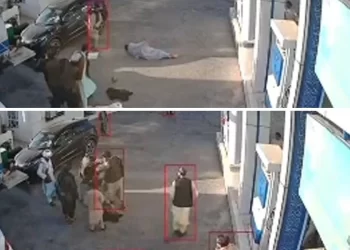
This source also reports a suicide attempt by one of the drivers on the Kote Sangi to Chaharahi Shaheed route, resulting from the Taliban’s strict enforcement measures. He says, “A private vehicle driver in Kote Sangi, out of desperation, attempted suicide after traffic officers stopped him from taking his car to the township he lives in. The Taliban traffic officers present at the scene responded to the driver with insults and abuse and showed no concern for his condition, but residents stopped him from taking his own life. The traffic officers also collect money daily from children and young people who call out for passengers to fill vehicles at stops, as well as from mobile tire repairmen.”
Nematullah (pseudonym), another source within the Taliban’s Traffic Department, points to another aspect of corruption in the department, saying that money is also collected from roadside carts through coordination with Taliban personnel in the traffic staff section. He adds, “In the vehicle registration renewal section as well, the work of those who pay money is completed within a single day, while those who lack connections or do not pay bribes must wait a week or even longer for their work to be completed.”
According to him, most vehicles have a “reset chassis number” or an “altered chassis number,” and if a technical inspection were conducted properly, their registration should not be renewed, because these vehicles are stolen. However, he says that by paying bribes, such vehicles receive registration from the Traffic Department without any review or technical inspection, and as a result, stolen vehicles circulate legally throughout the city.
This source says, “As for vehicles with temporary plates, stickers are issued only to those who have connections or pay bribes, even though, according to a Traffic Department announcement, no right-hand-drive vehicle is any longer entitled to registration, a new sticker, or biometric processing. Despite this, dozens of single-key and right-hand-drive vehicles still enter the country, and stickers, cards, and plates are issued for them.”
Ahmad Saeedi, an Afghanistan affairs analyst, says corruption has reached its peak in all Taliban-controlled institutions. According to him, embezzlement, bribery, coercion, and arbitrary conduct have increased compared to the previous government’s period. He adds, “In the Kabul Traffic Department and other provincial traffic departments, bribery and embezzlement are more prevalent than in many other Taliban-controlled institutions, because unemployment has reached its peak and a large number of people have been forced to turn to driving for a living.”
This analyst says, “People are required to renew their vehicle registration and obtain route permits, which is why the number of people visiting these departments is very high. To get their work done on time, especially owners of Pakistani right-hand-drive vehicles, they are forced to pay bribes. Even in the Kabul Traffic Department, nothing gets done without paying a bribe. At the head of this department is a person who previously worked as a baker in Quetta, Balochistan, Pakistan, and who has now been appointed as the head of Afghanistan’s Traffic Department. He is an “illiterate” and “unreasonable” person who has created numerous problems.”
This comes as a number of the country’s citizens, in interviews with the Hasht-e Subh Daily some time ago, expressed strong concern over the rise in corruption and bribery within government institutions under Taliban control.
Some of these residents had said that most of those who take bribes are Taliban members, and that without paying, no work gets done.
You can read the Persian version of this report here: