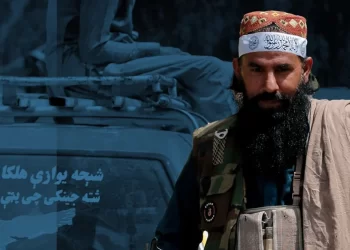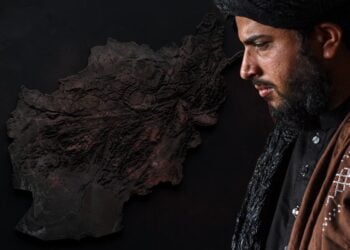

Over the past few days, I have thought repeatedly about the men of Afghanistan: men who have lived for five years under the ominous shadow of the Taliban; men whose daily reality few have spoken about, because all eyes, rightly, have been fixed on the women who have been barred from education, work, and participation in society. Yet alongside this immense catastrophe, there exists another suffering: the suffering of men who watch in silence as their lives and futures are slowly extinguished.
Many men in Afghanistan grow up from childhood with the conviction that they are responsible for their family’s sustenance, for putting bread on the table, for the security and future of their children. Now imagine a man with no work, no income, no hope for the future. Imagine a father who, each day more than the last, holds himself accountable for feeding his household, and each day carries a deeper shame.
During these years of Taliban rule, thousands of men in Afghanistan have been crushed under the weight of these pressures. The stories of many of them have never reached us: young men of thirteen and fourteen, men of thirty and forty, and others younger and older, who chose death over an exhausting, grinding existence. Among them was Shams, a twenty-seven-year-old engineer who, just days ago, set himself ablaze on the streets of Kabul in protest against the sweeping poverty and unemployment of the Taliban era. Nor do those who gave up on Afghanistan and chose migration fare much better. Munir, sixteen years old, was shot and killed this week at a foreign border in Türkiye. These names are only two examples from among thousands of untold stories of men from my homeland.
But this is not the full picture. Other men, after Afghanistan fell to the bloodthirsty Taliban regime, took up arms and went to the mountains: heroes with neither bread nor recognition. No media spoke of them; no one sent them medals. Many of them knew they might never prevail, and that their very names might leave no trace. And yet, they fought and gave their lives.
I do not glorify war. But I cannot fail to acknowledge the men who, in these dark years, stood bare-handed against a ruthless force that has seized an entire country in its grip. They are part of the narrative of Afghanistan’s suffering and resistance.
Yet what gave me more hope than anything else in recent days was neither war nor weapons. It was a cry that rose yesterday and today from Herat: a cry from men who did not come into the streets for their own rights; who did not come for more bread; who did not come for their own safety. They came for the freedom of girls. They came to protest against locked school gates, to reclaim the rights of the women and girls of this land. Men who stood bravely before guns, before armored vehicles, and the treads of tanks belonging to this ignorant oppressor. Our heroes stepped onto the field knowing that the price of protest in today’s Afghanistan is not merely imprisonment; it is a bullet.
For years, the women of Afghanistan have fought for the right to education and work. For years, the girls of Afghanistan have paid the price. But to see men raise their voices for girls’ rights under such conditions carries a meaning that surpasses protest alone. This is what I call the most honorable form of solidarity. The most honorable solidarity is when a person stands for a right that does not directly belong to them. This solidarity honors Afghanistan and carries our civilization and consciousness into the streets of the entire world.
We, the women of Afghanistan, saw in these days that we are not alone. We saw that amid so much darkness, there are still men who do not regard women’s freedom as a woman’s issue, but as a matter of honor, justice, and the future of Afghanistan. I bow my head in respect for those men. In respect for the fathers who stood beside their daughters. In respect for the brothers who did not stay silent. In respect for the young men who raised their voices despite their fear.
I pay tribute to sixteen-year-old Jibreel, who understood that a locked school gate for a girl is a wound upon the future of all Afghanistan. The name of this small heroic protester, whose body has not yet even been returned to his family, will remain the crown of Afghanistan.
The heroes of Herat, at a time when the Taliban sought with all the force of their religion and worldly power to build a wall between women and men, reminded us that freedom is indivisible: either everyone is free, or no one is free.
Surely, when history writes the account of these dark years, alongside the names of the women who fought for freedom, it will also remember the men who stood beside them in the hardest of days. All honor to you.
You can read the Persian version of this article here: