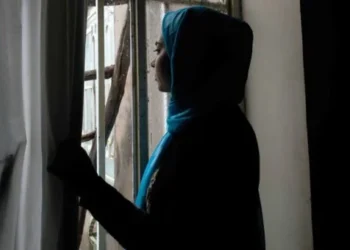

In this report, five female protesters who were arrested and imprisoned by the Taliban share their accounts of physical and psychological torture in Taliban detention centers in Kabul. The women describe methods of torture including hanging by the feet, placing plastic bags over their heads and faces, binding their hands behind their backs, keeping them in damp rooms, whipping with belts, placing the barrel of a Kalashnikov near their ears, and threatening them with death. Additionally, the women endured vulgar insults, verbal abuse, being called prostitutes, being accused of being American servants and spies, and threats of harm to their family members. All these women are currently suffering from severe mental and physical health issues, including joint pain.
Two of the former detainees confirmed that they were forced to confess while naked or semi-naked to ensure they would not protest against the Taliban’s policies again. They were denied access to legal counsel, family contact, communication with fellow prisoners or guards, and medical treatment for menstrual-related needs, among other hardships.
Findings from the Hasht-e Subh Daily indicate that all women arrested by the Taliban were subjected to physical and psychological torture in detention centers and prisons. The severity of the torture was proportional to the detainees’ popularity and recognition in society, especially on social media. Some protesters endured more severe torture, while others experienced comparatively less physical abuse. Interviews with five female prisoners revealed that all had experienced torture and forced confessions. The women confirmed that they were threatened with death, stoning, execution by firing squad, and retaliation against their families.
The Taliban employed various methods to torture detained female protesters. The treatment varied from one detainee to another, with some held for short periods and others for several months. The Taliban forced all released women to provide confessions. The detainees confirmed that the confessions were prepared before the interrogations, and they were warned to recite them in front of cameras in their own words. When they refused, they were subjected to physical and verbal abuse, including beatings with belts, slaps, and degrading insults.
Humaira (pseudonym), one of the protesting women, confirmed in an interview with the Hasht-e Subh Daily that she was tortured by the Taliban. She described the Taliban’s treatment of detainees as brutal and inhumane. She recounted that each time she was taken for interrogation, she was first hung by her feet, her hands bound behind her back, and then whipped before being kept in damp rooms. The interrogations involved humiliation, insults, and forced confessions.
Humaira stated that she was only allowed to use the restroom three times a day and was forbidden from speaking to the guards. She had no contact with her family and was denied medication despite her illness. She was also deprived of legal counsel, and forced confessions were extracted from her every other day. The Taliban coerced her into making statements about actions she had never committed. Although female Taliban staff were present in the prison, all acts of torture were carried out by male fighters, who beat and insulted her.
When discussing the forced confessions, Humaira’s voice trembled, and she broke into tears. She explained that due to Afghanistan’s cultural norms and to protect her family from psychological trauma, she concealed the extent of her suffering from them. “My family does not know about my forced confessions because Afghanistan’s cultural environment is very harsh. If my family learns what happened to me, they would fall into depression and suffer a significant emotional blow. The Taliban stripped us naked, filmed the confessions, and threatened to release the videos if we spoke about the interrogations. They used this method on all prisoners, making them repeat pre-written confessions in front of the camera while three armed men stood nearby, threatening us. Imagine a woman standing naked or semi-naked in front of a camera — what could be worse than this?”
Humaira added that the confessions extracted from her were entirely fabricated. “The Taliban forced me to say that I received money from America to protest against their policies. They threatened me to confess that I had received money from Richard Bennett, the UN Special Rapporteur on human rights, to protest against the hijab. They wanted me to say that I intended to recruit girls into immoral activities and train them as dancers to be sent to the West for exploitation. These false confessions were taken from all detainees, often while they were naked or semi-naked.”
In solitary confinement cells, there was no one to offer even a shred of sympathy. “The Taliban accessed my phone and social media accounts, interrogating me about the addresses of other female protesters and showing me their photos, demanding I write down their names,” Humaira stated that she could not withstand the torture and would faint within ten minutes when hung by her feet, after which she would be moved to damp rooms and beaten.
Humaira recounted other prisoners’ stories, saying they made her own suffering seem less severe. “The Taliban offered a young woman her freedom if she married a Taliban member. I saw another woman imprisoned with her children, without any visitors. The children were depressed, their bodies lifeless, weakened by the shock of their situation. They had been arrested on charges they did not even understand. Every day they grew weaker, suffering a massive psychological trauma.”
Humaira says she is in shock and experiencing severe mental and emotional distress. According to her, no one helps anyone in the current situation. She adds, “Unfortunately, my condition is not good. I cannot talk to doctors over the phone. I wish there were a doctor who could listen to all my words and be a remedy for the suffering and torture I have endured. So far, no one has helped me, and I am grappling with immense pain and uncertainty.”
Parnian (pseudonym), another protesting woman who has experienced the bitter and painful reality of Taliban prisons, confirms that women in Taliban detention centers are subjected to torture, humiliation, and insult. Having endured both psychological and physical torture in solitary confinement, she says that while her physical wounds have healed, she will never forget the insults and profanity she heard from the Taliban. Parnian recounts that the Taliban arrested her in a horrifying manner and, during her days in solitary confinement, she was allowed to use the restroom only once a day—while she was detained during her period. She emphasizes that she endured two menstrual cycles in solitary confinement without any sanitary facilities or hygiene products.
The protesting woman adds that the dampness of the cell, lack of cleanliness, and illness caused her entire body to emit a foul odor. She says, “I was on my period when they imprisoned me. I had two more periods in prison. I prayed many prayers without ablution, asking God to place the sin on the Taliban. I smelled bad there, and I feel like that smell is still in my body.”
Parnian confirms that Taliban fighters tied her hands behind her back and placed a black bag over her head during the arrest. She says that at least three days after being placed in solitary confinement, she was taken for interrogation. She adds, “There was a cross-shaped table. The chair behind it was very low, and they would place hands on the table and cuff them. This was not an interrogation. They would just sit you down, insult you, beat you, call you a prostitute, accuse you of going to the Americans at night, saying seven or eight men would be on top of you, and use vulgar words. Then they would recite religious texts, blow on themselves as if to protect against her perceived sins, and say God saved them from our evil. If I said anything, they would punch and slap me.”
The protesting woman adds, “During the interrogation, the Taliban member had a belt in his hand, which he used frequently. He would hit with the metal part, which could make you faint if it struck the bone. They did not ask questions; they just took you under the pretense of interrogation and tortured you. They would say to repeat whatever they told us. When I said I hadn’t done that and wouldn’t lie, he slapped me so hard that my eyes burned. They said, ‘You would give your body to Westerners, and now you won’t talk to us?’ When I adjusted my headscarf, they said, ‘You walked barefoot in the streets, stand here the same way and talk.’ Eventually, I had to make a forced confession and repeat whatever they said to escape their torment.”
This former Taliban prisoner says that the Taliban’s psychological and physical tortures are unforgettable. She stresses that the beating of a woman by men, the insults, and the humiliations she and others endured will never be forgotten, and one day, the Taliban will be held accountable for all these atrocities. She says she witnessed other shocking incidents in prison. She adds, “One day I wanted to go to the restroom, and a woman was ill. The woman was lying in the corner of the room, suffering from labor pains, and no one cared about her. She endured her pain and gave birth alone in filthy prison conditions. Seeing those scenes is horrifying. There were women in prison whose children had never seen the outside world. The reason for most women’s imprisonment was unknown, many were arrested solely for their ethnicity.”
Parnian says that in the early days, the Taliban burned one of her hands, and later, because the burn reached the bone, they no longer hung her by her feet but subjected her to other tortures, including punches, kicks, and beatings with belts. She adds, “When they told me to say something and I refused, they would cover my face with plastic bags until I was forced to speak. They beat me with belts. Once, the belt struck my eye, and the scar is still there. Water from the heating system would seep into the room, making everything wet. They gave me an old, dirty, thin blanket, and its effects remain—I still have pain in my legs and back. I witnessed girls being dragged by their feet and heard their screams as they begged the religious scholar to stop, saying their legs were being cut off. I even heard the screams of men who had stones hung from their testicles.”
Parnian adds, “One day when they took me for interrogation, they asked who supported me. One of them stood behind me with a bayonet fixed on a Kalashnikov and said if I did not confess, he would slice my flesh with the knife and peel the skin off my hand.”
Mehrafarin (pseudonym), another protesting girl who has experienced detention by the Taliban, says she protested for women’s right to education and eventually had to endure various forms of humiliation, insults, and torture by the Taliban, as well as the discriminatory gaze of society. She adds that physical wounds heal over time, but the psychological scars she has endured will never be healed or forgotten.
With a choked voice, this protesting girl says, “When a girl is detained in Afghanistan, her social life never returns to normal. No one can cope with this bitterness. People make extremely harsh and unjust remarks and resort to insults and humiliation.”
Mehrafarin says, “The Taliban did not allow me to meet my family in prison. They would beat and insult us. They would ask why we were not married. We would say we were minors and needed to study, but they would call us infidels and beat us with fists, kicks, and the butts of their rifles. My sister, due to blows to her head, has developed neurological disorders and severe headaches. I am also ill and in shock. The Taliban did not consider women as human beings in prison.”
Sandokht (pseudonym), one of the protesting women, says, “When the Taliban arrested us, I was afraid of sexual assault. All the girls were scared, and our hands and feet were trembling. When female Taliban employees came, they frightened and threatened us even more. They would tell us that we would be stoned, that salt would be sprinkled on snow and cement, and then we would be left in the cold air to walk on it. They would ask us if we understood whom we were standing against. They would say that now that we were here, we should cry so much that our faces would peel from the tears.”
This protesting woman adds, “I was afraid of the threats from the female Taliban employees. I had a small child who was crying and saying we should go home because it was cold and there was no water. Even the toilet water was cut off, and it was only dripping. No matter how much my child asked for water, I could not find clean water for him. I gave him some of the toilet water in a jug, and the next day, he could not lift his head and became very ill. There was no doctor or medicine. The Taliban demanded money from my family for my release. They said they did not have such a daughter and disowned me to rid themselves of the Taliban.”
Mehrasa (pseudonym), another protesting woman, says that the Taliban tied her hands behind her back during her arrest. She adds that on the first night in prison, they poured cold water on her head, took her for interrogation, and asked why she was protesting against the group’s regime. She says that during the interrogation, they threatened to kill her. She adds, “They held a gun to my ear and said they would kill me, execute me. They asked why I was protesting. They beat me, and I was so scared that I fainted.”
This protesting woman adds that the Taliban denied to her family that they had brought her to their security checkpost and then insulted her family, saying, “You are dishonorable and without dignity for not knowing that your wife and daughter are serving foreigners.” According to her, the worst kind of torture is when the Taliban detain a woman without any crime, without access to a defense lawyer, and a fair trial.
This former Taliban prisoner says that anything is possible in Taliban prisons. Women arrested by the Taliban imagine everything from being stoned to being raped. She also adds that women whose arrests are publicized by the media are spared from death and stoning, but they are still tortured.
Meanwhile, over the past three years, the Taliban have arbitrarily detained several women on various charges. In addition to holding extrajudicial tribunals and publicly flogging women, the Taliban have imprisoned hundreds of women and girls in an unfair process, accusing them of collaborating with anti-Taliban fronts, the Islamic State group, engaging in extramarital relationships, or talking on the phone with men they consider non-mahram (unrelated men).
Previously, the Hasht-e Subh Daily, in several reports, found that some women in Taliban prisons and detention centers had been subjected to both individual and group sexual assaults by Taliban members. The findings of the Hasht-e Subh Daily indicate that some women and girls were sexually assaulted during their detention in Taliban supervision centers and prisons. During interrogations, the Taliban reportedly order the detainees to undress, and those who refuse are severely tortured, to the extent that their genital organs are beaten.
You can read the Persian version of this Investigative Report here:
وضعیت زنان در زندانهای طالبان؛ با تن برهنه اعتراف اجباری میگیرند | روزنامه ۸صبح