In recent weeks, border tensions between Afghanistan and Pakistan, and the role of Tehrik-i-Taliban Pakistan (TTP) fighters in fueling them, have revealed a truth long hidden in the back of our collective mind: primitivism is no longer confined to the mountains or to rigid religious schools; it lives also within the educated mind that calls itself modern and nationalist.
What has been most alarming in this crisis was not the behavior of the Taliban, but the stance of certain Pashtun elites, men considered technocrats and educated figures of the Karzai and Ghani eras, who, at the height of the crisis, defended both the Taliban and the TTP, turned the Durand Line into a tool of ethnic agitation, and called for mass mobilization toward a new, unequal war. This intellectual regression is a warning bell for us all: it shows that primitivism can return, disguised in modern clothing.
Primitivism, in its simplest definition, is a stage where blood ties, tribal loyalty, and rigid traditions prevail over law, citizenship, and collective reason. For centuries, Afghanistan has struggled to move beyond this stage, yet every time it nears civility, it falters and is pushed back. Today, we face a new version of this old phenomenon: modern primitivism. In this form, university-educated elites speak the language of the nation, but in moments of crisis, they instinctively revert to the logic of the tribe. Their words sound modern, yet their thinking remains bound by tradition and tribal emotion.
When a technocrat who speaks of law, citizenship, and women’s rights at international conferences suddenly writes on social media about ethnic honor and defending Pashtun soil, it becomes clear that primitivism is still alive in his mind; only the language and the attire have changed. Some of these elites even unconsciously reveal their tribal attachment through the continued use of ethnic surnames or suffixes, signaling that their identity remains anchored in inherited loyalties rather than civic consciousness.
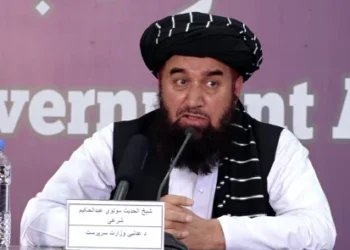
This reality was clearly visible in the second Doha agreement between the Taliban and Pakistan. Under military and economic pressure, the Taliban agreed in secret talks to curb TTP fighters’ activities inside Afghanistan. The agreement, much like the original Doha deal, was made behind closed doors, without public participation, and its details remain undisclosed. Ostensibly, its purpose is to ensure border stability; in practice, it allows the Taliban to preserve their international legitimacy by offering concessions to Pakistan. Domestically, however, they have stoked anti-Pakistan sentiment and tribal emotions to maintain their internal cohesion.
This duality, external compromise and internal incitement, shows that the Taliban use foreign policy to preserve power and domestic policy to fortify the tribe. Such an approach, which sacrifices the nation to the tactics of tribalism, continues the same cursed tradition that has repeatedly derailed Afghanistan’s path to civility.
The Durand Line issue illustrates this clearly. A border that should be treated as a legal and historical matter has once again become a field for emotional and ethnic competition. Those who once preached legality and nation-building suddenly began to echo the rhetoric of mullahs who long ago replaced religion and nationhood with tribalism. The result of this dangerous shift is nothing but the erosion of trust among ethnic groups, the stirring of emotions, and the reproduction of the same cycle that has long corroded Afghanistan from within.
History shows that whenever politics in Afghanistan takes on a tribal hue, three disasters follow: social, economic, and cultural collapse.
The social disaster begins when horizontal trust among citizens disintegrates and society fragments from within. The individual ceases to see himself as a citizen and instead identifies as a tribesman. Friendship, employment, marriage, and even empathy become bound to ethnic ties. In such a society, the law loses its power, for everyone seeks refuge in their tribe.
The economic disaster follows naturally: when tribal loyalty replaces law, fair competition collapses. National resources turn into tribal spoils, mines become clan quotas, customs offices become personal fiefdoms. Wealth that should build schools and hospitals is spent instead on weapons and preserving power.
The cultural disaster completes the cycle: education and media, instead of cultivating reason, become tools for promoting prejudice. Books are banned, independent teachers dismissed, women deprived of learning, and thought itself criminalized. A society that equates criticism with treason inevitably falls back into the arms of the tribe.
Thus, the recent border crisis is not merely a territorial conflict; it is a symptom of the return of that same dangerous mentality. By trading concessions abroad and stirring emotions at home, the Taliban have adopted a double game that could once again drag Afghanistan toward collapse.
What, then, is to be done? The answer lies in returning to the simplest of principles: the law must stand above all blood and faith. No tribe, no school of thought has the right to replace it. Equal citizenship must be the foundation of coexistence, Pashtun and Tajik, Hazara and Uzbek, women and men alike are citizens before they are members of any group. Defending girls’ education and civil liberties is not merely a women’s issue; it is the ultimate test of loyalty to the idea of nationhood.
Border disputes, too, can only be resolved through diplomacy and international law, not by emotional slogans or calls for war. Anyone who incites ethnic conflict, whether dressed as a mullah or a technocrat, acts in practice against the nation.
Overcoming modern primitivism requires a new kind of alliance: an ethical and intellectual coalition that is not tribal in spirit but firmly rooted in national principles. Such an alliance must unite urban Hanafi scholars, intellectuals, and civil activists who can revive a rational, civic reading of Islam in opposition to the tribal Deobandi interpretation. Alongside them stand the men and women who, by building schools, clinics, and workshops within Afghanistan, keep the flame of hope alive. True legitimacy comes from real work, not slogans.
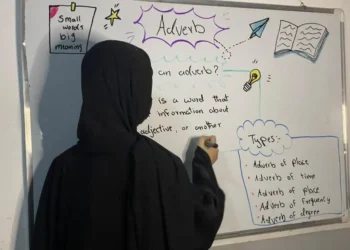
Experience shows that whenever people witness tangible results, when libraries, schools, and girls’ education flourish in the provinces, the war narrative fades on its own. A shining example is the launch of Radio Nawai Zan in Herat, a station that has brought women’s voices back into the public sphere and seeks to bridge the gap between city and countryside. If this radio continues prioritizing literacy and awareness, it could become a genuine symbol of women’s struggle for knowledge and liberation. May its founders succeed on this difficult but luminous path.
In this journey, we must be both firm and kind: firm against anti-national and lawless behavior, yet kind in our dialogue with diverse identities. Afghanistan’s enemy has never been any single ethnic group, but rather the mentality that bends the law for tribal gain, silences women, and treats public wealth as personal loot.
If we fail today to choose between reason and passion, law and tribe, service and rhetoric, tomorrow we may have no choice left at all. Afghanistan’s future lies not in its mines, but in its capacity for just coexistence. Every time we choose tribe over law, we take one step further from that future.
The alarm has sounded. The path to salvation lies not in ethnic outcry, but in an alliance of all who believe in law, justice, education, and equality. Such an alliance may begin with a single classroom, a transparent project, or a respectful dialogue among communities. This is the road to civility, slow, difficult, yet the only road that can free us from the century-old curse of primitivism that has held us captive for far too long.