• 8AM.MEDIA
  • ویب‌سایت فارسی
  • پښتو ویب‌پاڼه
  • اۉزبېکچه ویب‌سایت
  • Podcast
Tuesday, September 29, 2026
Hasht-e Subh
  • Home
  • News
    • Afghanistan News
    • World News
  • Opinion
    • Editorial
    • Analysis
  • Reports
    • Daily Reports
    • Investigative Reports
  • Society
    • The story of people
  • Women’s Word
  • Columns
    • Three Years After Afghanistan’s Fall: The Taliban’s Resurgence
    • Towards Equality
    • The Resurgence of the Taliban: Two Years Since Afghanistan’s Fall
    • Hebatullah Report Special Edition
    • Resistance for Education Special Edition
    • Special Column on Taliban’s Education Curriculum
    • Nawroz
  • Interviews
  • Contact Us
    • About Us
    • 8AM MEDIA Annual Awards
    • Submit an Article to Hasht-e-Subh
  • 8am.mediaBack
Subscribe
No Result
View All Result
  • Home
  • News
    • Afghanistan News
    • World News
  • Opinion
    • Editorial
    • Analysis
  • Reports
    • Daily Reports
    • Investigative Reports
  • Society
    • The story of people
  • Women’s Word
  • Columns
    • Three Years After Afghanistan’s Fall: The Taliban’s Resurgence
    • Towards Equality
    • The Resurgence of the Taliban: Two Years Since Afghanistan’s Fall
    • Hebatullah Report Special Edition
    • Resistance for Education Special Edition
    • Special Column on Taliban’s Education Curriculum
    • Nawroz
  • Interviews
  • Contact Us
    • About Us
    • 8AM MEDIA Annual Awards
    • Submit an Article to Hasht-e-Subh
  • 8am.mediaBack
No Result
View All Result
Hasht-e Subh
No Result
View All Result

Combating the Taliban: Civil Struggle or Armed Resistance?

By: Abdul Saboor Setiz

Moqim mehran Moqim mehran
15 November 2023 - Solar Hijri Date: 1402/08/24 [t_time:1700035651]
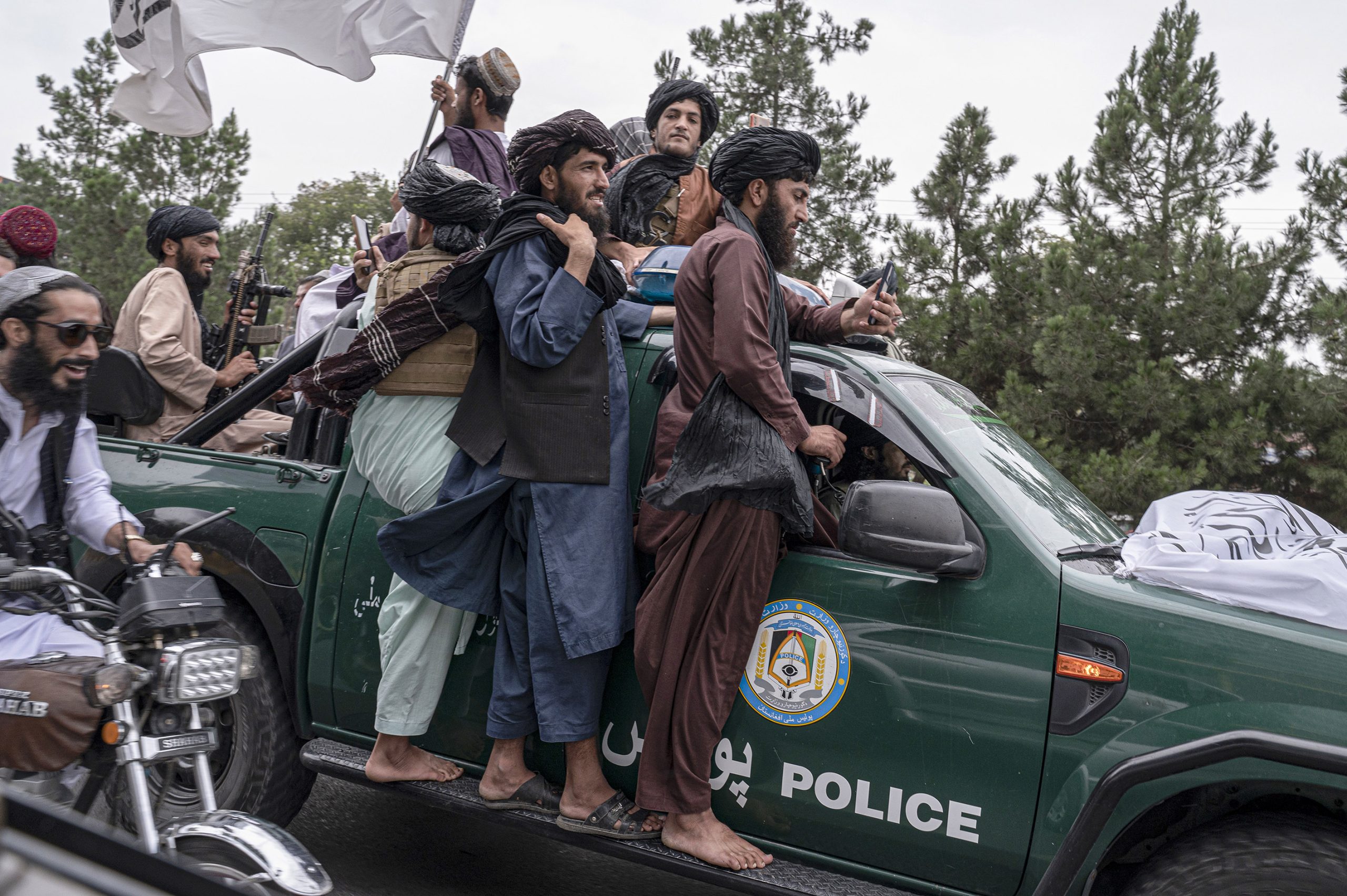
The Taliban and the Reinforcement of Terrorism: Afghanistan Remains a Source of Regional Security Threats

Wakil KOHSAR / AFP

Initially, when the Taliban regained power, some people believed that their control might weaken and eventually collapse. However, after two years, it turned out that many opponents of the Taliban were deeply concerned about the situation in Afghanistan.

The opponents of the Taliban can be classified into two main groups: the first group favors civil struggle and direct negotiations with the Taliban, while the second group favors armed resistance against them. Although each group holds distinct views and justifications, the main focus lies in evaluating the results and determining which approach will be most effective.

In the current situation, many former political leaders, along with political and civil activists, support intra-Afghan dialogue and direct negotiations with the Taliban, with a focus on resolving disputes through peaceful dialogue. However, some leaders have adopted a different approach. They have chosen the path of armed resistance and have formed groups to fight against the Taliban.

The National Resistance Front of Afghanistan (NRF) wholly believes that the Taliban have not shown any signs of positive change, highlighting the Taliban’s constant human rights violations, particularly regarding women’s rights, which have led to a significant reduction in social freedoms. According to these fronts, considering the current situation, the only appropriate option is to participate in armed resistance against the Taliban. This is because they see the Taliban in a cycle of conflict and violence and see no alternative but to confront them militarily.

Recently, the Special Inspector General for Afghanistan Reconstruction (SIGAR) published a report stating that approximately 21 armed groups are trying to fight the Taliban. Even though these groups have a shared adversary, they have independently taken up arms against the Taliban, indicating disharmony within them. These groups or fronts have not yet been able to garner the support of the international community. This is because the international community believes that the world has changed, and Afghanistan needs a constructive intra-Afghan dialogue rather than armed conflict.

Despite the Taliban controlling all areas of Afghanistan, it is worth noting that we still observe the demonstrations of brave Afghan women in big cities. This demonstration signifies the ongoing civil movements inside the country, forcing both the international community and the neighboring countries to pressure and encourage the Taliban to make internal reforms and comply with human rights standards.

Although the Taliban do not respond to the requests of the people and the international community, political and civil activists are still hopeful. They believe that insisting on non-violent civil activities can ultimately affect Afghanistan’s internal politics, and with the support of the international community, they aspire to exert pressure on the highest levels of Taliban leadership.

This strategy is conditioned on the fact that the structure of the Taliban is hierarchical (from top to bottom), where decisions and orders are issued from the highest levels of leadership, especially from the supreme leader of this group. Achieving dramatic changes and reforms requires targeting this leadership structure. Qatar has been the official host of the Taliban office for several years, and significant negotiations between the Taliban and the US have been held in Doha, Qatar. This shows that Qatar has maintained its relationship with the Taliban leadership and is capable of influencing them. Therefore, it can be concluded that Qatar’s cooperation is necessary to gain significant influence over the Taliban. Qataris can act as mediators in these situations and use their influence to help achieve desired goals and outcomes.

The recent history of Afghanistan has featured continuous conflicts and civil wars between opposing factions competing for power. From Dawood Khan’s coup against Zahir Shah to the re-establishment of the Taliban regime, armed conflicts and coups have repeatedly led to the overthrow of governments and the establishment of new regimes.

Afghanistan’s contemporary history offers an important lesson: governments that come to power through the use of force and conflict often struggle to maintain stability and instead suffer a similar fate to their predecessors. These violent overthrows have always led to short-term governance cycles; because in the end, they were forcibly overthrown by the opposition groups through armed conflicts.

Although armed resistance can rapidly undermine governments and seize power, it is often costly and can lead to instability. On the other hand, civil struggles that rely on negotiation and nonviolent resistance may take longer, but the ensuing governments are more stable, having a better chance to connect with the people and create a popular support base.

Therefore, the example of countries such as India, South Africa, and many others provides strong evidence that the governments that emerged through non-violent civil movements and national support have been more successful in maintaining stability and achieving lasting peace and tranquility inside the country.

To address the current challenges in Afghanistan and achieve sustainable peace, the most effective way is through civil movements and peaceful negotiations among Afghans themselves. Relying on non-violent methods and participation in intra-Afghan dialogue is the main key. It is crucial to know that the option of armed resistance will only lead to more human suffering and repeat the mistakes of the past, without leading to lasting peace.
ShareTweetSendSendShare

Related Posts

Saleh Mohammad Rigestani, General Military Commander of the National Resistance Front (NRF), stands in a camouflage uniform before a rocky mountain slope in a video released from the Hindu Kush. (Photo credit: Social Media)
Analysis

The Triumph of “Display” Over “Caution”

29 September 2026 [t_time:1790709280]
People gather near the fenced border area between Pakistan and Afghanistan following a deadly suicide bombing in Chaman that killed at least six people and forced the closure of the Spin Boldak crossing. (Photo Credit: Social Media)
Afghanistan News

Taliban Torture Children in Spin Boldak Over Alleged Smuggling to Chaman

29 September 2026 [t_time:1790701019]
Abdul Salam Hanafi shakes hands with Chinese Ambassador Zhao Xing during a farewell meeting in Kabul. (Photo credit: @FitratHamd)
Afghanistan News

Abdul Salam Hanafi Meets Chinese Ambassador in Kabul

29 September 2026 [t_time:1790699476]

Latest

Loading latest news...

Popular stories

  • Surveillance footage shows Taliban fighters surrounding and shooting a bound man in Herat. (Photo credit: Social Media)

    Taliban Shoot Young Man from Herat After Torturing Him with Hands Tied

    Share
    Share Tweet
  • Al-Qaeda Releases Hamza bin Laden Message on 9/11 Anniversary

    Share
    Share Tweet
  • UN Report Reveals Shifts in Family Attitudes and Rise in Domestic Violence in Afghanistan

    Share
    Share Tweet
  • Afghanistan: A New Battlefield as Iran and America Redraw the Taliban’s Role in Regional Power

    Share
    Share Tweet
  • Sources: Kandahar Bombing Leaves Seven Dead and Eight Injured at Mirwais Hospital

    Share
    Share Tweet

Podcast

Insights
Insights

Join Lynne O’Donnell for 8AM’s podcast series, Insights.
Lynne talks with generals, diplomats, soldiers, journalists, politicians, activists, people who have front row seats for conflicts around the world, and citizens with a story to tell, happy or sad. For this first series, Afghanistan is the focus. Lynne and her guests talk about the collapse of the republic in August, 2021, and the impact since — for the people of Afghanistan, for the security of the region, for the safety of the world. It’s important, interesting and insightful.

Insights/22: Controlling the Narrative with Mina Sharif
byinsights8am

Controlling the Narrative

Lynne O’Donnell talks with Mina Sharif, author, activist, women’s rights campaigner, educator and mentor. They discuss who controls the narrative and who speaks for Afghanistan’s people when the Taliban appear to have seized control not only of the country but of the message, too.

Have a listen

Insights/22: Controlling the Narrative with Mina Sharif
Episode play icon
Insights/22: Controlling the Narrative with Mina Sharif
Episode Description
Episode play icon
Insights/21: Media Meltdown with Zahra Joya
Episode Description
Episode play icon
Insights/20: Terror Inc with Scott Richards
Episode Description
Episode play icon
Insights/19: Busting Stereotypes with Bushra Gohar
Episode Description
Episode play icon
Insights/18: Media Matters with Waliullah Rahmani
Episode Description
Episode play icon
Insights/17: What Goes Around Comes Around with Sima Samar
Episode Description
Search Results placeholder
Hasht-e Subh

8AM Media, also known as Hasht-e-Subh Daily, stands as Afghanistan's premier independent and non-profit newspaper, resonating as a beacon of journalistic integrity since its establishment in June 2007 by esteemed Afghan journalists and human rights advocates. With a steadfast commitment to citizen journalism and civic education, Hasht-e-Subh Daily has earned its place as the most esteemed publication in the nation.

Publisher: Sanjar Sohail
Email: [email protected]
Executive Director: Parwiz Kawa
Email: [email protected]

Read More

The Triumph of “Display” Over “Caution”

Banking Restrictions Keep Afghanistan’s Citizens and Traders Reliant on Exchange Shops and Hawala

Taliban Torture Children in Spin Boldak Over Alleged Smuggling to Chaman

Abdul Salam Hanafi Meets Chinese Ambassador in Kabul

Afghanistan Journalists Center: Taliban Have Detained Around 300 Journalists and Media Workers

Editor’s Choice

Every Saturday morning, 8AM MEDIA English Services Department will guide you through the week’s biggest stories from Afghanistan and the international community.

Subscribe

© 2026 - ©Hasht-e Subh Daily

No Result
View All Result
8am.Media
پښتو ویب‌پاڼه
ویب‌سایت فارسی
اۉزبېکچه ویب‌سایت
  • Home
  • News
    • Afghanistan News
    • World News
  • Opinion
    • Editorial
    • Analysis
  • Reports
    • Daily Reports
    • Investigative Reports
  • Society
    • The story of people
  • Women’s Word
  • Columns
    • Three Years After Afghanistan’s Fall: The Taliban’s Resurgence
    • Towards Equality
    • The Resurgence of the Taliban: Two Years Since Afghanistan’s Fall
    • Hebatullah Report Special Edition
    • Resistance for Education Special Edition
    • Special Column on Taliban’s Education Curriculum
    • Nawroz
  • Interviews
  • Contact Us
    • About Us
    • 8AM MEDIA Annual Awards
    • Submit an Article to Hasht-e-Subh
  • 8am.media

© 2026 - ©Hasht-e Subh Daily