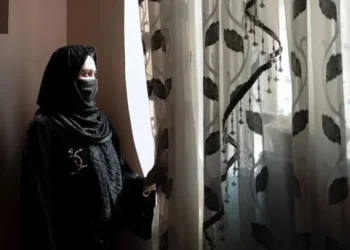
Health officials and residents of Nimruz province express concern over the rising number of mental health patients in the region. According to verified statistics provided to the Hasht-e Subh Daily, more than 150 mental health patients visit both public and private hospitals daily. Sources reveal that most of these patients are women or girls.
Health officials in Nimruz confirm that between 90 and 120 mental health patients seek treatment daily at the provincial hospital. In addition to the public hospitals, many private clinics and hospitals have reported a recent surge in mental health cases, with dozens of patients visiting private health centers daily.
Dr. Ahmad Sadeed (pseudonym), a specialist at Nimruz Provincial Hospital, says the increase in mental health patients is unprecedented. He notes that the majority of those seeking treatment are women and girls.
This specialist at Nimruz Provincial Hospital explains that patients frequently cite the closure of schools and universities for women and girls, the ban on women’s work, forced marriages, poverty, and unemployment as the main factors contributing to the rise in mental health issues.
Dr. Sadeed adds, “We now see a significant rise in mental health patients, with 100 to 120 people coming to us every day. Seventy percent of them are women, mostly young girls, while the remaining 30 percent are young men.”
He continues, “When we ask these patients, many mention that it’s because of school closures, being forced into unwanted marriages, or being banned from working. Young men, on the other hand, often cite unemployment. These numbers clearly show that our society is in distress.”
Additionally, several mental health patients in this province state that the recent circumstances have led them to develop mental health conditions against their will.
Seventeen-year-old Shaima, who has been barred from attending school by the Taliban, has come with her mother to seek treatment for her mental illness. She says that the closure of schools caused her to develop this condition at a young age.
Shaima tells the Hasht-e Subh Daily, “The schools were closed, and I’ve been living like a prisoner in my house. A year passed, and we kept hoping the schools would reopen, but they didn’t. Staying at home caused this illness to develop.”
Zainab, another young woman from Nimruz, has also been taken to the hospital by her family due to mental health issues. Zainab’s mother explains that her daughter’s condition developed as a result of being forced into an unwanted marriage.
Zainab’s mother tells the Hasht-e Subh Daily, “My daughter had no health problems; she was very bright. But after she was married, she developed this illness. We’ve brought Zainab to the hospital twice just this week. She has a strange condition where she suddenly collapses to the ground.” She adds, “When the Taliban came, a relative of ours proposed to her, and her father married her off without her consent. This is the result of that marriage.”
Alongside women and girls, unemployed young men are also expressing concern about the growing mental health crisis. They say that the Taliban’s rule has spread poverty and unemployment throughout the society.
Ahmad Shoaib, who worked at the Nimruz Department of Education before the Taliban took control, was dismissed from his position and is now struggling to support his family of five. With the Taliban having replaced him, Shoaib says unemployment and lack of income have led him to suffer from mental health problems.
Ahmad Shoaib tells the Hasht-e Subh Daily, “I used to work at the Department of Education, and my salary covered the expenses of my five-member family. But after the Taliban took over, I, a university graduate, was fired, and a Taliban member was appointed in my place.”
He adds, “It’s been a year and a half since I was dismissed. During this time, I’ve submitted my CV to various organizations, but I haven’t been able to find a job. I’m unemployed, and my family needs food. This hardship and hopelessness caused me to seek medical help. Now, the doctor says my mental health isn’t good and advises me not to worry. But it’s poverty and unemployment that have brought me to this point.”
Meanwhile, private clinics in Nimruz also confirm that the number of mental health patients in the province is rising, with at least 15 to 20 individuals visiting these clinics daily for treatment.
You can read the Persian version of this new here:
افرایش بیماران روانی در نیمروز؛ ۷۰ درصد مبتلایان زن یا دخترند | روزنامه ۸صبح