The United States Special Inspector General for Afghanistan Reconstruction (SIGAR) in its latest report stated that terrorist groups such as ISIS, al-Qaeda, and Tehrik-e Taliban Pakistan (TTP) operate freely in Afghanistan, widespread corruption and mismanagement have squandered billions of dollars in foreign aid, and the rights of women and children in the country are systematically violated in full view of the international community. According to SIGAR, the cessation of U.S. aid has exacerbated the humanitarian crisis, further darkening the already uncertain future of Afghanistan’s reconstruction. SIGAR described ISIS-Khorasan as the “most serious threat” to ethnic and religious minorities, UN personnel, foreign citizens, and diplomats in Afghanistan.
SIGAR, in its most recent report, noted that terrorist groups like ISIS-Khorasan and TTP remain active in Afghanistan, with al-Qaeda also benefiting from a favorable environment for its operations. According to the report, the Taliban’s reported figures regarding the number of their security forces cannot be independently verified.
SIGAR submitted its quarterly report to the U.S. Congress, stating that despite the Taliban’s commitments under the Doha Agreement to counter terrorist groups, concerns persist about Afghanistan becoming a haven for terrorists.
Citing the UN Sanctions Monitoring Team’s report, SIGAR wrote that ISIS-Khorasan remains the “most significant transnational terrorist threat” in Afghanistan. SIGAR described ISIS-Khorasan as the “most serious threat” to ethnic and religious minorities, UN personnel, foreign citizens, and diplomats in Afghanistan.
According to the SIGAR report, ISIS-Khorasan has established bases in Badakhshan, Nuristan, and Kunar provinces, and the group, along with its affiliates, has “remained resilient and adaptable in the face of counterterrorism pressures.” The report noted that the Taliban in Afghanistan supports TTP, which has approximately 6,500 fighters in Afghanistan, primarily based in the eastern regions of the country.
Counter-Narcotics Efforts
SIGAR stated in its report that opium production in Afghanistan has decreased since the Taliban’s ban in 2022, but economic pressures on farmers and the emergence of synthetic drugs threaten this trend. According to the report, neighboring countries continue to seize significant quantities of opium and methamphetamine, indicating ongoing trafficking of these substances.
The report noted that SIGAR’s oversight activities during this quarter included seven reviews related to synthetic drugs and five financial audits. These reviews identified $214,474 in questionable costs due to deficiencies in internal controls and non-compliance issues by U.S. government contractors.
Additionally, seven ongoing criminal investigations are underway. Since 2008, the United States has identified $4.39 billion in savings for American taxpayers. One of SIGAR’s notable investigations involved Douglas Edelman, a former defense contractor, who in May 2025 pleaded guilty to financial crimes related to defrauding the U.S. government and tax evasion on income from defense contracts. This case has been described as “the largest tax evasion case in the history of the U.S. Department of Justice.”
Cessation of U.S. Aid
SIGAR emphasized in its report that in 2025, the United States, for the first time in 24 years, completely halted all aid to Afghanistan. This action followed Executive Order No. 14169 issued by President Trump to review and realign foreign aid.
According to the report, only three programs related to Afghanistan remain active: two educational programs (online scholarships or the American University of Afghanistan in Doha) and an opium production survey project managed by the UN Office on Drugs and Crime from offices in Austria and Uzbekistan.
SIGAR noted that the Taliban have used the closure of some programs as a pretext to seize U.S.-funded assets, including armored vehicles. During this reporting period, the Taliban also confiscated armored vehicles, unarmored vehicles, sensitive security equipment, and other valuable assets from partner organizations.
Humanitarian Situation
SIGAR reported that the cessation of U.S. aid has created a significant gap in the UN’s humanitarian response. The UN has warned that millions of people in Afghanistan will lose access to humanitarian services. Targeted UN aid has also decreased from covering 22.9 million people to 12.5 million.
According to SIGAR, a study found that U.S. development aid was associated with a 15 percent reduction in mortality in Afghanistan between 2001 and 2021. Currently, 12.6 million people face acute food insecurity, and 90 percent of young children live in food poverty. Since the cessation of U.S. financial support, 422 health facilities supported by the World Health Organization (WHO) have closed, affecting approximately 3.08 million people.
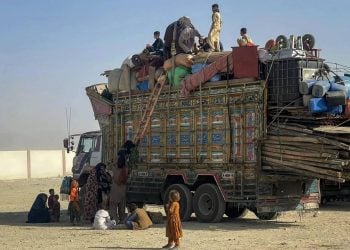
According to the report, in 2025, approximately 1.9 million people were forcibly returned from Iran and Pakistan, further exacerbating instability and humanitarian needs in Afghanistan.
International Engagement
The report stated that the Taliban have implemented the “most repressive policies” against women and girls globally. SIGAR, citing independent UN Security Council assessments, described the current regime as “unengagable and ineffective.” The report noted that the United States has limited its focus in Afghanistan to reducing terrorist threats and securing the release of detained American citizens. Russia became the first country to officially recognize the Taliban.
The report further noted that Russia’s recent decision to recognize the Taliban have altered the trajectory of regional engagement with the group. According to SIGAR, this move may encourage other Central and South Asian countries to establish formal relations with the Taliban.
The report stated that, in response to widespread human rights violations, the United States has minimized its engagement with the Taliban, while the UN continues to call for “more structured engagement and continued aid.” However, SIGAR noted that despite meetings between UN representatives and Taliban officials in Doha, the situation remains “at a standstill,” as the Taliban have refused to accept international norms in exchange for economic aid.
SIGAR added that the International Criminal Court (ICC) has issued arrest warrants for Hibatullah Akhundzada and Abdul Hakim Haqqani, Taliban leaders, for committing crimes against humanity and persecuting women and girls.
Quoting the U.S. State Department, the report stated: “The U.S. position is that we cannot continue to support the Taliban while simultaneously urging them to adhere to their international commitments and respect Afghanistan’s global responsibilities.”
SIGAR emphasized that the Taliban’s provision of haven to terrorist groups, failure to honor commitments under the Doha Agreement, and enforcement of repressive policies against women have deepened the country’s crisis.
Suppression of Women and Girls by the Taliban
The Taliban have systematically violated the rights of women and girls in Afghanistan through an institutionalized structure of discrimination, oppression, and domination, amounting to crimes against humanity. Women and girls have been barred from education beyond the sixth grade and excluded from many professions. Afghanistan ranks as the second-lowest country globally, after Yemen, in terms of women’s empowerment and gender equality.
Economy
Economic growth in Afghanistan remained limited in the 2024 fiscal year, with the value of the Afghani increasing against the U.S. dollar. The UN reported that cash shipments to Afghanistan, due to banking disruptions, have stabilized the economy but have also benefited the Taliban. The “Afghan Fund” holds $4.2 billion in assets as of July 30, 2025, but no funds have been disbursed for the benefit of the people of Afghanistan.
SIGAR also highlighted the absence of a transparent and accountable economic framework, noting that the Taliban have failed to manage financial resources and utilize international humanitarian aid effectively due to the lack of a legitimate legal system and an independent central bank. According to SIGAR, corruption, repression, and lack of international oversight have left millions of Afghanistan’s citizens in extreme poverty and food insecurity.
Erosion of Judicial and Legal Independence
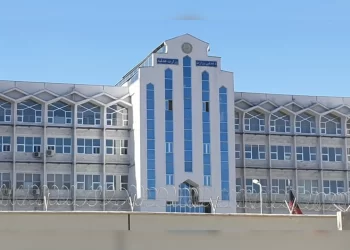
SIGAR reported that the Taliban use judicial institutions as tools to restrict civil liberties and suppress various societal groups, particularly women and human rights activists. According to the report, the Taliban leverages the judicial system to consolidate power and eliminate opposition, implementing strict and opaque laws to keep Afghan society under pressure and fear. The report emphasized that women have suffered the most due to the Taliban’s discriminatory policies. It also noted that the Taliban’s judicial processes lack transparency, fairness, and adequate defense opportunities, with courts predominantly ruling in favor of the Taliban.
SIGAR highlighted structural weaknesses in the judicial system, emphasizing that the lack of judicial independence and Taliban influence in judicial institutions has led to selective and politically motivated justice. Furthermore, SIGAR noted that widespread corruption in government institutions, including the Taliban’s judicial system, remains one of the greatest obstacles to Afghanistan’s progress and development.
Nevertheless, SIGAR stressed the need for international oversight and support for independent judicial and civil institutions to counter Taliban abuses and ensure the human rights and fundamental freedoms of Afghanistan’s citizens.
Highlights of SIGAR’s Mission Conclusion
This report, SIGAR’s 68th and final quarterly report, has been recognized since 2008 as the most comprehensive and consistent source of independent analysis of the largest reconstruction effort in U.S. history.
The report highlighted four key aspects of SIGAR’s extensive work, including a strategic framework with seven fundamental questions to guide future reconstruction investments, a thorough assessment of the sustainability challenges of U.S.-funded projects in Afghanistan, exposure of widespread corruption that undermined the effectiveness of U.S. aid, and a groundbreaking report on the “ghost soldiers” phenomenon, which revealed systemic fraud in the payment of Afghan National Defense and Security Forces (ANDSF) salaries.
The report noted that, despite the loss of 2,459 U.S. soldiers, thousands injured, and over $2 trillion spent in Afghanistan, the United States failed to achieve its strategic objectives.
SIGAR further stated that repeated warnings about potential failure, corruption, mismanagement, and the fragility of the previous Afghan government’s structures were provided to U.S. officials over the years, but many of these warnings were ignored, according to SIGAR.
You can read the Persian version of this report here:
افغانستان در چنگال تروریسم؛ سیگار: داعش، القاعده و تیتیپی آزادانه میتازند