• 8AM.MEDIA
  • ویب‌سایت فارسی
  • پښتو ویب‌پاڼه
  • اۉزبېکچه ویب‌سایت
  • Podcast
Thursday, October 15, 2026
Hasht-e Subh
  • Home
  • News
    • Afghanistan News
    • World News
  • Opinion
    • Editorial
    • Analysis
  • Reports
    • Daily Reports
    • Investigative Reports
  • Society
    • The story of people
  • Women’s Word
  • Columns
    • Three Years After Afghanistan’s Fall: The Taliban’s Resurgence
    • Towards Equality
    • The Resurgence of the Taliban: Two Years Since Afghanistan’s Fall
    • Hebatullah Report Special Edition
    • Resistance for Education Special Edition
    • Special Column on Taliban’s Education Curriculum
    • Nawroz
  • Interviews
  • Contact Us
    • About Us
    • 8AM MEDIA Annual Awards
    • Submit an Article to Hasht-e-Subh
  • 8am.mediaBack
Subscribe
No Result
View All Result
  • Home
  • News
    • Afghanistan News
    • World News
  • Opinion
    • Editorial
    • Analysis
  • Reports
    • Daily Reports
    • Investigative Reports
  • Society
    • The story of people
  • Women’s Word
  • Columns
    • Three Years After Afghanistan’s Fall: The Taliban’s Resurgence
    • Towards Equality
    • The Resurgence of the Taliban: Two Years Since Afghanistan’s Fall
    • Hebatullah Report Special Edition
    • Resistance for Education Special Edition
    • Special Column on Taliban’s Education Curriculum
    • Nawroz
  • Interviews
  • Contact Us
    • About Us
    • 8AM MEDIA Annual Awards
    • Submit an Article to Hasht-e-Subh
  • 8am.mediaBack
No Result
View All Result
Hasht-e Subh
No Result
View All Result

Families Warn of Alarming Collapse in Public School Education Quality in Afghanistan

Translated by Farhad Farhaad | Originally reported in Persian by Ilya

Mohammad Farhaad Mohammad Farhaad
28 June 2026 - Solar Hijri Date: 1405/04/07 [t_time:1782658028]
Students attend a public school ceremony under a banner of the Taliban-run caretaker Ministry of Education in Afghanistan. (Photo Credit: AFP)

AFP

Several families whose children attend public schools in Kabul have complained about the low quality of education in these schools. They say the existing teaching methods do not meet students’ learning needs, and for this reason, they are forced to pay additional costs beyond school fees for supplementary tutoring and language learning, sending their children to educational centers outside of school. According to these families, classroom instruction is largely based on rote memorization and note-taking, and students are not given sufficient opportunity for discussion, research, and the development of critical thinking. They claim that in recent years, the Taliban have not paid adequate attention to improving educational quality, focusing instead on issues such as the dress and appearance of students and teachers.

These families, speaking to the Hasht-e Subh Daily, added that the shortage of well-equipped laboratories, standard libraries, and computer classrooms is among the fundamental problems of public schools. They said that in some cases, even when laboratory equipment is available, practical instruction is not carried out on the pretext of preventing damage to the equipment, and subjects such as physics and chemistry are effectively taught in a purely theoretical manner.

In their view, the lack of qualified professional teachers and the mismatch between some teachers’ academic backgrounds and the subjects they teach have negatively affected the quality of education. They believe this situation has led a number of families to transfer their children to private schools and educational centers. Otherwise, they say, the chances of success in the university entrance examination, known as the Kankor, decline significantly.

Hassan, the father of one of the students, says that teaching methods in public schools remain rooted in traditional approaches, with little to no innovation evident. He says teachers mostly cover the material in the textbook, and there is little opportunity for practical instruction or the use of modern pedagogical methods.

This father added: “Teachers generally teach the same content from the book, and there is hardly any opportunity for practical learning or the use of modern methods. There may be exceptions in some schools, but overall,l this approach has continued for years without producing satisfactory results. In science subjects, students are forced to attend educational centers outside of school for better learning, because what is taught in school is not sufficient for a full understanding of the material. In mathematics as well, despite instruction beginning from the lower grades, many students fail to achieve the necessary level of mastery by the end of twelfth grade.”

Zia, another father, says the shortage of qualified teachers and educational resources has severely reduced the quality of instruction. He says students who rely solely on school-based education have little chance of success in the Kankor.

This father added: “In most public schools, adequate educational facilities are not available, and practical classrooms such as laboratories are not functioning properly. Physics and chemistry require hands-on instruction, but such facilities are not accessible. As a result, families are compelled to turn to private tutoring courses. Only in well-known schools such as Habibia, Naderia, and Istiqlal are subjects like mathematics, physics, and chemistry taught to a standard somewhat better than in other schools.”

Sadeq, the father of one of the students, says his children had greater motivation to study before the fall of the previous government, but their hope for the future has now faded. He says changes to the educational system, the shortage of qualified teachers, and the lack of educational resources have diminished the motivation of many students.

This father said: “In the past, they were hopeful that through studying they could achieve a better future, but today many of them no longer hold such hope. From the curriculum to the shortage of qualified teachers, many problems have emerged. In some schools, there are even teachers whose academic fields are unrelated to the subjects they teach. A student who graduates from school is not adequately prepared to enter university and is forced to attend private educational centers to succeed in the Kankor. There are not even computer classrooms, and students do not even know how to turn one on.”

Raziq (pseudonym), a former student at one of the public schools, says the quality of education in public schools has declined in recent years, and students are facing a shortage of textbooks, a lack of practical instruction, and inadequate educational facilities. He says instruction in science subjects is largely delivered in a theoretical format, and students relying solely on school lessons cannot acquire the necessary preparation for the Kankor.

This student said: “Unfortunately, the quality of teaching in schools has deteriorated and is on a downward trajectory. Textbooks are also incomplete and have many problems. When a student goes looking for a book or study material, they usually cannot find a complete copy and are forced to continue their studies with those incomplete books. There is no motivation among them. Unfortunately, practical instruction is also virtually nonexistent, and most lessons are delivered in a theoretical manner.”

Mahram Ali, another former student, says the shortage of textbooks and educational equipment has been a longstanding problem in public schools, but in his view, these problems have intensified since the Taliban returned to power. He added that students continue to face a shortage of textbooks, deterioration of educational resources, and the absence of modern instructional aids and equipment.

This student said, “In the past, textbooks were never provided to students in sufficient quantities. I do not know whether the problem lies with the budget or printing capacity, but new and high-quality books do not reach students. I remember that out of 12 or 13 subjects, each student would receive only four or five books, and even those books were in very poor condition. With the arrival of the Taliban, in my view, the education system has suffered even greater damage. Modern educational tools and teaching methods are still not being used, and the same outdated approaches continue unchanged.”

These complaints come at a time when Afghanistan’s education system has undergone sweeping changes under Taliban rule. Over the past nearly five years, the Taliban have revised the curriculum, dismissed or relocated several teachers, and imposed sweeping restrictions on girls’ education, including a ban on schooling for girls above sixth grade.


You can read the Persian version of this report here:

خانواده‌ها: کیفیت آموزش در مکتب‌های دولتی به‌گونه نگران‌کننده‌ای سقوط کرده است

ShareTweetSendSendShare

Related Posts

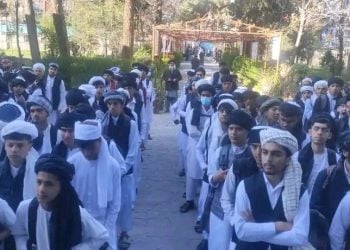
Taliban students in uniform, including white shirts, trousers, and headscarves, walking in line at a school in Afghanistan.
Daily Reports

Textbook and Teacher Shortages Hit Schools as Students Say Taliban Prioritize Turbans Over Education

1 October 2026 [t_time:1790861080]
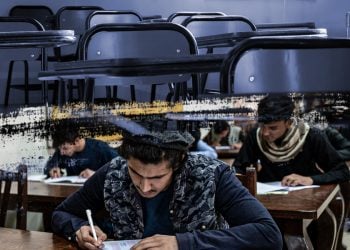
Male candidates sit for the Kankor university entrance exam in a classroom, as girls remain barred from taking part under Taliban restrictions. (Photo credit: AFP)
Analysis

Girls Barred from Kankor Exam: A Setback for Afghanistan’s Development

12 July 2026 [t_time:1783877755]
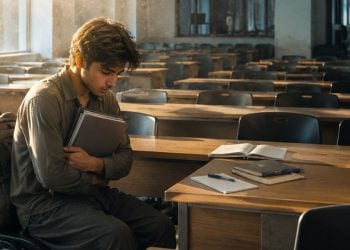
A young man sits alone with his books in a nearly empty university classroom in Afghanistan, reflecting the growing number of students unable to continue their education. (Photo credit: AI)
Daily Reports

Empty Seats in Afghanistan’s Private Universities: Stories of Young People Left Behind on Education

11 July 2026 [t_time:1783791300]

Latest

Loading latest news...

Popular stories

  • An aerial view shows collapsed buildings and widespread damage following an earthquake in Panama (Photo: Reuters)

    More Than 200 Aftershocks Recorded in Panama Since Friday’s Earthquake

    Share
    Share Tweet
  • Axios: Trump Expects Ukraine Not to Attack Russian Oil Refineries

    Share
    Share Tweet
  • UN Report Reveals Shifts in Family Attitudes and Rise in Domestic Violence in Afghanistan

    Share
    Share Tweet
  • The Politics We Inherited: Rethinking Afghanistan’s Political Culture

    Share
    Share Tweet
  • Mujahid: Pakistan Should Address Its Internal Problems Instead of Making Accusations

    Share
    Share Tweet

Podcast

Insights
Insights

Join Lynne O’Donnell for 8AM’s podcast series, Insights.
Lynne talks with generals, diplomats, soldiers, journalists, politicians, activists, people who have front row seats for conflicts around the world, and citizens with a story to tell, happy or sad. For this first series, Afghanistan is the focus. Lynne and her guests talk about the collapse of the republic in August, 2021, and the impact since — for the people of Afghanistan, for the security of the region, for the safety of the world. It’s important, interesting and insightful.

Insights/22: Controlling the Narrative with Mina Sharif
byinsights8am

Controlling the Narrative

Lynne O’Donnell talks with Mina Sharif, author, activist, women’s rights campaigner, educator and mentor. They discuss who controls the narrative and who speaks for Afghanistan’s people when the Taliban appear to have seized control not only of the country but of the message, too.

Have a listen

Insights/22: Controlling the Narrative with Mina Sharif
Episode play icon
Insights/22: Controlling the Narrative with Mina Sharif
Episode Description
Episode play icon
Insights/21: Media Meltdown with Zahra Joya
Episode Description
Episode play icon
Insights/20: Terror Inc with Scott Richards
Episode Description
Episode play icon
Insights/19: Busting Stereotypes with Bushra Gohar
Episode Description
Episode play icon
Insights/18: Media Matters with Waliullah Rahmani
Episode Description
Episode play icon
Insights/17: What Goes Around Comes Around with Sima Samar
Episode Description
Search Results placeholder
Hasht-e Subh

8AM Media, also known as Hasht-e-Subh Daily, stands as Afghanistan's premier independent and non-profit newspaper, resonating as a beacon of journalistic integrity since its establishment in June 2007 by esteemed Afghan journalists and human rights advocates. With a steadfast commitment to citizen journalism and civic education, Hasht-e-Subh Daily has earned its place as the most esteemed publication in the nation.

Publisher: Sanjar Sohail
Email: [email protected]
Executive Director: Parwiz Kawa
Email: [email protected]

Read More

Saudi-Led Coalition Says It Intercepted Drone Over Eastern Region

Sources: Five Killed and 15 Injured in Traffic Accident in Kandahar

Algeria Condemns Colombia’s Opening of Embassy in East Jerusalem

UN: Home-Based Businesses Run by Rural Women Are Expanding

UK Prime Minister Reaffirms “Unwavering Support” for Ukraine

Editor’s Choice

Every Saturday morning, 8AM MEDIA English Services Department will guide you through the week’s biggest stories from Afghanistan and the international community.

Subscribe

© 2026 - ©Hasht-e Subh Daily

No Result
View All Result
8am.Media
پښتو ویب‌پاڼه
ویب‌سایت فارسی
اۉزبېکچه ویب‌سایت
  • Home
  • News
    • Afghanistan News
    • World News
  • Opinion
    • Editorial
    • Analysis
  • Reports
    • Daily Reports
    • Investigative Reports
  • Society
    • The story of people
  • Women’s Word
  • Columns
    • Three Years After Afghanistan’s Fall: The Taliban’s Resurgence
    • Towards Equality
    • The Resurgence of the Taliban: Two Years Since Afghanistan’s Fall
    • Hebatullah Report Special Edition
    • Resistance for Education Special Edition
    • Special Column on Taliban’s Education Curriculum
    • Nawroz
  • Interviews
  • Contact Us
    • About Us
    • 8AM MEDIA Annual Awards
    • Submit an Article to Hasht-e-Subh
  • 8am.media

© 2026 - ©Hasht-e Subh Daily