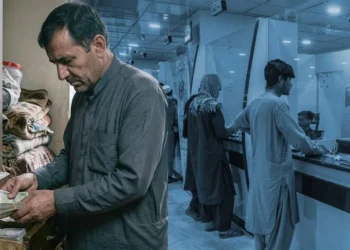
The announcement of the 2026 Kankor exam results by the ruling group has once again exposed one of the most significant consequences of Taliban policies: the complete absence of girls from this national exam. The exclusion of girls from participating in the Kankor exam has not only defined one of the most notable features of this round, but has also considerably undermined the credibility and legitimacy of this national process.
There was a time when the Kankor exam was one of the most important educational events in Afghanistan. Hearing the word Kankor filled thousands of students with excitement, enthusiasm, and hope for the future. In the years before Taliban rule, gaining admission to a desired field of study was one of the greatest concerns for school graduates, and nearly 200,000 candidates took part in the nationwide Kankor exam each year. But after Taliban rule began, not only were half of the candidates, namely girls, barred from taking part in this exam, but the interest and motivation of boys to participate in the process also declined considerably. Today, the Kankor exam no longer holds the excitement and status it once had among the younger generation.
As the most important channel for identifying national talent and the main gateway to higher education, the Kankor exam has a history spanning nearly six decades. The first Kankor exam was held in 1960 to select school graduates for admission to institutions of higher education. Although the number of graduates was limited at the time and the exam was held mainly in Kabul, it gradually became the primary pathway to higher education and to training the country’s skilled workforce.
After 2002, alongside the reconstruction of Afghanistan’s education system and support from the international community, girls’ education grew significantly. Millions of girls returned to school, and their presence in universities also increased to an unprecedented degree, so much so that, according to official statistics, one in every three university students was a woman.
A review of statistics from 2016 to 2021, that is, before Taliban rule, shows that girls made up about 33 percent of the roughly 150,000 to 200,000 Kankor participants, meaning that around 60,000 to 70,000 girls took the exam each year. In some years, girls even earned the top overall score in the Kankor exam.
After the Taliban took control of Afghanistan in August 2021, the process of restricting girls’ education began in stages. First, girls’ middle schools and high schools were closed, then girls were barred from continuing their education at universities, and finally, starting in 2023, they were also stripped of the right to take the Kankor exam. Now, with the announcement of the 2026 Kankor exam results, nearly five years have passed since girls were deprived of education. The bridge that connected secondary education to higher education has effectively collapsed. Although this bridge had already been broken from the moment middle schools and high schools were closed, since no girl could graduate from twelfth grade to become eligible to take the Kankor exam, the formal ban on girls’ participation in the Kankor exam also closed the last window of hope for girls who had graduated earlier.
This article examines the consequences for Afghanistan of denying girls secondary education, the Kankor exam, and higher education, as well as how this policy should be assessed from a human rights perspective.
Education is one of the most fundamental human rights and the most important foundation for development in any society. The experience of developed countries shows that economic progress, innovation, and sustainable development are, above all, the result of extensive investment in education. Ensuring equal opportunity for all citizens, particularly girls and women, to access education and higher education is one of the most essential responsibilities of governments.
Although Afghanistan today has no government that enjoys national and international legitimacy, the Taliban, as the de facto rulers of the country, cannot escape this responsibility.
Depriving half of the country’s population of education and higher education confronts Afghanistan’s future with serious and irreversible threats. Such a policy not only destroys the country’s human capital but also darkens the prospects for Afghanistan’s economic, social, and cultural development.
From a human rights perspective, access to education is one of the most fundamental human rights and lays the groundwork for the enjoyment of many other rights.
Article 26 of the Universal Declaration of Human Rights (UDHR), Article 13 of the International Covenant on Economic, Social and Cultural Rights (ICESCR), Articles 28 and 29 of the Convention on the Rights of the Child (CRC), and Article 24 of the Convention on the Rights of Persons with Disabilities (CRPD) all emphasize the right to education and the need to ensure it for all human beings.
Likewise, Article 10 of the Convention on the Elimination of All Forms of Discrimination against Women (CEDAW) specifies that states are obligated to take all necessary measures to eliminate discrimination against women in education, and to provide equal opportunities for women and men in access to education, obtaining qualifications, use of curricula, participation in exams, access to scholarships, and use of educational facilities of equal quality.
Similarly, under the United Nations Sustainable Development Goals (SDGs), Goal 4 emphasizes ensuring quality, inclusive, and equitable education for all and guaranteeing equal educational opportunities for girls and boys.
The exclusion of girls from education, higher education, and participation in the Kankor exam is therefore one of the clearest examples of human rights violations, gender discrimination, and structural violence against women. This policy not only conflicts with the fundamental principles of human rights and international instruments but is also subject to prosecution, condemnation, and accountability under international law.
The Taliban ban on girls’ education in schools and universities was implemented through a calculated, phased policy designed to manage reactions and reduce public protest. As a first step, less than a month after the Taliban took control of Afghanistan, the group issued an official announcement calling on male students in sixth grade and above to return to school, but made no mention of female students. This came even though the return of students in grades one through six had already begun earlier. Just like that, amid the silence of the international community and the handover of Afghanistan to Taliban rule, the process of excluding girls above sixth grade from education began.
In the next step, the Taliban regime’s Ministry of Higher Education restricted girls’ choice of field of study in the first nationwide Kankor exam under Taliban rule, and then, on December 20, 2022, announced that women and girls would no longer be allowed to continue their education at public and private universities. A few days later, the Taliban regime’s Ministry of Education formally announced a ban on girls’ education above sixth grade.
According to credible reports from the United Nations Children’s Fund (UNICEF), the World Bank, and the United Nations (UN), more than 2.2 million girls and roughly 110,000 higher education students have been denied education since the Taliban issued their decree in March 2022 banning girls’ education above sixth grade. This is only part of the consequences of this policy, since alongside reduced access, the quality and effectiveness of the education system have also been in continuous decline.
As noted, the process of excluding girls was carried out in a phased and managed manner. In fact, one of the Taliban’s most essential goals is the systematic removal of half of society from decision-making and public life, since literate and educated girls and women naturally gain the basis for social participation, freedom of expression, and the right to vote, which stands in direct conflict with the nature and survival of the Taliban regime.
This is even though, according to official statistics from the years before Taliban rule, about 110,000 to 130,000 girls were studying at Afghanistan’s universities and made up nearly 30 percent of the country’s student population. Approximately four million girls were also enrolled in general education schools.
According to reports from the UN, UNICEF, the World Bank, and other credible sources, about 3.8 million girls aged seven to eighteen, equivalent to 61 percent of this age group, were out of school in 2024, more than 2.6 million of whom were of secondary school age. Since the ban on education above sixth grade, roughly 250,000 girls have been denied further education each year, meaning that over the past five years, more than one million girls have been excluded from secondary education.
From an economic standpoint as well, restrictions on girls’ education and women’s employment cost Afghanistan’s economy roughly 5.3 billion Afghanis, equivalent to 84 million dollars, each year, an amount equal to about 0.5 percent of the country’s gross domestic product (GDP) in 2023. If these bans continue, this loss will grow larger each year.
One of the most significant consequences of this policy is the damage done to the education and health sectors, damage whose effects will also be passed on to future generations. These consequences include a rising number of mothers with little or no literacy, a shortage of skilled female professionals, and increased pressure on the health system. Since women make up a large share of health workers, the ban on girls’ education and higher education will confront Afghanistan’s health system with a serious human resources crisis in the future.
Even now, the health and education sectors face a growing shortage of skilled female workers, and this damage will intensify in the coming years. The role women play in educating girls and treating female patients is a unique one, and there is no substitute for it.
As a result, denying girls education, social participation, and the Kankor exam is not merely a violation of their basic rights; it also poses a serious threat to sustainable development, economic growth, public health, social stability, poverty reduction, the strengthening of human capital, and Afghanistan’s future. This policy will deepen poverty, increase family dependency, create a shortage of female doctors and teachers, and weaken the country’s education and health systems.
The ban on education and the Kankor exam is therefore not merely an educational issue, but a matter with far-reaching legal, economic, social, and developmental dimensions that directly affect the well-being of society, social justice, economic growth, and Afghanistan’s future.
Recommendations
- Advocacy for lifting the ban on girls’ education should become a national movement and a public demand, with support extended to all domestic civic and protest movements working toward this goal.
- Donor countries and international institutions should increase their financial and technical support for advocacy programs aimed at lifting the ban on girls’ secondary and higher education.
- The international community should continue supporting the right to education for the girls of Afghanistan and exert greater political and diplomatic pressure on the Taliban regime to revoke these bans.
- The International Criminal Court (ICC) should pursue the case of systematic discrimination against the women and girls of Afghanistan, particularly their exclusion from education and higher education, with greater seriousness.
- Donor countries and international institutions should make the continuation of their assistance to Afghanistan conditional on lifting the ban on girls’ education.
- International institutions and donor countries should, on a trial basis and for a period of one to six months, suspend the flow of weekly cash assistance to Afghanistan to increase pressure on the Taliban regime to reopen schools and universities to girls.
- Countries that support human rights and international institutions should impose further sanctions on officials and all cabinet members of the Taliban regime who played a role in adopting this policy.
- Investment in alternative education, particularly online education, should be increased, and online schools and universities should be supported and recognized until the bans are lifted.
Sources
- Statistical Yearbook of the National Statistics and Information Authority (NSIA)
- Official website of the National Kankor Examinations Authority Kankor
- Statistics and results broken down by the participation of girls and boys (2016 to 2021)
- Official reports from UNICEF, UNESCO, the World Bank, the United Nations, and international human rights organizations
You can read the Persian version of this analysis article here: