• 8AM.MEDIA
  • ویب‌سایت فارسی
  • پښتو ویب‌پاڼه
  • اۉزبېکچه ویب‌سایت
  • Podcast
Saturday, October 3, 2026
Hasht-e Subh
  • Home
  • News
    • Afghanistan News
    • World News
  • Opinion
    • Editorial
    • Analysis
  • Reports
    • Daily Reports
    • Investigative Reports
  • Society
    • The story of people
  • Women’s Word
  • Columns
    • Three Years After Afghanistan’s Fall: The Taliban’s Resurgence
    • Towards Equality
    • The Resurgence of the Taliban: Two Years Since Afghanistan’s Fall
    • Hebatullah Report Special Edition
    • Resistance for Education Special Edition
    • Special Column on Taliban’s Education Curriculum
    • Nawroz
  • Interviews
  • Contact Us
    • About Us
    • 8AM MEDIA Annual Awards
    • Submit an Article to Hasht-e-Subh
  • 8am.mediaBack
Subscribe
No Result
View All Result
  • Home
  • News
    • Afghanistan News
    • World News
  • Opinion
    • Editorial
    • Analysis
  • Reports
    • Daily Reports
    • Investigative Reports
  • Society
    • The story of people
  • Women’s Word
  • Columns
    • Three Years After Afghanistan’s Fall: The Taliban’s Resurgence
    • Towards Equality
    • The Resurgence of the Taliban: Two Years Since Afghanistan’s Fall
    • Hebatullah Report Special Edition
    • Resistance for Education Special Edition
    • Special Column on Taliban’s Education Curriculum
    • Nawroz
  • Interviews
  • Contact Us
    • About Us
    • 8AM MEDIA Annual Awards
    • Submit an Article to Hasht-e-Subh
  • 8am.mediaBack
No Result
View All Result
Hasht-e Subh
No Result
View All Result

Unemployment Deepens in Afghanistan as Citizens Struggle With Despair and Hardship

Translated by Farhad Farhaad | Originally reported in Persian by Ilya

Mohammad Farhaad Mohammad Farhaad
3 October 2026 - Solar Hijri Date: 1405/07/11 [t_time:1791041936]
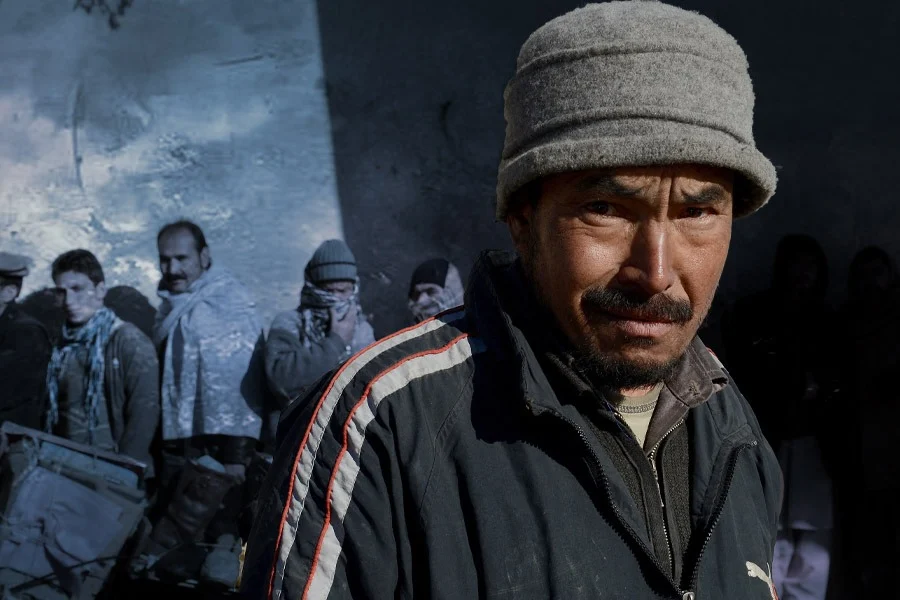
A man stands in front of a group of men gathered behind him as unemployment deepens in Afghanistan. (Photo credit: AFP)

AFP

Several citizens are complaining about rising unemployment and shrinking job opportunities in Afghanistan. They say the lack of suitable jobs has left many young people and heads of households facing economic hardship. These citizens add that since the Taliban took control of Afghanistan, job opportunities in private companies have dropped sharply, and that in government offices, hiring favors people with work experience under the Taliban or close ties to them. Citizens stress that continued unemployment has pushed them toward migration, temporary work, and low-paying jobs. According to them, the lack of a stable income has made living costs heavier for families and has also narrowed the prospects of young people.

A number of residents of Herat, Panjshir, Kunar, Kabul, Khost, and Ghazni provinces told the Hasht-e Subh Daily that, given current conditions, they have little hope that the Taliban will create job opportunities. They call on private companies and institutions to provide more employment for young people, especially the educated. They also stress that, to reduce unemployment, the conditions for private sector investment must be created, and clear programs must be launched to create jobs and absorb young workers.

Shirullah, a resident of Ghazni and a graduate in law and political science, says he has been trying to find a suitable job for about a year, but so far he has not been able to find work in a field related to his degree. He adds that the lack of job opportunities has forced many young people to turn to non-specialized, low-paying work. According to him, brokerage-based hiring and ethnic favoritism in recruitment at Taliban institutions and some private offices are also among the factors that have limited young people’s access to jobs.

Shirullah says: “Unemployment is one of the problems that the country’s young people are struggling with. Even young people who studied abroad regret returning once they come back to Afghanistan, because there are no job opportunities in Afghanistan.”

Sotuda, a resident of Kabul and a graduate in journalism and public relations from Kabul University, says that after graduating, finding work related to her field has been difficult. She adds that limited job opportunities have not only affected young people’s income but have also restricted the chance to use their knowledge and abilities.

Sotuda says: “Every person who has the ability, knowledge, and motivation to work deserves a chance to build a future and put their abilities to use. Creating job opportunities is, in truth, an investment in the future of society.”

Fawzia, a resident of Herat, says that the lack of job opportunities has forced many young people to take up work unrelated to their expertise in order to cover living expenses. She adds that she herself has not been able to find a job suited to her abilities since graduating, and that a number of young people have turned to jobs such as tailoring and hairdressing to cover their living costs.

Fawzia says: “Unfortunately, most educated young people, both women and men, are unemployed. I studied fine arts myself, but there is no work through which I can earn an income. Most young people have turned to tailoring or hairdressing.”

Alongside graduates, skilled laborers and daily wage workers are also complaining about the difficulty of finding work.

Amruddin, a resident of Khost, says that a large number of young people remain without jobs after graduating from universities because of the lack of work, and that skilled laborers also face difficulty finding daily work.

This Khost resident says: “Educated young people graduate from universities, but they remain jobless. Skilled laborers who gather every day on one of the main roads in Khost city return home empty-handed, and only a limited number of them find work.”

Shahed Khan, a resident of Kunar, says the lack of job opportunities and the poor economic situation have made life difficult for many families. He adds that poverty and unemployment have led some children to enter the labor market, instead of continuing their education, to help cover their families’ expenses.

Shahed Khan says: “Where are the job opportunities? Our economy is zero. It is true that children abandon school because of poverty and go to work. Those at the top have no capacity at all.”

Shamsullah, a resident of Panjshir, considers the lack of job opportunities one of the major problems facing young people in the country, and says that if this situation continues, it could have social and economic consequences. He adds that some young people turning to drugs and suffering from mental health problems can be counted among the consequences of unemployment.

Shamsullah says: “Today, the lack of job opportunities has caused problems for a large share of the country’s workforce, and young people turning to drugs and developing mental health problems can be seen as examples of it.”

This Panjshir resident adds: “Every form of production needs labor, resources, and machinery so that products can be supplied to the market, but despite the availability of resources and labor in the country, these opportunities have not been used.”

Marina, another resident of Panjshir, says that alongside general unemployment, women in this province also face greater restrictions in finding work. She adds that some residents work as daily wage laborers and some hold government jobs, but another group has no work at all.

Marina says: “The economic situation is very poor. Some people are laborers, some have government jobs, and some are unemployed. Overall, people’s economic situation is not good. If you mean women, most of them are unemployed.”

These complaints come as Afghanistan’s economy continues to face serious constraints. In its 2025 report, the World Bank said that nearly one quarter of Afghanistan’s young people are unemployed, and that many of those who do have jobs face low pay, fewer working hours, and work unrelated to their level of education.

According to the Afghanistan Humanitarian Needs and Response Plan (HNRP) for 2026, about 21.9 million people, equivalent to nearly 45 percent of the country’s population, need humanitarian assistance. Of these, 17.5 million people are targeted to receive aid.

At the same time, the economic crisis and the decline in households’ purchasing power have been accompanied by food insecurity and malnutrition. According to 2026 estimates, about 17.4 million people in Afghanistan face acute food insecurity, and nearly 3.7 million children under the age of five suffer from acute malnutrition.


You can read the Persian version of this report here:

بیکاری و کاهش فرصت‌ها؛ مردم با ناامیدی و دشواری دست‌وپنجه نرم می‌کنند

ShareTweetSendSendShare

Related Posts

Excavators and a dump truck work at an open-pit mine site in Badakhshan as gold miners say official mining has been halted for two months. (Photo Credit: AFP)
Daily Reports

Taliban Associates Keep Mining Gold in Badakhshan While Other Miners’ Investments Sit Frozen

3 October 2026 [t_time:1791041908]
Taliban officials meet with Russian representatives at Russia’s Ministry of Health during an official delegation visit (Photo: @FitratHamd)
Afghanistan News

Taliban Seek Russian Cooperation to Improve Healthcare Services in Afghanistan

3 October 2026 [t_time:1791029751]
Pakistani fighter jets are seen over a map of Afghanistan as a massive explosion lights up the night sky above buildings. (Photo credit: Social Media)
Analysis

Pakistan Strikes, Taliban Warn: A Pattern of Attack and Empty Threats

3 October 2026 [t_time:1791028065]

Latest

Loading latest news...

Popular stories

  • Surveillance footage shows Taliban fighters surrounding and shooting a bound man in Herat. (Photo credit: Social Media)

    Taliban Shoot Young Man from Herat After Torturing Him with Hands Tied

    Share
    Share Tweet
  • UN Report Reveals Shifts in Family Attitudes and Rise in Domestic Violence in Afghanistan

    Share
    Share Tweet
  • Al-Qaeda Releases Hamza bin Laden Message on 9/11 Anniversary

    Share
    Share Tweet
  • Afghanistan Journalists Center: Taliban Have Detained Around 300 Journalists and Media Workers

    Share
    Share Tweet
  • Freedom Front Claims 37 Taliban Fighters Killed in Nuristan and Kunar

    Share
    Share Tweet

Podcast

Insights
Insights

Join Lynne O’Donnell for 8AM’s podcast series, Insights.
Lynne talks with generals, diplomats, soldiers, journalists, politicians, activists, people who have front row seats for conflicts around the world, and citizens with a story to tell, happy or sad. For this first series, Afghanistan is the focus. Lynne and her guests talk about the collapse of the republic in August, 2021, and the impact since — for the people of Afghanistan, for the security of the region, for the safety of the world. It’s important, interesting and insightful.

Insights/22: Controlling the Narrative with Mina Sharif
byinsights8am

Controlling the Narrative

Lynne O’Donnell talks with Mina Sharif, author, activist, women’s rights campaigner, educator and mentor. They discuss who controls the narrative and who speaks for Afghanistan’s people when the Taliban appear to have seized control not only of the country but of the message, too.

Have a listen

Insights/22: Controlling the Narrative with Mina Sharif
Episode play icon
Insights/22: Controlling the Narrative with Mina Sharif
Episode Description
Episode play icon
Insights/21: Media Meltdown with Zahra Joya
Episode Description
Episode play icon
Insights/20: Terror Inc with Scott Richards
Episode Description
Episode play icon
Insights/19: Busting Stereotypes with Bushra Gohar
Episode Description
Episode play icon
Insights/18: Media Matters with Waliullah Rahmani
Episode Description
Episode play icon
Insights/17: What Goes Around Comes Around with Sima Samar
Episode Description
Search Results placeholder
Hasht-e Subh

8AM Media, also known as Hasht-e-Subh Daily, stands as Afghanistan's premier independent and non-profit newspaper, resonating as a beacon of journalistic integrity since its establishment in June 2007 by esteemed Afghan journalists and human rights advocates. With a steadfast commitment to citizen journalism and civic education, Hasht-e-Subh Daily has earned its place as the most esteemed publication in the nation.

Publisher: Sanjar Sohail
Email: [email protected]
Executive Director: Parwiz Kawa
Email: [email protected]

Read More

Unemployment Deepens in Afghanistan as Citizens Struggle With Despair and Hardship

Taliban Associates Keep Mining Gold in Badakhshan While Other Miners’ Investments Sit Frozen

Taliban Seek Russian Cooperation to Improve Healthcare Services in Afghanistan

Pakistan Strikes, Taliban Warn: A Pattern of Attack and Empty Threats

Sharp Rise in Casualties in Pakistan; More Than 1,000 Killed in Three Months

Editor’s Choice

Every Saturday morning, 8AM MEDIA English Services Department will guide you through the week’s biggest stories from Afghanistan and the international community.

Subscribe

© 2026 - ©Hasht-e Subh Daily

No Result
View All Result
8am.Media
پښتو ویب‌پاڼه
ویب‌سایت فارسی
اۉزبېکچه ویب‌سایت
  • Home
  • News
    • Afghanistan News
    • World News
  • Opinion
    • Editorial
    • Analysis
  • Reports
    • Daily Reports
    • Investigative Reports
  • Society
    • The story of people
  • Women’s Word
  • Columns
    • Three Years After Afghanistan’s Fall: The Taliban’s Resurgence
    • Towards Equality
    • The Resurgence of the Taliban: Two Years Since Afghanistan’s Fall
    • Hebatullah Report Special Edition
    • Resistance for Education Special Edition
    • Special Column on Taliban’s Education Curriculum
    • Nawroz
  • Interviews
  • Contact Us
    • About Us
    • 8AM MEDIA Annual Awards
    • Submit an Article to Hasht-e-Subh
  • 8am.media

© 2026 - ©Hasht-e Subh Daily