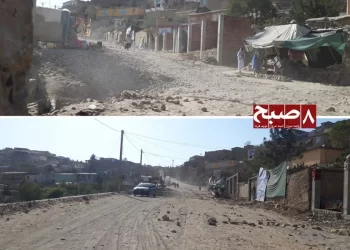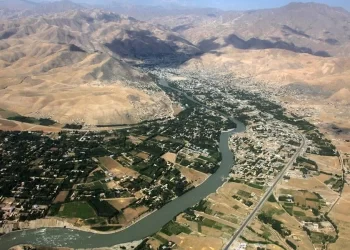

In recent weeks, the scene of armed resistance against the Taliban has taken on a new face. The newly established Sepahiyan-e Mihan (Soldiers of the Homeland) Front suddenly took Yaftal-e Sufla district in Badakhshan out of Taliban forces’ control for several hours and raised its own flag atop the district’s administrative building. The Afghanistan Freedom Front, which until recently was mostly known for “hit-and-run” operations, has now turned to frontal warfare and was engaged in fighting with the Taliban for several consecutive days in Zebak district of Badakhshan. The Afghanistan United Front (AUF), led by Sami Sadat, also launched its first military operation from Kandahar, a place that serves as a safe stronghold for the Taliban regime and specifically for the group’s leader. The National Resistance Front of Afghanistan (NRF) also remains active, although compared to the fronts mentioned above, it has a longer history but less recent activity.
Given the multiplicity of military fronts and the simultaneity of their movements, a question arises: why have Taliban opponents intensified their activity in the form of several fronts with different leaderships, rather than forming a single unified front and organizing around it? Does this multiplicity and plurality signify discord among them, or does it conceal an underlying unity? Is diversity and heterogeneity within the ranks of the opposition inherently beneficial to the Taliban, or is it also detrimental to the group?
The first point that must be raised against the common perception of the plurality of anti-Taliban forces is that their numerical multiplicity should not be equated with a multiplicity of objectives. This is because the National Resistance Front, the Afghanistan Freedom Front (AFF), the Afghanistan United Front, the Homeland Corps Front, and even other political movements that do not advocate armed conflict, all converge on a single point: ending the monopoly on power and creating an inclusive system in which all ethnic and political groups, including the very Taliban that now monopolizes power, have meaningful representation. So it appears that the fronts differ not in their destination but in their path: dialogue or armed resistance. On closer examination, these two paths are not mutually exclusive. For instance, the National Resistance Front, the Freedom Front, and the Afghanistan United Front, which have turned to war against the Taliban, do not necessarily deny the importance and function of dialogue. Rather, depending on their understanding of the nature of the Taliban, they believe that under current conditions, military pressure is a necessary precondition for reaching meaningful negotiations, negotiations from which both sides of the conflict benefit, not just the ruling regime. On the other hand, those factions that emphasize dialogue do not deny the necessity of leverage, including armed resistance itself, because they rightly understand that in the absence of necessary and effective pressure, the Taliban will not attach importance to dialogue.
Second, the expectation of forming a unified, cohesive, and unbreakable front among dozens of political and military movements opposed to the Taliban resembles an “ideal” more than a “reality.” It is not only Taliban opponents who face this fate; opposition forces in other weak and undemocratic countries confront the same predicament. Consensus on unified leadership, a single charter, and integrated, hierarchical command requires specific preconditions whose fulfillment, in countries like Afghanistan, is time-consuming and costly. But the more important point regarding Taliban opponents is that their inability to form a unified front does not mean a deviation from their shared goal: establishing democratic order in the country. For example, despite their current fragmentation, various anti-Taliban fronts simultaneously confronted the ruling regime’s forces in several provinces in recent weeks, an event that shows they can create trouble for the Taliban even in the absence of unified command.
From another perspective, the multiplicity and diversity of tendencies is not merely a weakness. In Afghanistan’s particular circumstances, it can also be an advantage. When opposition to the Taliban is heard from only one channel, whether political, military, ethnic, or regional, the Taliban can easily reduce it to a single narrative (such as “remnants of the former regime,” “a war of others against Pashtuns,” “personal ambition,” or “an attempt to revive pockets of power”) and devise a specific propaganda strategy to counter it. But when the social and geographic origins of opposition to the Taliban regime are both diverse and widespread, the group’s narrative about the situation becomes difficult to sustain. On this basis, the plurality of fronts, if accompanied by a shared goal, is not a sign of weakness but rather better demonstrates the widespread nature of discontent with the Taliban.
Third, the heterogeneity of Taliban opponents cannot be examined separately from the heterogeneity of Afghan society itself. Afghanistan has a pluralistic, heterogeneous, fragmented, and diverse society. Or it would be better to say that it is a country whose unity has always been more a product of agreement and compromise among its diverse components than something inherently natural. Expecting such a society to suddenly form a unified and homogeneous opposition against an authoritarian and monopolistic regime seems inconsistent with the very nature of this society. From this angle, the heterogeneous composition of Taliban opponents should be read not as a sign of weakness and discord, but as a reflection of the diverse composition of Afghan society itself. In a society with this degree of plurality and complexity, the measure of success in the war against the Taliban is not necessarily the formation of a single front by the group’s opponents, but rather their understanding of the necessity of preserving a shared goal and operationalizing it while maintaining plurality.
You can read the Persian version of this report here:
نفاق آشکار، وفاق پنهان؛ درباره تعدد جبهههای نظامی مخالف طالبان